
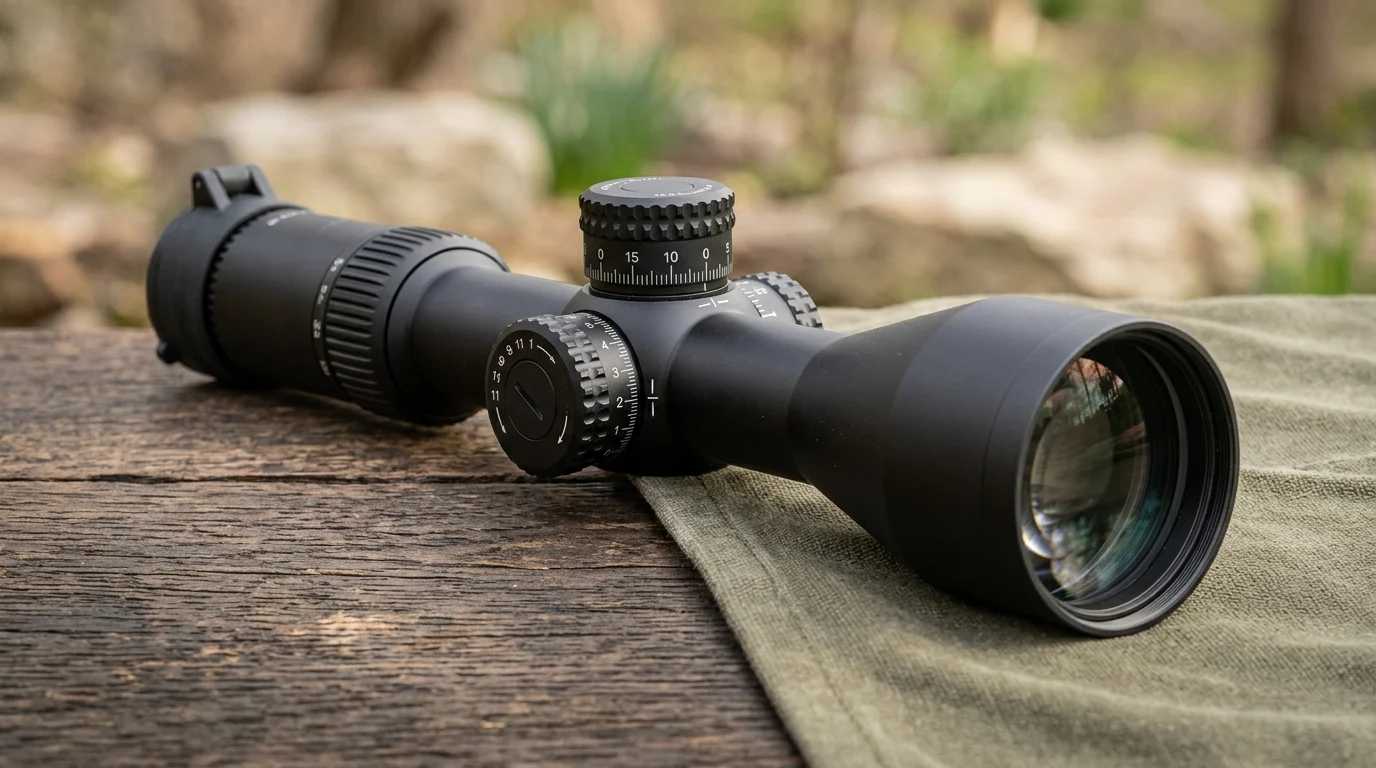
Affordable red dot optics have become a serious option for hunters who value speed, simplicity, and lower gear weight in close-cover situations. Shake-awake technology adds another advantage by keeping the illuminated aiming point ready while reducing unnecessary battery use, but it also introduces details hunters should understand before trusting it in the field. This guide looks at what separates a useful low-cost reflex sight from a risky bargain, including realistic price ranges, battery behavior, dot visibility, durability trade-offs, and the limits of non-magnified optics. If your shots are usually inside practical woodland distances, the right red dot can be a smart alternative to a traditional magnified scope.
What Makes a Budget Red Dot Hunting Scope Worth Buying
Hunters no longer need to overspend to afford a reliable optic. While the term "hunting scope" traditionally implies a magnified optic for long-range shots, the modern market has expanded to include the budget red dot sight—a non-magnified reflex optic—as a highly effective close-range alternative.
A dead battery in the field is a major frustration. Shake-awake technology solves this by using a motion-sensing accelerometer to turn the optic on instantly upon movement, ensuring the glowing dot is ready before the stock even meets the shoulder. It then shuts down the LED after a programmable delay timer of complete inactivity. However, users must be aware of transport-induced false wakes; vibrations from a vehicle can keep the optic powered on, leading to long-term storage battery drain. Additionally, accelerometer sensitivity varies across models, and these shake-awake electronics introduce an additional potential failure point for remote, multi-day hunts.
Budget Red Dot Basics
The fundamentals of a budget red dot revolve around delivering maximum field value, typically in the $100 to $200 range. Modern manufacturing efficiencies mean hunters can now acquire a highly capable alternative to traditional magnified optics weighing, depending on the model, typically between 5 and 7 ounces.
Before adopting a budget red dot, hunters should consider a few practical limitations to ensure it fits their needs:
- Magnification: It is a non-magnified reflex sight, distinct from a traditional hunting scope. Hunters pursuing game at longer ranges will still require a magnified riflescope, low-power variable optic (LPVO), or an add-on magnifier.
- Game Identification: The lack of magnification complicates game identification at a distance, making these optics strictly suitable for close-to-medium-range engagements.
- Astigmatism: Shooter astigmatism can cause the illuminated dot to appear distorted or starburst.
- Legal Restrictions: Some local hunting regulations may restrict non-magnified electronic optics for certain species, so verifying local laws is essential.
Key Trade-Offs: Price, Durability, and Features
Keeping the price tag low requires manufacturers to make strategic compromises. A budget optic usually utilizes 6061-T6 aluminum for its main housing instead of the heavy-duty 7075-T6 alloy found in premium, military-grade sights. While 6061 aluminum is perfectly adequate for standard field use, it is more susceptible to denting if dropped directly onto jagged rocks.
Glass clarity is another common trade-off. Budget optics often use simpler anti-reflective coatings that can affect light transmission or introduce a slight color bias, sometimes appearing as a blue or ruby tint. However, for a hunter taking ethical shots within 100 to 150 yards, these minor optical imperfections are generally acceptable compared to the significant cost savings.
Specs to Compare Before Trusting Shake-Awake Features
Trusting a budget optic in the field requires looking past marketing claims and evaluating the actual hardware.
While motion-sensing activation is a valuable battery-saving feature, it is ineffective if the underlying specifications cannot handle the punishing recoil of a .308 Winchester or the freezing temperatures of a late-season hunt.
Dot Size, Lens Clarity, Brightness, and Parallax
When evaluating visual mechanics, dot size is the first major decision. A 2 MOA (Minute of Angle) dot covers approximately 2.1 inches of the target at 100 yards, offering fine precision for longer shots, while a larger 6 MOA dot is faster to acquire for close-range brush hunting.
Brightness settings are equally critical; a quality budget optic should offer at least 10 to 12 distinct illumination levels to prevent the reticle from washing out in bright midday snow. Regarding parallax, most budget red dots claim to be "parallax-free," but in reality, slight reticle shifts can occur—often varying by manufacturer—if the shooter's eye is off-center at distances under 50 yards.
Battery Life, Mounting Options, and Field Reliability
Battery life claims often boast up to 50,000 hours on a single standard CR2032 battery. However, these figures are typically manufacturer estimates based on the lowest brightness setting or extensive downtime. While motion-sensing technology extends this lifespan, continuous use at medium brightness and cold weather can severely drain lithium cells. Hunters should still swap batteries annually to ensure reliability.
Mounting the optic securely is also non-negotiable. Whether utilizing a specialized mounting solution or clamping down on a standard Picatinny base, the hardware must withstand heavy, repetitive recoil. A loose connection will compromise a rifle's zero immediately. Field reliability also heavily hinges on adequate waterproofing, as detailed in the comparison below.
| Feature | Premium Red Dot ($500+) | Budget Red Dot ($100-$200) |
|---|---|---|
| Housing Material | Typically 7075-T6 Aluminum | Commonly 6061-T6 Aluminum |
| Battery Life | Up to 50,000 hours (Medium setting) | Commonly 20,000 – 50,000 hours |
| Waterproofing | IPX8 (Deep Submersible) | IPX7 (1m for 30 mins) |
| Mount Quality | Titanium / High-grade steel | Standard Aluminum |
How to Choose the Right Budget Red Dot for Hunting
Navigating the crowded market of affordable optics requires a strategic, analytical approach.
Finding the right balance between cost, durability, and performance ensures the chosen red dot complements the specific firearm and hunting environment without exceeding the season's gear budget.
Practical Buying Checklist
A practical buying checklist should start with recoil ratings and adjustment turrets. Ensure the manufacturer explicitly rates the optic for high shock resistance to handle a standard 12-gauge slug or a .30-06 rifle without the internal emitters rattling loose. Windage and elevation adjustments on budget red dots typically use recessed, capped adjusters rather than the exposed turrets found on traditional riflescopes. Ensure these adjusters offer tactile, audible clicks to make zeroing straightforward.
Next, inspect the warranty. While unconditional lifetime warranties are rare in the sub-$150 tier, a 3-year to 5-year guarantee against manufacturer defects provides a necessary safety net. Finally, verify the optic's footprint. Knowing whether the red dot uses a common Docter/Noblex, RMR, or Aimpoint Micro footprint will dictate which adapter plates and add-ons are compatible, preventing the purchase of mismatched hardware.
Best Fit by Hunting Style and Budget
The final purchasing decision should
Key Takeaways
- Choose a budget red dot mainly for close-to-medium-range hunting where fast target acquisition matters more than magnification.
- Expect many capable entry-level red dots to cost about $100 to $200 and weigh roughly 5 to 7 ounces, depending on the model.
- Verify shake-awake behavior before hunting because vehicle vibration can keep the sight active and drain the battery during transport.
- Use a magnified riflescope, LPVO, or magnifier if you need better game identification or ethical shot placement beyond typical red dot distances.
- Inspect housing material, glass tint, brightness settings, and recoil rating before trusting a low-cost optic on centerfire hunting rifles.
- Check local regulations before using an electronic red dot, since some hunting rules limit optic types by species, season, or location.
Frequently Asked Questions
Is a budget red dot suitable for hunting?
Yes, if your shots are close to medium range and you do not need magnification. A red dot is fast to acquire and practical for dense woods, driven hunts, and short-range setups.
What does shake-awake do on a red dot sight?
Shake-awake uses a motion sensor to turn the optic on when it moves and shut it off after inactivity. It helps conserve battery life while keeping the dot ready quickly.
Can vehicle vibration drain a shake-awake battery?
Yes. Truck, ATV, or case vibration can repeatedly wake the optic during transport, so turn it off manually or remove the battery for long storage.
What range is best for a non-magnified hunting red dot?
Most hunters should treat a non-magnified red dot as a close-range tool, commonly inside 100 to 150 yards, depending on target size, visibility, and skill.
What is a common price range for a reliable budget red dot?
Many capable budget red dots fall around $100 to $200, offering useful field performance without the cost of premium tactical or magnified optics.
Post time: Jul-31-2026