

Close-range combat demands optics that balance speed and precision. A red dot offers unmatched simplicity for rapid target acquisition, while prism scopes deliver accuracy with added features. Pairing these optics with the right accessories can elevate performance, making them essential tools for tactical scenarios or home defense.
Key Takeaways
- Red dot sights are fast and easy to use. They are great for close-range fights and protecting your home.
- Prism scopes give better accuracy with fixed zoom and clear reticles. They work well for mid-range shooting and tactical tasks.
- Pick the right optic based on your needs: red dots are good for beginners and quick action, while prism scopes are better for precision and flexibility.
Understanding Red Dot Sights
What Makes a Red Dot Ideal for Close-Range Combat?
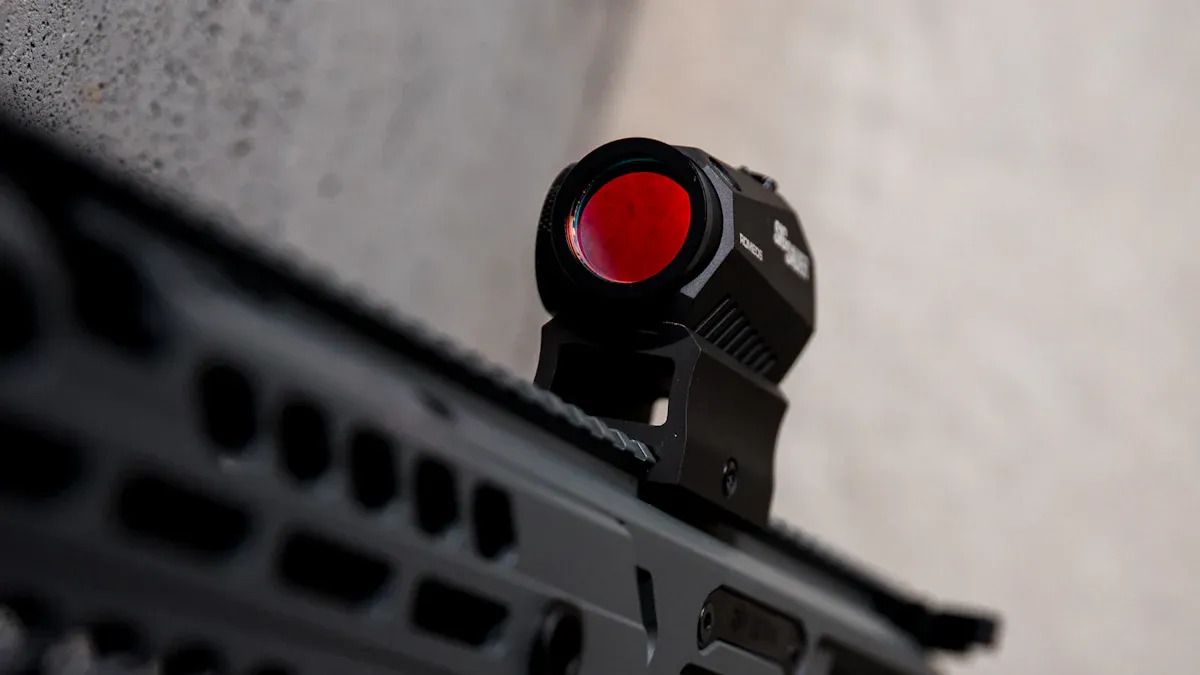
Red dot sights excel in close-range combat due to their speed and simplicity. Unlike traditional iron sights, they eliminate the need for precise alignment, allowing users to focus solely on the target. This streamlined approach significantly reduces reaction time, making them ideal for high-pressure scenarios. Law enforcement agencies have reported improved qualification scores when using red dot optics, with officers consistently achieving better performance during practical shooting exercises.
Empirical studies further validate their effectiveness. In a controlled test comparing red dot sights to iron sights, participants demonstrated higher hit ratios and accuracy across four stages of fire.
| Study Aspect | Red Dot Sights | Iron Sights |
|---|---|---|
| Hit Ratio | Higher | Lower |
| Accuracy | Higher | Lower |
| Participants | 14 | 13 |
| Stages of Fire | 4 | 4 |
These results highlight the red dot’s ability to enhance both speed and precision, making it a top choice for close-range engagements.
Key Features of Red Dot Sights
Red dot sights offer a range of features tailored for close-range combat. Their clear holographic reticle provides a precise aiming point, ensuring accuracy even in dynamic situations. Built with rugged, battle-proven designs, they withstand harsh conditions without compromising performance.
| Key Feature | Description |
|---|---|
| Clear holographic reticle | Provides a precise aiming point for accuracy. |
| Rugged and battle proven | Ensures durability in harsh conditions. |
| Durable housing | Protects internal components from damage. |
| Easy mounting | Facilitates quick attachment to firearms. |
| Simple and intuitive controls | Enhances user experience during operation. |
| Night-Vision Compatible? | Allows use in low-light conditions. |
| Battery | Uses a CR123A battery for reliable power. |
| Brightness settings | Offers 30 settings for various lighting conditions. |
These features make red dot sights versatile and user-friendly, ensuring optimal performance in diverse environments.
Common Scenarios for Using Red Dots
Red dot sights shine in scenarios requiring rapid target acquisition. Home defense situations benefit from their simplicity, enabling users to react quickly to threats. Tactical operations also leverage their speed and precision, especially in close-quarters combat.
Their compatibility with night vision makes them invaluable for low-light conditions, while adjustable brightness settings ensure visibility in varying environments. Whether for personal protection or professional use, red dot sights provide the reliability and efficiency needed for close-range engagements.
Exploring Prism Scopes
How Prism Scopes Differ from Red Dots
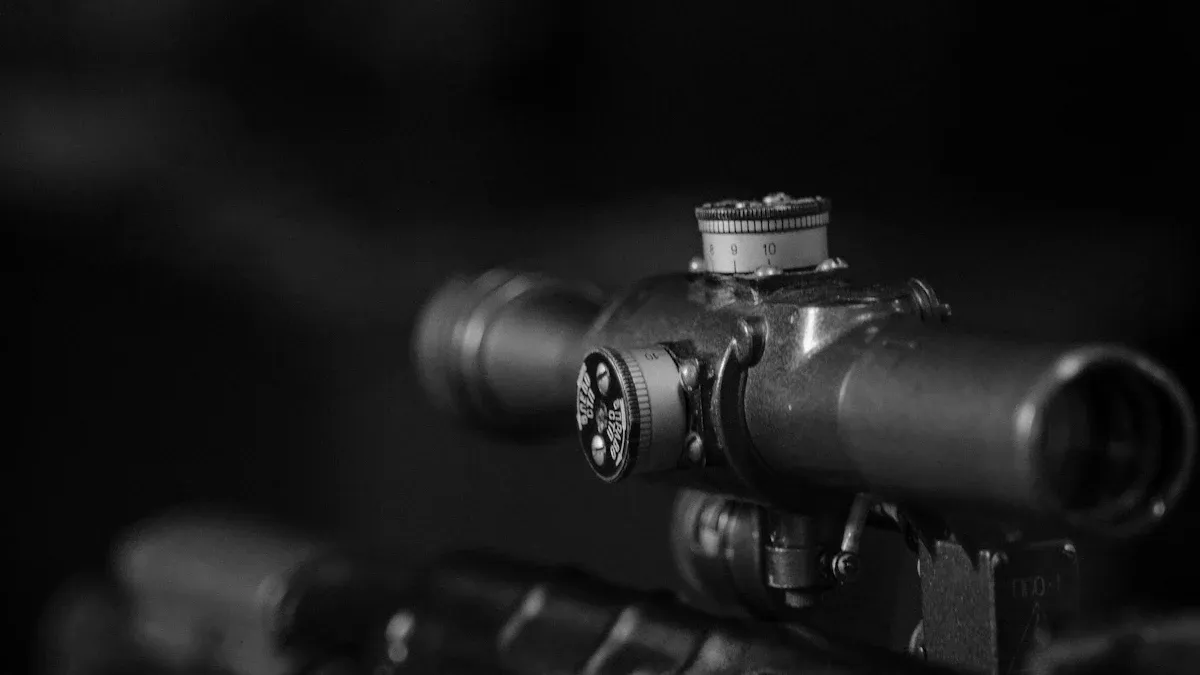
Prism scopes stand out from red dot sights due to their unique design and functionality. Unlike red dots, which rely on projected reticles, prism scopes use etched glass reticles. This feature ensures visibility even when the battery dies, offering a reliable aiming solution in critical moments. Prism scopes also provide magnification, typically ranging from 1x to 5x, making them more versatile for mid-range engagements.
In terms of durability, prism scopes often feature robust construction, designed to withstand harsh environments. Their compact size and fixed magnification make them an excellent choice for users seeking precision without the bulk of traditional scopes.
| Aspect | Sig Sauer Prism | Holographic |
|---|---|---|
| Reticle Type | Etched Glass | Projected |
| Battery Life | Long | Moderate |
| Weight (oz) | 15-20 | 8-15 |
| Price ($) | 300-600 | 400-700 |
| Range (yards) | 0-600 | 0-300 |
| Durability | High | Moderate |
This comparison highlights the prism scope’s edge in durability, battery independence, and extended range.
Key Features of Prism Scopes
Prism scopes offer a range of features tailored for precision and adaptability. Their etched reticles remain visible without illumination, ensuring reliability in any situation. Many models include illuminated reticles with adjustable brightness, enhancing visibility in low-light conditions.
Other notable features include:
- Magnification: Fixed magnification for improved accuracy at extended ranges.
- Compact Design: Smaller and lighter than traditional scopes, ideal for tactical use.
- Eye Relief: Shorter eye relief compared to red dots, requiring proper positioning for optimal performance.
These features make prism scopes a versatile tool for shooters who value precision and durability.
Practical Applications of Prism Scopes
Prism scopes excel in scenarios requiring both precision and adaptability. Their magnification capabilities make them suitable for mid-range shooting, such as hunting or competitive shooting. Tactical operators benefit from their rugged design and etched reticles, which perform reliably in demanding environments.
For home defense, prism scopes offer a balance of close-range usability and mid-range accuracy. Their compact size and clear reticles ensure quick target acquisition, even in high-stress situations. Whether for sport, defense, or tactical missions, prism scopes provide a dependable solution for shooters seeking versatility and precision.
Comparing Key Features
Magnification and Field of View
Magnification and field of view are critical factors when choosing between red dot sights and prism scopes. Red dots typically offer no magnification, making them ideal for close-quarters engagements. Their wide field of view allows users to maintain situational awareness, which is crucial in fast-paced scenarios. On the other hand, prism scopes often feature low magnification, ranging from 1x to 5x. This added magnification enhances precision, especially for mid-range targets.
The comparison between red dots and 1-4x prism scopes highlights their distinct advantages. Red dots are generally more affordable and excel in close-range combat. Prism scopes, however, provide variable magnification, making them versatile for both close and mid-range shooting. While red dots prioritize speed, prism scopes offer a balance of precision and adaptability.
Reticle Design and Illumination
Reticle design and illumination significantly impact an optic’s usability. Red dots feature a simple aiming point, which is easy to use but entirely dependent on battery power. If the battery fails, the reticle becomes unusable. Prism scopes, however, use etched glass reticles that remain visible even without illumination. This feature ensures reliability in critical moments.
| Feature | Red Dots | Prism Optics |
|---|---|---|
| Battery Dependency | Yes, can be unusable if battery fails | No, etched reticle remains visible even without battery |
| Reticle Type | Simple dot | Etched reticle with complex designs |
| Illumination | Typically battery-powered | Illuminated reticle available, requires battery |
| Precision | Basic aiming | Enhanced precision with holdover points and ranging marks |
Prism scopes also offer more complex reticle designs, including holdover points and ranging marks. These features assist with distance estimation and bullet drop compensation, making them a superior choice for precision shooting.
Eye Relief and Parallax
Eye relief and parallax are essential considerations for comfort and accuracy. Red dot sights provide unlimited eye relief, allowing users to aim from various positions without losing the reticle. This flexibility is particularly beneficial in dynamic situations where quick movements are required. Prism scopes, however, have shorter eye relief, requiring the shooter to maintain a consistent position for optimal performance.
Parallax is another area where these optics differ. Red dots are typically parallax-free, ensuring the reticle remains on target regardless of the shooter’s head position. Prism scopes, while precise, may exhibit slight parallax at certain distances. Shooters must account for this when aiming, especially at longer ranges.
Durability and Battery Life
Durability and battery life are crucial for any optic used in demanding environments. Red dot sights are known for their rugged construction, withstanding harsh conditions such as rain and recoil. However, their reliance on batteries can be a drawback. Continuous use may drain the battery within a few months, potentially leaving the optic unusable.
Prism scopes, by contrast, excel in durability and battery independence. Their etched reticles remain functional even without power, providing a reliable aiming solution in any situation. Performance tests have shown that prism scopes can endure extreme conditions without losing zero. Additionally, their illuminated reticles offer long-lasting battery life, ensuring consistent performance during extended use.
| Test Type | Result |
|---|---|
| Battery Duration | 4.5 months continuous use |
| Durability | Withstood harsh conditions including rain and recoil without losing zero |
Both optics are built to last, but prism scopes offer an edge in reliability due to their battery-independent reticles and robust design.
Performance in Close-Range Combat
Speed and Target Acquisition
In close-range combat, speed often determines success. Red dot sights excel in this area due to their simplicity and design. Their reticles, typically ranging from 2 MOA to 8 MOA, allow users to acquire targets quickly. Larger dots, such as those between 3 MOA and 8 MOA, are especially effective for close engagements. They appear brighter and are easier to spot, enabling faster shooting. This makes red dot sights a preferred choice for scenarios where every second counts.
Prism scopes, while precise, require slightly more time for target acquisition. Their fixed magnification demands proper positioning and alignment, which can slow down response times in fast-paced situations. However, their etched reticles remain visible without power, ensuring reliability even in critical moments.
- Key Advantages of Red Dot Sights for Speed:
- Simple reticle design for quick aiming.
- Larger dots enhance visibility and reduce response time.
- Unlimited eye relief allows flexibility in shooting positions.
These features make red dot sights a top contender for rapid target acquisition in close-range combat.
Accuracy and Precision
Both optics deliver accuracy, but their effectiveness depends on the situation. Red dot sights prioritize speed over precision. Their simple reticles provide a clear aiming point, making them ideal for close-quarters engagements. However, they lack the advanced features needed for long-range accuracy.
Prism scopes, on the other hand, shine in precision-focused scenarios. Their etched reticles often include holdover points and ranging marks, which assist with bullet drop compensation. This makes them suitable for mid-range targets and more accuracy-intensive tasks.
"The only time that the LPVO scored a faster time than the magnifier was on the near-far drill, but on the run with no magnification. That run was also faster than using magnification, both with the magnifier and the scope. I still believe that LPVOs are better for more accuracy-focused work. The low range of magnification range is 4x, and is currently topping out at 10x. Most magnifiers are 3x, with a few hitting 6x. An LPVO has fewer lenses that the incoming light has to pass through before hitting the shooter’s eye, compared to all the lenses in a red dot and magnifier."
This comparison highlights the prism scope’s edge in precision, especially for users who require detailed reticle designs and magnification.
Adaptability in Various Scenarios
Adaptability plays a crucial role in determining an optic’s effectiveness. Red dot sights are highly versatile, performing well in diverse environments. Their unlimited eye relief and parallax-free design allow users to aim from unconventional positions. This makes them suitable for dynamic situations, such as home defense or tactical operations.
Prism scopes offer adaptability through their magnification and durable construction. Their fixed magnification provides a balance between close-range usability and mid-range accuracy. This makes them a reliable choice for hunting, competitive shooting, and tactical missions. Additionally, their etched reticles ensure functionality even in low-light conditions or when the battery fails.
- Scenarios Where Each Optic Excels:
- Red Dot Sights: Home defense, close-quarters combat, and fast-paced tactical operations.
- Prism Scopes: Hunting, mid-range shooting, and precision-focused tasks.
Both optics offer unique advantages, but their adaptability depends on the user’s specific needs and environment.
Pros and Cons of Red Dot Sights and Prism Scopes
Advantages and Disadvantages of Red Dot Sights
Red dot sights offer several advantages that make them a popular choice for close-range combat. Their simplicity allows users to acquire targets quickly, which is critical in high-pressure situations. The unlimited eye relief ensures flexibility, enabling shooters to aim from unconventional positions. Additionally, their lightweight design minimizes fatigue during extended use. Many models also feature night vision compatibility, making them effective in low-light conditions.
Tip: Red dots with larger reticles (e.g., 6 MOA) are ideal for fast-moving targets, while smaller reticles (e.g., 2 MOA) enhance precision.
However, red dot sights have limitations. Their reliance on batteries can pose challenges. A dead battery renders the reticle unusable, potentially leaving the shooter without a functional optic. Furthermore, red dots lack magnification, which limits their effectiveness for mid-range engagements. These drawbacks make them less versatile compared to other optics.
Advantages and Disadvantages of Prism Scopes
Prism scopes excel in precision and durability. Their etched reticles remain visible even without power, ensuring reliability in critical moments. The fixed magnification enhances accuracy for mid-range targets, while the compact design offers portability. Many users appreciate the ergonomic benefits of prism scopes, as they reduce strain during prolonged use.
- Key Benefits:
- Etched reticle ensures functionality without batteries.
- Magnification improves accuracy for mid-range shooting.
- Durable construction withstands harsh environments.
Despite these strengths, prism scopes have drawbacks. Their shorter eye relief requires consistent positioning, which can slow down target acquisition. Some users report longer task completion times during initial use, especially without adequate training. Additionally, the added weight compared to red dots may affect maneuverability in dynamic scenarios.
Note: User preferences vary. Some prioritize the visual quality of prism scopes, while others prefer the simplicity of red dots.
Prism scopes cater to shooters seeking precision and versatility, but they demand more practice to master.
Choosing the Right Optic for Your Needs
Best Optic for Home Defense
For home defense, speed and simplicity are essential. Red dot sights excel in this category. Their wide field of view allows users to maintain situational awareness, while the illuminated reticle ensures quick target acquisition in low-light conditions. Unlimited eye relief enables shooters to aim comfortably from unconventional positions, which is crucial during high-stress situations.
Tip: Choose a red dot sight with night vision compatibility for enhanced performance in dark environments.
Prism scopes, while precise, may not be ideal for home defense. Their shorter eye relief and magnification can slow down response times. Homeowners seeking reliability and ease of use should prioritize red dots for their lightweight design and intuitive operation.
Best Optic for Tactical Operations
Tactical operations demand versatility and durability. Prism scopes shine in this area. Their etched reticles remain visible without battery power, ensuring reliability in critical moments. Magnification options, typically ranging from 1x to 5x, provide adaptability for both close-quarters and mid-range engagements.
- Key Features for Tactical Use:
- Rugged construction to withstand harsh environments.
- Illuminated reticles for low-light scenarios.
- Compact design for portability.
Red dots also perform well in tactical settings, especially for fast-paced missions. However, prism scopes offer a balance of precision and durability, making them the preferred choice for professionals.
Best Optic for Beginners
Beginners benefit from optics that are easy to use and forgiving of errors. Red dot sights are the ideal starting point. Their simple reticle design eliminates the need for complex adjustments, allowing new shooters to focus on mastering basic skills. Unlimited eye relief ensures comfort, while the lightweight build reduces fatigue during practice sessions.
Note: Opt for a red dot with adjustable brightness settings to accommodate various lighting conditions.
Prism scopes, while effective, require more training to use efficiently. Their magnification and shorter eye relief demand consistent positioning, which can challenge inexperienced users. Beginners should start with red dots to build confidence and accuracy before exploring advanced optics.
Red dot sights and prism scopes cater to different needs. Red dots excel in speed and simplicity, offering a wide field of view and unlimited eye relief for close-range combat. Prism scopes provide precision with fixed magnification and etched reticles, ideal for mid-range accuracy.
| Feature | Red Dots | Prism Optics |
|---|---|---|
| Magnification | Non-magnified, ideal for close range | Fixed magnification, best for mid to long-range |
| Reticle Types | Simple illuminated dot | Etched reticles with BDC and holdover markings |
| Field of View | Wide field of view for tracking | Narrower but better clarity at distance |
For home defense, red dots ensure rapid target acquisition. Tactical operations benefit from the durability and versatility of prism scopes. Beginners should start with red dots for their ease of use. Choose based on your specific needs to maximize performance.
FAQ
What is the main advantage of red dot sights over prism scopes?
Red dot sights prioritize speed. Their simple reticle design and unlimited eye relief allow users to acquire targets quickly, making them ideal for close-range combat scenarios.
Are prism scopes suitable for beginners?
Prism scopes require consistent positioning due to shorter eye relief. Beginners may find red dots easier to use, as they offer simplicity and flexibility for learning basic shooting skills.
Can prism scopes function without batteries?
Yes, prism scopes feature etched reticles that remain visible without power. This ensures reliability in critical situations, even when the battery dies.
Post time: Apr-30-2025