

Astigmatism impacts how individuals perceive red dot sights. Instead of a crisp dot, users may see blurry shapes or starbursts, which reduce accuracy. Manufacturers have created specialized accessories to address this issue. Selecting the right sight ensures clear visuals and enhances performance. A thoughtful choice benefits both recreational shooters and professionals alike.
Key Takeaways
- Astigmatism can make red dot sights look blurry or messy. Knowing this helps people figure out if the problem is their eyes.
- Picking the right red dot sight, like holographic or prism types, can make things clearer and more accurate for people with astigmatism.
- Trying out different sights before buying is very important. This makes sure the sight works well for their vision and improves shooting.
Understanding Astigmatism and Red Dot Sights
What is astigmatism
Astigmatism is a common vision condition caused by an irregular curvature of the cornea or lens. Instead of focusing light evenly onto the retina, the eye creates multiple focal points. This results in distorted or blurred vision at various distances. Unlike nearsightedness or farsightedness, which affect vision in specific ranges, astigmatism impacts clarity across all distances. It can occur alongside other refractive errors, such as myopia or hyperopia, further complicating visual perception.
For individuals with astigmatism, everyday tasks like reading or driving can become challenging. When using optical devices like red dot sights, the irregularities in the eye’s curvature can amplify distortions, making it harder to achieve a clear and accurate view.
How does astigmatism affect red dot sights
Astigmatism alters how users perceive red dot sights by distorting the reticle. Instead of seeing a crisp, well-defined dot, individuals may notice smearing, starbursts, or even multiple dots. These distortions occur because the eye struggles to focus light from the sight’s reticle onto a single point on the retina.
Scientific studies have shown that astigmatism, along with other refractive conditions, can lead to visual anomalies when using red dot sights. The design of these sights, which relies on light convergence, interacts with the irregular curvature of the cornea. This interaction often results in excessive starbursts, clusters of dots, or indistinct reticles. Even individuals with 20/20 vision may experience these effects if they have mild astigmatism.
Adjusting the brightness of the red dot or experimenting with different reticle colors, such as green, can sometimes improve clarity. Larger reticles, such as those with a 4 MOA dot size, may also reduce the appearance of blurriness.
Common issues: Starbursts, blurry dots, and distorted reticles
Astigmatism introduces several challenges when using red dot sights. These include:
- Starbursts: The reticle appears as a radiating burst of light rather than a single dot.
- Blurry dots: The red dot may look smeared or out of focus, making it difficult to aim accurately.
- Distorted reticles: Instead of a clean shape, users might see multiple dots or irregular clusters.
These issues stem from optical aberrations caused by the eye’s inability to focus light properly. The curvature of the cornea creates multiple focal points, which disrupt the clarity of the reticle.
Tip: If you notice starbursts or blurry dots, try rotating the sight. If the distortion moves with the sight, the issue lies with the optic. If it remains stationary, astigmatism is likely the cause.
Understanding these common issues can help users identify whether their challenges stem from their vision or the sight itself. By addressing these problems with the right equipment, shooters can achieve better accuracy and comfort.
Top Red Dot Sight Options for Astigmatism
Best overall: EOTech EXPS3
The EOTech EXPS3 stands out as the best overall choice for users with astigmatism. Its holographic reticle design provides exceptional clarity, even for those with visual impairments. Unlike traditional red dot sights, the holographic technology minimizes distortions caused by astigmatism, offering a crisp and precise aiming point.
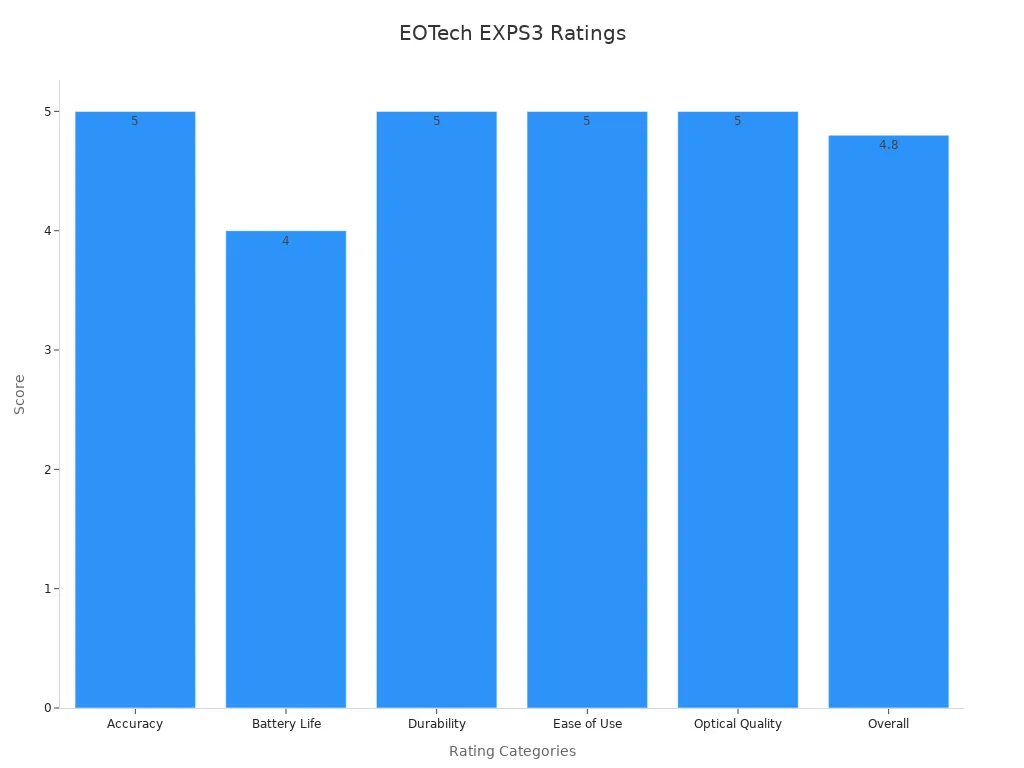
This sight excels in accuracy, durability, and optical quality. It consistently delivers 1.5 MOA groups at 100 yards, making it a reliable option for both recreational and professional shooters. The intuitive controls and quick-detach mount enhance usability, while the auto-shutdown feature conserves battery life.
| Category | Rating | Description |
|---|---|---|
| Accuracy | 5/5 | Exceptional precision with consistent 1.5 MOA groups at 100 yards. |
| Battery Life | 4/5 | Good but not great at 1,000 hours; auto-shutdown helps. |
| Durability | 5/5 | Survived extreme torture testing while maintaining zero. |
| Ease of Use | 5/5 | Intuitive controls and quick-detach mount make operation simple. |
| Optical Quality | 5/5 | Superior glass clarity and holographic reticle perfect for astigmatism. |
| Overall | 4.8/5 | Represents the pinnacle of holographic weapon sights for astigmatism. |
Best for hunting: Trijicon RMR Type 2
The Trijicon RMR Type 2 is a top-tier choice for hunting. Its robust construction and crystal-clear optics make it ideal for outdoor conditions. The sight features a 6.5 MOA dot, which appears sharp and clear for users with astigmatism. This larger dot size aids in quick target acquisition, a critical factor when hunting.
The RMR Type 2 includes an auto-brightness feature that adjusts the reticle’s intensity based on ambient light. Its top-loading battery design ensures easy replacement without removing the sight, maintaining zero. Field tests confirm its reliability, with users praising its ability to hold zero even after battery changes.
- Key Features:
- Bombproof durability for harsh environments.
- Auto-brightness for varying light conditions.
- Clear and sharp reticle for astigmatic users.
Best budget option: Holosun HS503CU
For those seeking an economical yet effective solution, the Holosun HS503CU is an excellent choice. It features a 65 MOA circle reticle, which provides a clearer sight picture for users with astigmatism. This larger reticle size enhances target acquisition and reduces visual distortions.
Despite its affordability, the HS503CU offers robust performance and durability. It includes solar power backup and a long battery life, ensuring reliability in the field. Users have noted its value for money, making it a preferred option for budget-conscious buyers.
-
Pros:
- Affordable without compromising quality.
- Solar power backup for extended use.
- Clear and large reticle for astigmatic users.
-
Cons:
- Some users report minor adjustments needed for optimal clarity.
Best holographic sight: Vortex UH-1 Gen 2
The Vortex UH-1 Gen 2 is a premium holographic sight designed to address the needs of astigmatic users. Its holographic reticle provides a sharp and distortion-free aiming point, even for those with significant visual impairments.
This sight features multiple brightness settings, allowing users to adjust the reticle’s intensity for various lighting conditions. Its rugged construction ensures durability, making it suitable for demanding environments. The UH-1 Gen 2 is a reliable choice for shooters seeking top-notch performance and optical clarity.
Best prism sight: Cyelee WOLF2
The Cyelee WOLF2 is the best prism sight for astigmatism, thanks to its innovative STIG-RS (Astigmatism Relief System). This system is specifically designed to provide a clear and sharp reticle for users with astigmatism. The larger 64 MOA circle enhances visibility, while the lower brightness settings reduce eye strain.
| Feature | Description |
|---|---|
| Reticle System | STIG-RS (Astigmatism Relief System) designed for users with astigmatism. |
| Circle Size | Larger 64 MOA circle for improved visibility and lower brightness settings. |
| User Feedback | Positive feedback regarding clarity and usability for individuals with astigmatism. |
The WOLF2 combines affordability with performance, making it a great option for those who prefer prism sights. Its compact design and durable construction further enhance its appeal.
Comparison of Features
Reticle type: Holographic vs. prism sights
Holographic and prism sights differ significantly in their reticle designs, offering unique advantages for users with astigmatism. Holographic sights, such as the EOTech EXPS3, typically feature a 1 MOA dot surrounded by a 68 MOA ring. This design enhances target acquisition speed, especially in close-quarters scenarios. Prism sights, like the Cyelee WOLF2, often use fixed reticles with 2 MOA dots or larger, catering to precision shooting or close-quarters combat (CQB).
| Reticle Type | Holographic Sights | Prism Red Dot Sights |
|---|---|---|
| Common Reticle Size | 1 MOA dot and 68 MOA ring | 2 MOA dots for precision, larger for CQB |
| Versatility | Offers additional dots for distance | Typically fixed reticle types |
| Target Acquisition | Fast due to the ring design | Varies based on dot size |
Holographic sights excel in versatility, while prism sights provide clarity for users with astigmatism.
Brightness settings and adjustability
Brightness settings play a crucial role in optimizing red dot sights for various lighting conditions. Many models, such as the Trijicon RMR Type 2, feature auto-dimming capabilities. This function adjusts the reticle’s brightness based on ambient light, ensuring visibility in both shaded and bright environments.
One fantastic option this red dot has over many others is the auto-dimming feature. When I take this from the shop to the side of the shop, the red dot will change brightness to match the environment.
Some sights, like the SRO, offer up to eight brightness levels with easy-to-use buttons, making them ideal for hunting scenarios.
Price and value for money
Price often determines the accessibility of red dot sights. Premium options, such as the EOTech EXPS3, deliver exceptional performance but come at a higher cost. Budget-friendly models, like the Holosun HS503CU, provide reliable features without compromising quality. Buyers should weigh their needs against the sight’s durability, optical clarity, and additional features to ensure the best value for their investment.
Buyer’s Guide: Choosing the Right Red Dot Sight
Holographic vs. prism sights: Which is better for astigmatism
Holographic and prism sights both offer advantages for individuals with astigmatism. Holographic sights reduce distortion by using a holographic grate that filters light, ensuring only direct rays reach the eye. This technology minimizes the starburst effect often seen with traditional red dot sights. Prism sights, on the other hand, rely on etched glass reticles, which provide a clear and fixed aiming point. This design reduces aberrations and works well for users who prefer a simpler optic.
For those seeking versatility, holographic sights excel in dynamic shooting scenarios. Prism sights, however, are ideal for precision shooting due to their sharp reticle clarity. Choosing between the two depends on the intended use and personal preference.
Green vs. red dots: Which color works best
Green dots often outperform red dots for users with astigmatism. The human eye is more sensitive to green light, which reduces glare and enhances sharpness. This makes green dots easier to see and less likely to cause eye fatigue during extended use. Additionally, green dots maintain better visibility in bright environments, where red dots may appear washed out.
Users with astigmatism frequently report that green dots provide a clearer and more precise reticle. This clarity improves comfort and performance, especially in varying lighting conditions.
Importance of testing before buying
Testing a red dot sight before purchasing is essential for finding the right fit. Astigmatism affects individuals differently, so what works for one person may not work for another. Visiting a store or range to try out different sights can help identify which reticle type and color provide the best clarity.
Testing also allows users to evaluate features like brightness settings, eye relief, and overall comfort. This hands-on approach ensures the sight meets specific needs and avoids unnecessary expenses.
Other factors to consider: Eye relief, durability, and weight
Eye relief plays a crucial role in comfort and usability. Sights with generous eye relief allow users to maintain a natural shooting position. Durability is equally important, especially for outdoor use. Optics with robust construction can withstand harsh conditions and maintain performance.
Weight is another factor to consider. Lightweight sights reduce fatigue during extended shooting sessions and improve maneuverability. Balancing these factors ensures a red dot sight enhances the shooting experience without compromising comfort or reliability.
Selecting the right red dot sight for astigmatism ensures clear vision and improved accuracy. Options like holographic and prism sights cater to different needs, while green reticles often outperform red ones due to reduced distortion and better visibility.
Tip: Testing various models helps users find the perfect fit for their unique vision requirements.
FAQ
What makes holographic sights better for astigmatism?
Holographic sights use a laser to project the reticle, reducing distortion. This technology provides a clearer aiming point for users with astigmatism.
Can prescription glasses fix red dot sight distortions?
Yes, prescription glasses designed for astigmatism can improve clarity. They correct the eye’s irregular curvature, reducing issues like starbursts or blurry dots.
Are green reticles always better than red for astigmatism?
Not always. Green reticles often appear sharper due to the eye’s sensitivity to green light. However, personal preference and lighting conditions also influence effectiveness.
Post time: Apr-30-2025