
A long-range optic is only as dependable as the mount holding it in place. When you step into 34mm scope tubes and extended-distance shooting, small fitment details—rail engagement, mount height, ring spacing, and elevation cant—can determine whether your rifle tracks consistently or loses zero under recoil. A 20 MOA Picatinny mount can be a major advantage past typical mid-range distances, but it is not automatically right for every rifle and scope combination. This guide explains how to evaluate compatibility, calculate clearance, understand elevation travel, and select a mount that supports precision instead of limiting it.
Why a 34mm 20 MOA Picatinny Scope Mount Matters
Upgrading to a 34mm optic is a significant step for long-range shooters. However, securing an optic to a rifle requires a solid foundation. The scope mount itself must attach to an existing Picatinny rail base on the rifle's receiver. A specialized 34mm Picatinny rail scope mount with a built-in 20 MOA incline bridges the gap between standard shooting and extreme long-range precision by providing a rock-solid connection to the rifle.
34mm Tube Diameter and Picatinny Rail Compatibility
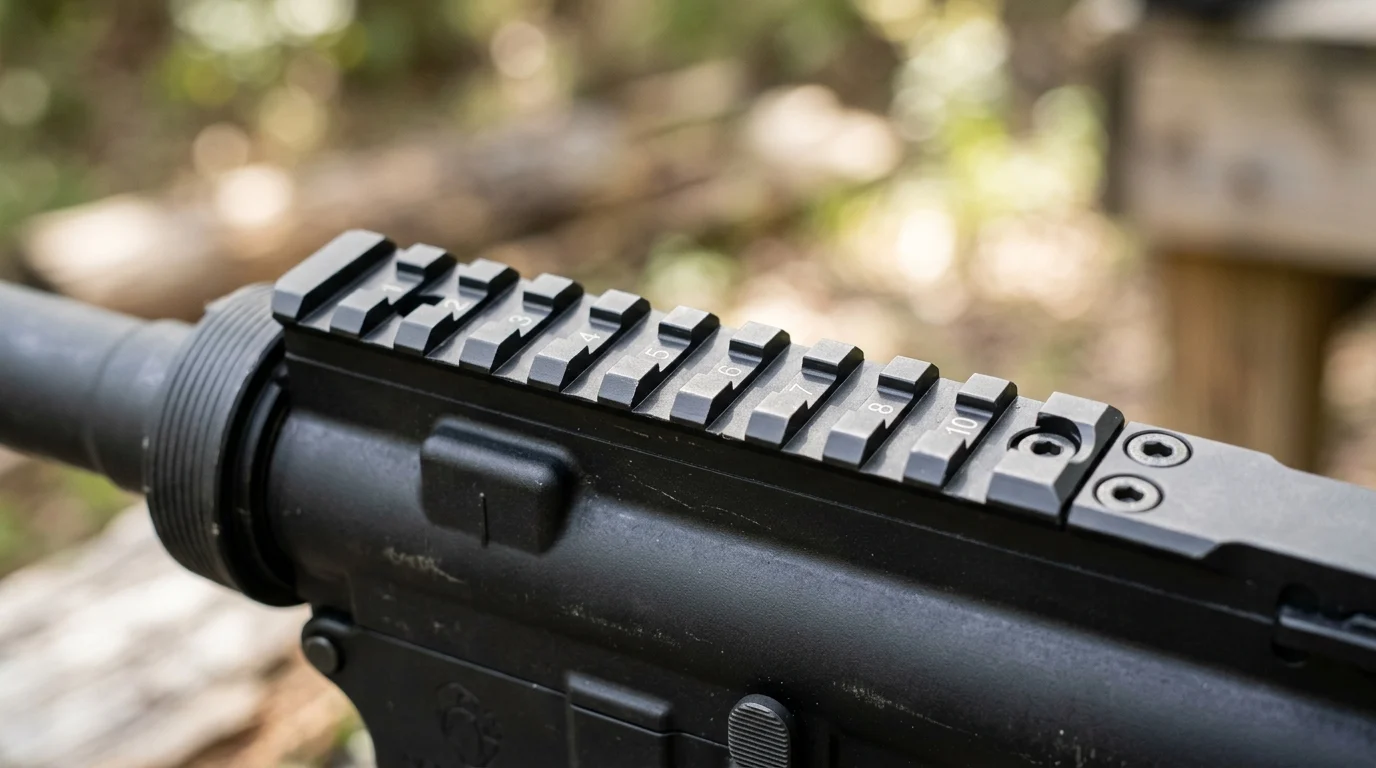
A 34mm tube offers a broader internal adjustment range compared to traditional 30mm designs. This larger diameter demands a mounting solution capable of supporting the added weight. Standard MIL-STD-1913 specifications dictate that a true Picatinny rail scope base features recoil slots that are nominally 0.206 inches wide, subject to specific manufacturing tolerances. A 34mm mount utilizes machined crossbolts or integrated recoil lugs that fit these slots. Proper recoil-lug engagement is critical; if the fit is loose, the optic can slide under recoil, turning a precision instrument into an unpredictable liability.
When a 20 MOA Mount Improves Long-Range Adjustment
Pushing a bullet past 800 yards requires significant compensation for gravity. With a flat mount, a rifle scope will often run out of internal elevation before reaching the 1,000-yard mark. A 20 MOA mount angles the objective lens downward relative to the barrel. This geometry shifts the usable elevation turret range upward, effectively reclaiming 20 MOA of dial adjustment. A key caveat: before assuming a cant is necessary, shooters should calculate their expected bullet drop and check the scope's total elevation travel. Because the 20 MOA cant shifts the elevation range, the scope must have enough internal travel to accommodate the downward angle. Otherwise, the shooter may be unable to re-zero the rifle at a close baseline distance (such as 100 yards) without bottoming out the turret.
Key Specs to Compare Before Buying
Shopping for the right mount involves more than just matching the 34mm diameter. Shooters must evaluate physical dimensions and material specifications to ensure the mount integrates flawlessly with the rifle's action.
Mount Height, Ring Spacing, and Eye Relief
The mount must be tall enough to allow a large objective lens to clear the rifle barrel. To find the exact clearance needed, use a clear formula: objective bell outer radius (half the outer diameter) plus the required barrel contour clearance, minus the height of the Picatinny base to the rail. This ensures the centerline height of the mount accommodates the optic without touching the barrel. Ring spacing is equally vital; use a straightedge or calipers to measure the scope's central turret housing to ensure the rings will straddle it without pinching the magnification ring or objective bell. Cantilever-style mounts are often required on AR-pattern rifles to push the optic forward. To measure for eye relief, shoulder the rifle in your natural shooting position and measure the distance from your eye to the optic's ocular lens (typically 3 to 4 inches) to prevent the scope from striking your face during recoil.
Material, Weight, Torque Specs, and Recoil Rating
The materials and torque limits of a scope mount dictate its reliability. Most modern mounts are machined from either 6061-T6 or 7075-T6 aluminum, striking a balance between ruggedness and weight. Over-tightening can damage the optic tube, while under-tightening causes slipping. Because torque specifications vary widely by manufacturer, shooters must always follow the manufacturer’s exact torque guidelines for both ring screws and base crossbolts rather than relying on generic values.
Additionally, while material tensile strength is a factor, a mount's true recoil limit depends heavily on its overall design, clamping mechanism, and how well the recoil lugs engage the Picatinny rail slots. The table below provides general material properties, but these are broad estimates—recoil limits should always be verified with the mount's manufacturer.
| Material | Approx. Weight (oz) | Tensile Strength (MPa) | General Suitability |
|---|---|---|---|
| 6061-T6 Aluminum | 6 – 8 | 310 | Standard Centerfire |
| 7075-T6 Aluminum | 7 – 9 | 572 | Magnum Centerfire |
| Steel | 12 – 16 | 800+ | Extreme Recoil / Heavy Duty |
How to Choose and Validate the Right Mount
Validating the fit ensures the rifle remains zeroed through years of use. Use this practical checklist to finalize your selection:
- Confirm Core Specs: Verify the 34mm ring diameter matches your scope tube exactly, and check your scope's total elevation travel to ensure compatibility with a 20 MOA cant.
- One-Piece vs. Two-Piece Rings: One-piece mounts offer inherent alignment and rigidity, while two-piece rings provide more flexibility for bolt-action breeches.
- Fixed vs. Quick-Detach (QD): Fixed mounts are ideal for dedicated precision rifles. While QD levers allow for rapid optic swapping, they may not return to zero as reliably as fixed mounts, which is critical for extreme long-range precision.
- Clearance: Verify that the mount provides adequate clearance for the receiver, bolt-handle operation, and objective lens.
- Recoil-Lug Engagement: Ensure the mount features integrated recoil lugs that securely interface with the Picatinny slots.
- Torque Application: Always use a calibrated torque wrench, follow the manufacturer's recommended torque sequence, and apply threadlocker only if specified by the manufacturer.
Fit-Check Steps to Prevent Rail or Scope Mismatch
Proper installation requires a meticulous fit-check before any threadlocker is applied. When placing the mount onto the Picatinny rail base, push the entire assembly forward toward the muzzle before tightening the base nuts. This seats the crossbolts firmly against the front face of the recoil slots, neutralizing the rearward force of the rifle's recoil. Ensure the mount's locking levers or nuts do not interfere with brass ejection paths, other mounting accessories, or the operation of a rifle bipod.
Budget vs Duty-Grade Mount Decision Rules
The market offers a wide array of options, generally split between budget-friendly hardware and duty-grade gear.
Key Takeaways
- Choose a true 34mm mount for a 34mm scope tube, because 30mm rings will not provide proper clamping or alignment.
- Use a 20 MOA mount when your ballistic drop and scope elevation travel show that a flat mount may run out of adjustment at long range.
- Confirm that the mount’s recoil lugs or crossbolts properly engage Picatinny slots, which are nominally 0.206 inches wide under MIL-STD-1913.
- Calculate mount height from the objective bell radius, barrel clearance, and rail height before buying to avoid contact with the barrel.
- Measure ring spacing around the turret housing and magnification area so the rings do not pinch or interfere with scope controls.
- Consider a cantilever-style mount on AR-pattern rifles when you need extra forward positioning for correct eye relief.
Frequently Asked Questions
Why choose a 34mm scope mount instead of a 30mm mount?
A 34mm tube typically offers more internal adjustment range and is common on long-range optics, but it requires a matching 34mm mount with enough strength and height to support the larger scope.
What does 20 MOA mean on a Picatinny scope mount?
A 20 MOA mount is angled to give the scope more usable upward elevation adjustment, helping shooters dial for longer distances such as 800 to 1,000 yards and beyond.
Will a 20 MOA mount work for a 100-yard zero?
Usually, but not always. Check your scope’s total elevation travel first, because the angled mount can reduce available downward adjustment and may prevent a close-range zero on some setups.
How do I know if a mount fits a true Picatinny rail?
Look for compatibility with MIL-STD-1913 Picatinny dimensions, including recoil slots around 0.206 inches wide, and ensure the mount’s crossbolts or recoil lugs engage securely.
How high should a 34mm scope mount be?
The mount must let the objective bell clear the barrel. Compare the objective bell outer radius, desired barrel clearance, and Picatinny rail height to determine the needed centerline height.
Post time: Jul-10-2026