
Using red dot sights with night vision feels like stepping into a sci-fi movie. This combination transforms low-light challenges into opportunities for precision and control. Compatibility plays a vital role here. Properly mounting the gear ensures seamless operation. Accessories like night vision monoculars enhance mobility and preserve natural vision, boosting accuracy and situational awareness.
Key Takeaways
- Pick red dot sights with night vision modes to avoid reticle glare and see clearly in the dark.
- Set the red dot brightness to match your night vision gear for better use and clear sight.
- Choose a mount height, around 3.5 to 4.25 inches, for comfort and proper alignment with night vision tools.
Red Dot Sights and Night Vision Compatibility
Key features of red dot sights
Red dot sights have revolutionized aiming technology. These sights project a small illuminated dot onto a lens, allowing users to aim quickly and accurately. Unlike traditional scopes, they eliminate the need for perfect eye alignment. This makes them a favorite among tactical professionals and hobbyists alike.
Key performance metrics define their reliability. For instance, vertical and horizontal deviation measurements ensure precision. Controlled tests often evaluate metrics like the average deviation in inches or minutes of angle (MOA). These tests confirm that red dot sights maintain accuracy even under challenging conditions.
| Metric | Description |
|---|---|
| Average of Vertical Deviations (VD A MOA) | Measures the average vertical deviation in minutes of angle. |
| Standard Deviation of Horizontal Deviations (HD SD IN) | Quantifies the consistency of horizontal deviations in inches. |
| Average of Horizontal and Vertical Deviations (AVG A MOA) | Measures the combined average deviation in minutes of angle. |
Durability also sets red dot sights apart. Many models feature rugged designs with lens coatings that resist scratches and glare. Adjustable brightness settings further enhance their versatility, making them suitable for both daylight and low-light environments.
How night vision devices interact with red dot sights
Night vision devices amplify ambient light, allowing users to see in near-total darkness. When paired with a red dot sight, the two technologies create a seamless aiming experience. However, this pairing requires careful adjustment to avoid issues like reticle washout.
Brightness settings play a critical role here. Red dot sights with night vision (NV) settings prevent the reticle from overpowering the night vision image. Adjustable brightness levels ensure the dot remains visible without creating glare. Additionally, mount height affects usability. Extra-tall mounts align the red dot sight with night vision goggles, improving aiming posture and comfort.
- Tips for optimal interaction:
- Use a red dot sight with NV settings.
- Adjust brightness to match the night vision device.
- Ensure the mount height aligns both devices for a clear field of view.
Why compatibility is crucial for tactical use
In tactical scenarios, every second counts. Compatibility between red dot sights and night vision devices ensures smooth operation in high-pressure situations. Military applications, for example, demand adaptability to varying light conditions. Red dot sights excel in this area, functioning effectively in both bright and low-light environments.
Case studies highlight the benefits of this compatibility. The XTRAIM© Weapon Sight combines red dot and thermal imaging technologies, enabling soldiers to engage targets day or night. Its lightweight design enhances mobility, while its large eyepiece improves situational awareness. This seamless integration significantly boosts tactical performance, allowing for rapid target acquisition and sustained firepower.
Pro Tip: Always test your gear in controlled environments before heading into the field. This ensures all components work together flawlessly.
Technical Setup for Red Dot Sights with Night Vision
Selecting the right mount height
Mount height plays a critical role in ensuring a smooth experience when combining red dot sights with night vision devices. A higher mount aligns the red dot sight with the night vision device, reducing neck strain and improving comfort during extended use. Ergonomic studies suggest that taller mounts provide better precision and situational awareness.
| Mount Type | Height Over Bore (inches) |
|---|---|
| Aimpoint T2 + KAC Skyscraper | 3.53 |
| Aimpoint CompM5 + Unity FAST | 3.66 |
| Aimpoint PRO + Carry Handle | 4.0 |
| Trijicon RMR over ACOG | 4.25 |
| Trijicon RMR over Geissele Mount | 4.25 |
| Aimpoint ACRO over Elcan | 4.25 |
| ACRO height over HK416 upper | 4.625 |
This table highlights popular mounting solutions and their respective heights. For example, the Aimpoint CompM5 paired with a Unity FAST mount offers a height of 3.66 inches, striking a balance between comfort and functionality.

Adjusting reticle brightness for night vision
Reticle brightness can make or break the integration of red dot sights with night vision. A reticle that’s too bright will overpower the night vision device, creating a distracting glare. On the other hand, a dim reticle may become invisible in low-light conditions.
Devices with night vision (NV) settings allow users to fine-tune brightness levels. For instance, tactical professionals often start with the lowest brightness setting and gradually increase it until the reticle becomes visible without washing out the night vision image. This method ensures a clear and balanced view.
Pro Tip: Always test brightness settings in a dark environment before heading into the field. This practice prevents surprises during critical moments.
Aligning the red dot with the night vision device
Proper alignment ensures that the red dot appears clearly through the night vision device. Misalignment can lead to frustration and missed targets. To achieve perfect alignment, users should first mount the red dot sight at the correct height. Then, they should adjust the position of the night vision device to match the sight’s optical axis.
A practical example involves pairing an Aimpoint PRO with a carry handle mount. This setup provides a height of 4 inches, aligning the red dot perfectly with most night vision goggles. Regular practice with this configuration helps users develop muscle memory, making target acquisition faster and more intuitive.
Practical Tips for Using Red Dot Sights with Night Vision
Choosing compatible gear and brands
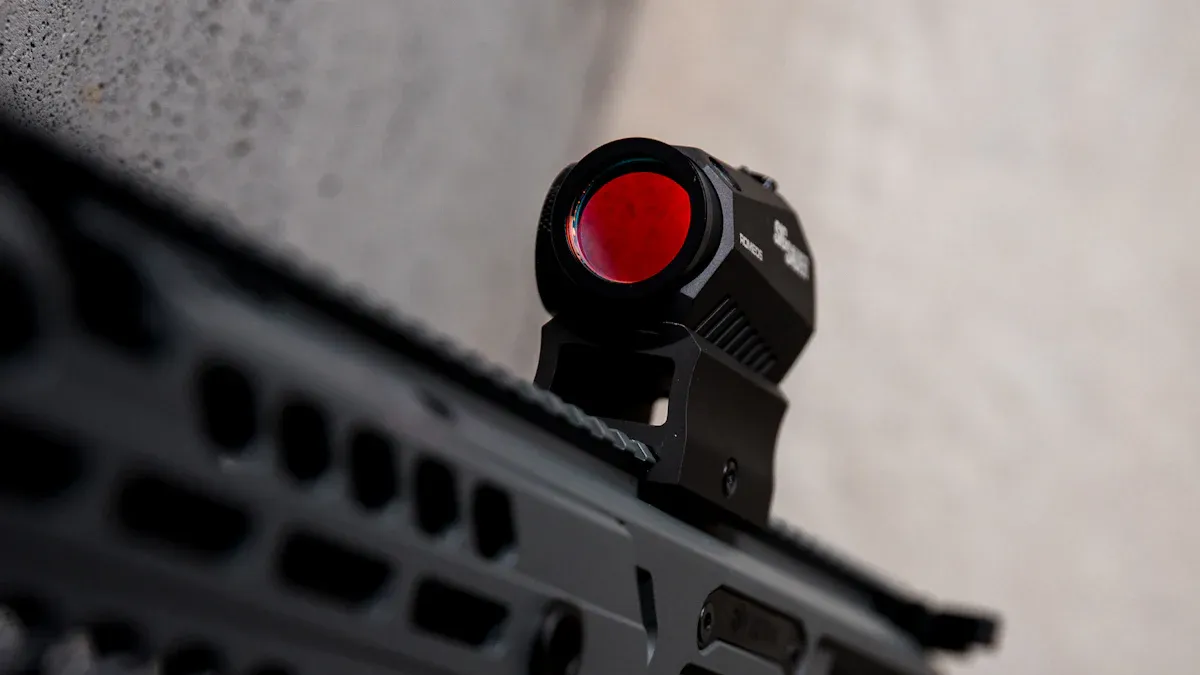
Selecting the right gear can make or break your night vision setup. Not all red dot sights work seamlessly with night vision devices, so compatibility should be a top priority. Some EOTech models, for instance, are specifically designed for night vision use, offering features like adjustable brightness and NV settings. These models may cost more, but their performance justifies the investment.
When choosing mounts, users should consider their shooting style and equipment. Standard picatinny mounts provide a reliable option, while quick-detach picatinny riser mounts offer added convenience for those who frequently switch setups. Reticle types also play a role. A 1 MOA dot inside a 65 MOA ring, for example, caters to shooters who need both precision and rapid target acquisition.
Pro Tip: Pairing gear from the same brand often ensures better compatibility and reduces the risk of technical hiccups.
Practicing alignment and target acquisition
Practice is the secret sauce for mastering red dot sights with night vision. Even the best gear won’t perform well without proper alignment and consistent training. Users should start by aligning the red dot with the night vision device’s optical axis. This ensures the reticle appears clearly through the night vision lens.
Training exercises can validate alignment and improve target acquisition. For example, tactical lights and lasers enhance visibility in low-light conditions, while high-intensity beams allow for swift identification of threats. The table below highlights key performance metrics from training scenarios:
| Metric | Description |
|---|---|
| Tactical Lights and Lasers | Enhance target acquisition in low-light conditions. |
| Superior Lumen Output | Extends visual range and identification capabilities in low-light scenarios. |
| Rapid Target Acquisition | High-intensity beams allow for swift and accurate identification of threats. |
| Enhanced Accuracy | Precision-engineered lasers provide pinpoint aiming, crucial for accuracy in low visibility. |
| Optimal Visibility | Improves visual range, ensuring observation and reaction to movements in low light conditions. |
Regular practice with these tools builds muscle memory, making target acquisition faster and more intuitive.
Preventing reticle washout and managing field of view
Reticle washout occurs when the brightness of the red dot overwhelms the night vision image, rendering the reticle invisible. To prevent this, users should opt for red dot sights with adjustable brightness settings. Starting with the lowest brightness and gradually increasing it ensures the reticle remains visible without overpowering the night vision device.
Environmental testing has shown that different reticle types perform variably under specific conditions. The table below illustrates how dual-illumination and adjustable reticles fare in various scenarios:
| Testing Condition | Reticle Type | Effectiveness |
|---|---|---|
| Dark Room | Dual Illum | Dim reticle may cause washout when illuminated by external light |
| Bright Daylight | Dual Illum | Works effectively with ambient light |
| Urban Environment | Dual Illum | Can blend in with backgrounds, leading to potential washout |
| Battery Powered | Adjustable | Allows manual brightness adjustment to prevent washout |
Managing the field of view is equally important. A higher mount height can improve situational awareness by aligning the red dot with the night vision device, reducing neck strain during extended use.
Maintaining equipment for reliability in harsh conditions
Night vision setups often face harsh environments, from rain-soaked forests to dusty deserts. Proper maintenance ensures reliability and extends the lifespan of the equipment. Users should clean lenses regularly with a microfiber cloth to prevent scratches and maintain clarity. Waterproof and shockproof models, like those from Aimpoint and Trijicon, offer added durability for extreme conditions.
Battery management is another critical aspect. Always carry spare batteries, as night vision devices and red dot sights rely heavily on power. Extreme temperatures can drain batteries faster, so storing them in insulated cases helps maintain their charge.
Pro Tip: Perform routine checks on all components before heading into the field. This includes testing brightness settings, inspecting mounts, and ensuring batteries are fully charged.
Mastering red dot sights with night vision transforms low-light challenges into opportunities. Compatibility ensures seamless operation, while proper setup boosts accuracy. A soldier in a training drill, for instance, improved target acquisition by aligning his gear perfectly. Practice these tips, and watch your tactical performance shine like a beacon in the dark!
Post time: Apr-30-2025