
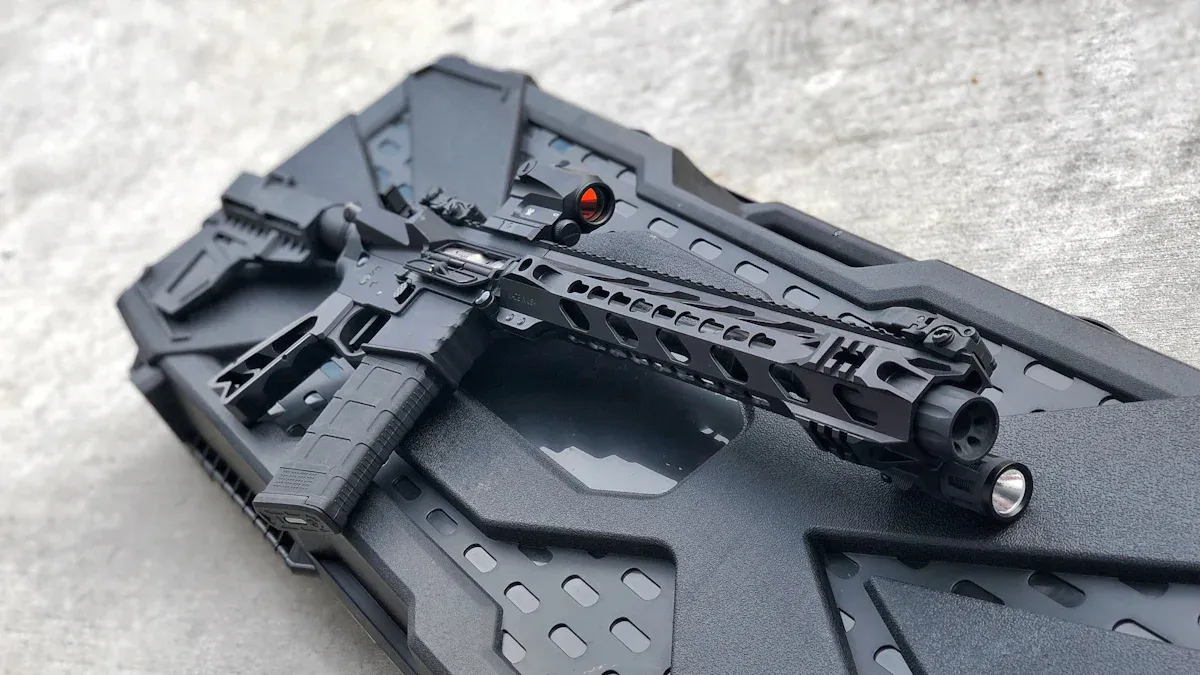
Firearm enthusiasts often encounter Picatinny Rail and Weaver Rail systems. They look similar, but distinct differences exist. Understanding these distinctions is crucial for securely attaching accessories like a rifle scope or a Rifle bipod. A proper Mount ensures stability on the firearm’s accessory Rail.
Key Takeaways
- Picatinny rails have wider slots and consistent spacing. Weaver rails have narrower slots and inconsistent spacing.
- Most Weaver accessories fit on Picatinny rails. Picatinny accessories usually do not fit on Weaver rails.
- Picatinny rails offer more versatility and standardization. Weaver rails are good for older firearms and lighter accessories.
Picatinny Rail vs. Weaver Rail: Core Distinctions
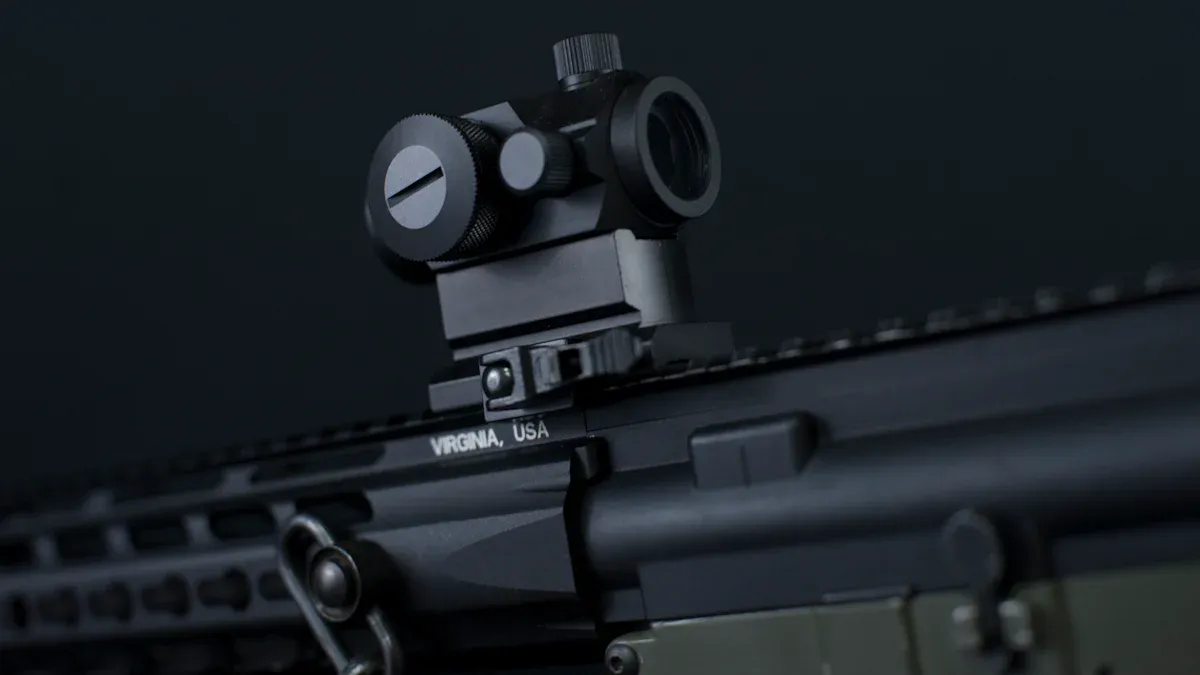
Imagine two siblings who look quite similar, but one is a stickler for exact measurements and the other is a bit more relaxed. That comparison helps explain the Picatinny Rail and Weaver Rail story. These differences, though subtle, significantly impact how accessories attach and perform.
Slot Width and Spacing
The most noticeable difference between these two rail systems lies in their slot dimensions. A Picatinny Rail boasts a precise locking slot width of 0.206 inches (5.23 mm). This exact measurement ensures a snug fit for accessories. Weaver rails, on the other hand, feature slots that are 0.180 inches (4.5 mm) wide. This makes Weaver slots narrower than their Picatinny counterparts.
Beyond just width, the spacing of these slots also tells a different tale. Picatinny rails maintain a consistent distance between their cross slots. They are 0.206 inches wide and spaced exactly 0.394 inches apart from center to center. This standardization is a hallmark of the Picatinny design. Weaver rails lack this consistent pattern. Manufacturers often determine the spacing between Weaver slots, leading to variations. This inconsistency can sometimes make mounting accessories a bit trickier.
Recoil Lugs and Cross Slots
Recoil lugs are like tiny anchors. They prevent accessories from sliding forward or backward under the force of recoil. These lugs ensure your scope or other gear stays exactly where you put it. They help the action return to its original position after each shot. Without them, accessories might creep along the rail, losing their zero or position.
The design of the cross slots themselves also plays a big role in how securely accessories attach. Picatinny rails feature square-bottomed slots. This design, combined with their standardized dimensions, provides a very secure and consistent fit for accessories. This is especially true for heavier items like large scopes. Weaver rails, however, have rounded slots and a narrower recoil groove. While some Weaver accessories can fit on a Picatinny Rail, the reverse is often not possible. The Picatinny Rail’s precise dimensions and square slots offer superior accessory retention and positioning.
Rail Profile and Depth
The overall shape and depth of the rail also contribute to its functionality. Picatinny rails often have a more pronounced angular section. This design provides a robust platform for mounting various accessories. The consistent depth and profile across the entire rail ensure accessories sit level and secure. Weaver rails, originating from a modified low, wide dovetail design, can sometimes vary more in their overall profile and depth depending on the manufacturer. This variability can occasionally lead to slight differences in how accessories sit or align. The standardized profile of the Picatinny Rail offers a more predictable and stable mounting surface.
Historical Context of Rail Systems
The Weaver Rail: Early Mounting Solutions
Imagine a time before universal standards, when innovators simply built what worked. William Ralph Weaver designed the Weaver rail system. He created it primarily for mounting rifle scopes and other hardware. A key design goal was ensuring a precise fit between the rail and its accessories. This guaranteed functionality. The system also provided clear and easy access to the ejection port. This was crucial for bolt-action rifles common at the time. It helped with individual loading and fixing malfunctions. The initial two-piece design kept the bolt opening clear. This allowed easy cartridge insertion and the use of stripper clips.
Weaver introduced the first mount, the V Mount, with his Model 3-30 scope. The S- and M-series mounts quickly replaced the V Mount. In 1947, Weaver introduced the U and B mounts. The Detachable Split-Ring Side Mount came out in 1950. The Split Ring Tip-Off mount became Weaver’s flagship mount. It used a ‘rail’ base and appeared in 1953.
The Picatinny Rail: MIL-STD-1913 Standard
The military needed a more standardized mounting system. The United States Army tasked Picatinny Arsenal with this development. Picatinny Arsenal, a U.S. Army research and manufacturing facility, played a key role. A team there, led by mechanical designer Gary Houtsma, developed the rail. This design became the MIL-STD-1913 standard. Various military branches officially adopted it in 1995. This standard defines the dimensions for the Accessory Mounting Rail for Small Arms Weapons. People commonly know it as the Picatinny Rail. It has been the standard since its adoption.
Understanding Picatinny Rail Compatibility
Navigating the world of firearm accessories often feels like solving a puzzle. One of the biggest pieces involves understanding how different rail systems play together. Compatibility between Picatinny and Weaver rails is a common point of confusion. Let’s clear up the mystery.
Picatinny Accessories on Weaver Rails
Imagine trying to fit a square peg into a slightly smaller, rounder hole. That is often the situation when someone tries to mount a Picatinny accessory onto a Weaver rail. The differences in design create real headaches. Most Picatinny-compatible devices simply will not fit on Weaver rails. The slot width and spacing are the main culprits. A Picatinny Rail boasts a precise 0.206-inch slot width. Weaver rails, however, feature narrower 0.180-inch slots. This size difference alone prevents many Picatinny accessories from seating properly.
Consider this comparison:
| Feature | Weaver Rail | Picatinny Rail |
|---|---|---|
| Slot Width | .180” | .206” |
| Groove Spacing | Not necessarily consistent | .394” (center-to-center) |
| Compatibility with Picatinny Accessories | Will not fit | N/A |
The wider and more standardized nature of the Picatinny rail makes it a more universal platform for its own accessories. While some accessories claim to fit both, most devices designed specifically for the 1913 standard will not work on a Weaver rail. The consistent spacing of Picatinny slots, 0.394 inches from center to center, also plays a role. Weaver rails lack this consistent spacing. This means even if a Picatinny accessory somehow squeezed into a Weaver slot, it might not align with subsequent slots for secure mounting.
Weaver Accessories on Picatinny Rails
Now, let’s flip the script. What happens when you try to put a Weaver accessory on a Picatinny Rail? Good news! This usually works out much better. A general rule of thumb states that Weaver accessories are compatible with both NATO and Picatinny rails. Think of it like this: the Picatinny’s wider slots and standardized dimensions are more forgiving. A smaller Weaver-style lug can often drop into the larger Picatinny slot. The Picatinny’s robust design simply offers more room. This makes it a more accommodating host for older Weaver-style mounts. However, remember that the reverse is not always true. Picatinny and NATO accessories may not fit onto a Weaver base due to those pesky differences in slot width and spacing.
The “Universal” Mount Misconception
The word “universal” often sounds fantastic, promising effortless compatibility. However, in the world of firearm accessories, “universal” can sometimes mean “compromise.” Many products claim universal fit, but users often discover limitations. For example, holster manufacturers frequently use proprietary attachment systems. This locks users into their specific brand. It creates compatibility issues when someone tries to mix and match holsters and attachments from different brands. This forces consumers to buy entirely new holster and attachment systems when upgrading or switching firearms. This happens despite the existence of “universal mounting adapters” like the Dara Holsters Bridge™ Adapter, designed to bridge these incompatible systems.
Even outside firearms, “universal” mounts can present challenges. Consider gym equipment racks:
- Offset Hole Racks: Attachments designed for inline holes, such as spotter arms, may not align correctly with offset hole patterns. This prevents proper fit.
- Import/Metric Racks: Often advertised as 3×3 inch tubing with 1-inch holes, these racks frequently use metric measurements (e.g., 75mm tubing, 25mm holes). These are slightly smaller than advertised. This can cause tighter tolerance attachments like utility loops or storage hooks to be incompatible.
- Width Compatibility: Rack widths vary between brands (e.g., 47-inch vs. 49-inch). Some attachments are designed for specific widths and will not fit racks of a different size.
- Location of First Hole: Different brands start their first hole at varying heights from the ground. Even with consistent 2-inch hole spacing, this initial height difference means attachments that touch the ground and connect to an upright will not align across brands unless they have slotted holes.
- Rack Mounted Machines: Similar to other attachments, rack-mounted machines like cable columns or lat pulldowns may not connect to different brand uprights without slotted crossmembers to account for hole alignment discrepancies.
Universal mounting systems for headache rack toolboxes, while designed for flexibility with features like telescoping rails and adjustable bracket spacing, are not always the perfect tool for every job. They are akin to adjustable wrenches. They handle a wide variety of situations but do not always provide an ideal fit for every specific truck model. This is true despite their evolution from one-size-fits-all solutions. So, while a “universal” mount might get the job done, it might not offer the rock-solid, perfect fit of a purpose-built solution. Always check the fine print and user reviews before trusting a “universal” claim.
Practical Applications of Each Rail System
Weaver Rail: Ideal Use Cases
Weaver rails are like a trusted old friend for many hunters and shooters. They offer a very low-profile mount. Two-piece configurations are especially good. This design gives full access to the ejection port area of bolt-action rifles. No need for a special cut there! This allows for an extremely low profile. Some bases are super thin, like 0.150 inches. This makes them great for rifles with iron sights or blind magazines. They also help reduce weight on mountain rifles. Weaver rails are also simpler and cheaper to make. Their non-standardized slot spacing means less precision is needed. This makes production cost-effective. It is perfect for older rifles or basic needs. They work well for lightweight hunting optics and classic hunting rifles. Low recoil rifles also benefit. Lighter optics, red dot sights, and laser pointers are good fits.
Picatinny Rail: Versatility and Standardization
The Picatinny Rail is the versatile champion of firearm accessories. It has been around for a long time. This means a huge selection of accessories exists for it. It acts as a strong platform for many items. You can attach scopes, red dot sights, lasers, and foregrips. Its standardized design guarantees compatibility. Almost all Picatinny-compatible accessories will fit. This rail brought order to the accessory market. It helped streamline manufacturing for tactical gear. This standardization saved a lot of labor and machining time. Shooters could now use one mounting system for many firearms. The 1913 rail is everywhere. It attaches bipods, lasers, and flashlights to all kinds of firearms.
Choosing the Right Picatinny Rail for Your Setup
Choosing the right Picatinny Rail for your firearm needs careful thought. First, think about your firearm and what accessories you want. Do you need a long rail for a big scope? Or just a short section for a red dot sight? Consider the rail type too. There are standard Picatinny, KeyMod, and M-LOK options. Each has different features. Check the length and how many slots it has. Make sure it can hold all your current and future gear. Material matters too. Aluminum is light, but steel is super strong for heavy optics. Ensure the rail is easy to install. It must also work with your chosen mounting hardware. Finally, set a budget. Find a rail that fits your needs without breaking the bank.
Mounting Accessories: Best Practices
Secure Attachment and Stability
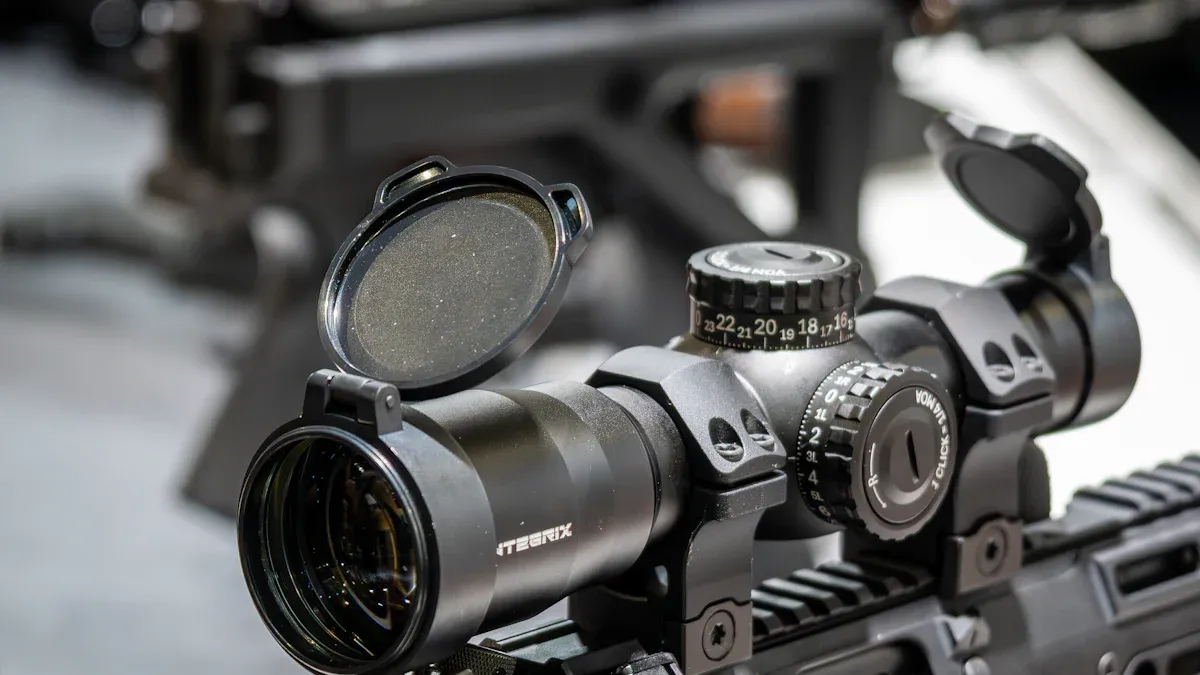
Properly mounting accessories is not just about looks. It ensures your gear performs its best. Imagine your scope shifting after every shot. That would be a nightmare! Secure attachment prevents such mishaps. It keeps your zero true. It also protects your expensive optics and other gear. Under-torquing mounts can cause big problems. The base might shift with side impacts. Rough handling also makes it move. This means your aim will be off.
Torque Specifications for Picatinny Rail Mounts
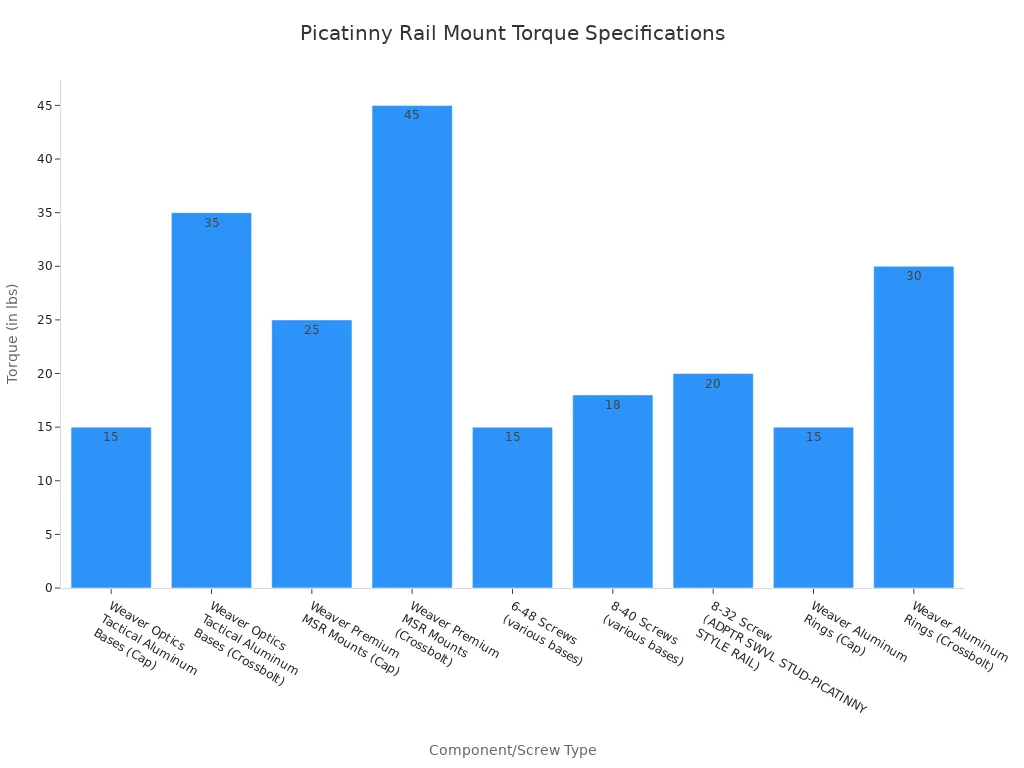
Getting the torque right is super important. It is like tightening a bolt on a car wheel. Too loose, and it falls off. Too tight, and you strip the threads. The same goes for your rail mounts. Scope manufacturers give specific torque recommendations. Older scopes might suggest 20-25 inch-pounds. Newer, lighter scopes often need less, sometimes as low as 15 inch-pounds. Always check your scope manufacturer’s guide. Never use thread locker on ring screws.
Here is a quick guide for some common components:
| Component/Screw Type | Torque (in lbs) |
|---|---|
| Weaver Optics Tactical Aluminum Bases (Cap) | 15 |
| Weaver Optics Tactical Aluminum Bases (Crossbolt) | 35 |
| Weaver Premium MSR Mounts (Cap) | 25 |
| Weaver Premium MSR Mounts (Crossbolt) | 45 |
| 6-48 Screws (various bases) | 15 |
| 8-40 Screws (various bases) | 18 |
| 8-32 Screw (ADPTR SWVL STUD-PICATINNY STYLE RAIL) | 20 |
| Weaver Aluminum Rings (Cap) | 15 |
| Weaver Aluminum Rings (Crossbolt) | 30 |
Over-torquing is also a big no-no. You risk shearing off small screws like 6-48 or 8-40. They can snap right inside your firearm. That is a headache nobody wants!
Adapters and Converters for Rail Systems
Sometimes you have a Weaver accessory but a Picatinny Rail. Good news! Most Weaver accessories fit onto this rail system. Just make sure the accessory’s crossbolt sits in the rearmost recoil groove. This stops it from moving when the gun kicks. You can also find special adapters. Weaver to Picatinny rail adapters let modern optics fit older Weaver rails. Picatinny to Weaver adapters help with backward compatibility.
However, adapters have downsides. They can add complexity. They might even introduce signal loss or latency. They also cost more. Sometimes, they generate electromagnetic interference. It is often best to use a direct mount if possible.
Picatinny rails offer standardization and versatility, while Weaver rails provide simpler, often older, mounting solutions. Making informed decisions ensures your accessories stay secure and perform flawlessly. The future of rail systems looks exciting. Expect lighter alloys, quick-detach mechanisms, and smart optics integration.
FAQ
Can Picatinny accessories fit on a Weaver rail?
No, most Picatinny accessories will not fit on a Weaver rail. Picatinny slots are wider and have consistent spacing. Weaver rails have narrower slots, making them incompatible with many modern Picatinny mounts.
Why do Picatinny rails have consistent slot spacing?
Consistent slot spacing on Picatinny rails ensures standardization. This allows accessories to mount securely and repeatedly. It provides a stable platform for various optics and tactical gear.
Are Weaver rails still useful today?
Yes, Weaver rails remain useful. They offer a low-profile mounting solution for older firearms. Many hunters appreciate their simplicity and lighter weight for certain applications.
Post time: Nov-14-2025