
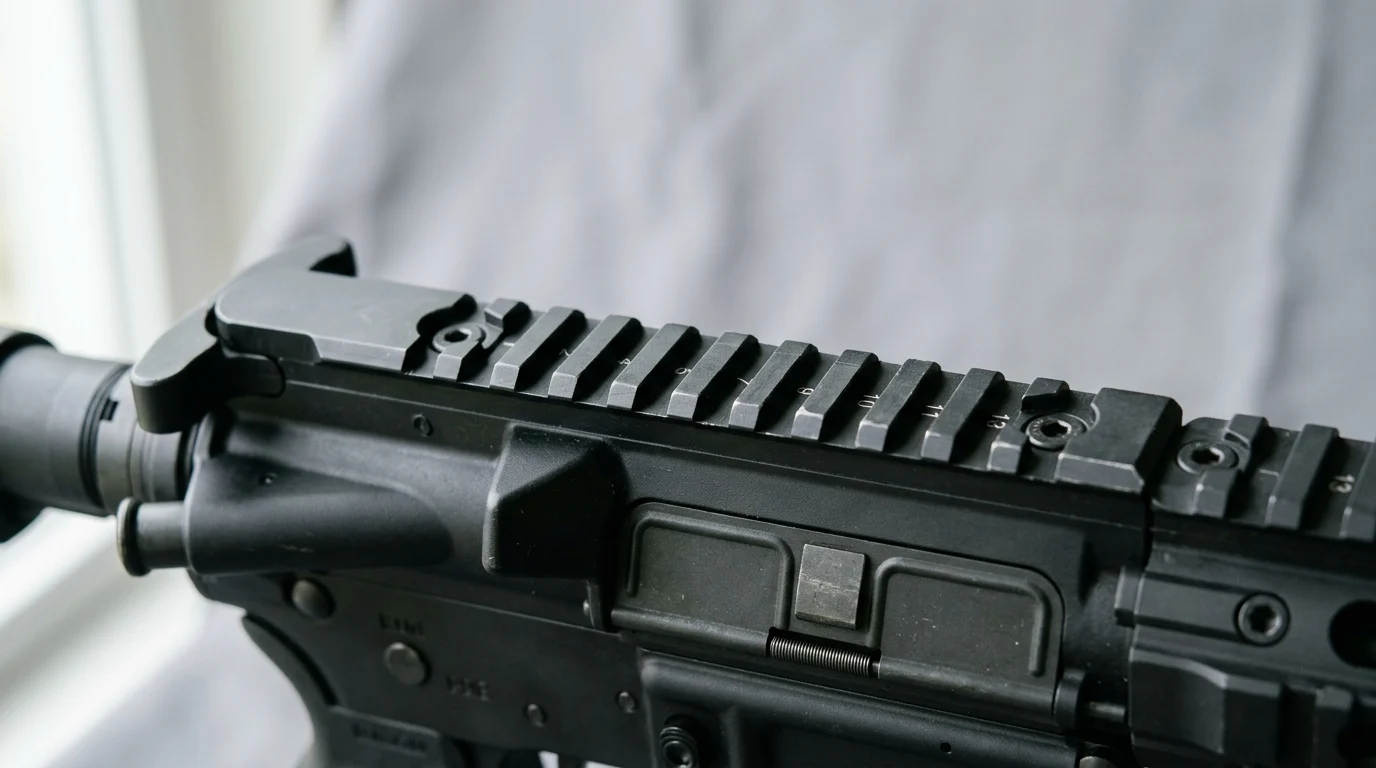
A scope can only perform as well as the base holding it in place. For new shooters, the Picatinny rail is one of the most important parts of a reliable rifle setup because it gives optics and accessories a standardized, repeatable mounting surface. Formalized as MIL-STD-1913, its slot dimensions and spacing help reduce movement under recoil and make it easier to position a scope correctly. This guide explains what the rail does, how it differs from Weaver systems, and the practical steps that help you mount a scope securely. With the right preparation, tools, and safety checks, a simple rail system can support better accuracy and fewer range-day frustrations.
Why Picatinny Rail Scope Mounting Matters
Mounting a new rifle scope onto a firearm without a solid foundation compromises accuracy. The Picatinny rail provides a highly reliable accessory platform. Formalized in 1995 as MIL-STD-1913 at the Picatinny Arsenal, this standardized design transformed the shooting world into a highly modular system. Before this rail became the global norm, shooters often had to drill custom holes for new gear.
What a Picatinny Rail Does
A quality scope base or rail system keeps optics secure during firing. The advantage of the Picatinny design lies in its standardized cross-slots. By design, slots measure 0.206 inches (5.23 mm) wide, with a center-to-center spacing of 0.394 inches (10.01 mm), subject to strict manufacturing tolerances. This uniformity means a shooter can detach an optic, travel, and remount it into the same slots with minimal shift. While this provides a highly repeatable zero, shooters must always re-confirm their zero at the range. The mount's recoil lug sits squarely inside the slot, absorbing kinetic energy without letting the optic slide.
Picatinny vs Weaver Rails
The classic Weaver system paved the way for modern mounting solutions, but it lacks the standardized consistency of the MIL-STD-1913 rail. Weaver slots are narrower (usually around 0.180 inches) and their spacing is rarely uniform. Because of the size difference, many Weaver rings will physically fit into a Picatinny rail. However, their smaller recoil lugs may not engage adequately, which can be unsafe under heavy recoil. For this reason, Picatinny-specific mounts are the preferred and safer choice for high-recoil setups. Picatinny accessories, meanwhile, will not fit into narrower Weaver slots. Here is a quick breakdown to keep the specifications straight:
| Feature | Picatinny (MIL-STD-1913) | Weaver |
|---|---|---|
| Slot Width | 0.206 inches | 0.180 inches |
| Slot Spacing | 0.394 inches (uniform) | Variable |
| Compatibility | Accepts Weaver and Picatinny | Accepts only Weaver |
| Ideal For | Heavy recoil, tactical setups | Classic hunting rifles |
How to Mount a Scope on a Picatinny Rail
Bolting down an optic might seem as simple as tightening a few screws, but doing it wrong is a one-way ticket to frustration. A sloppy mounting job turns a high-end setup into an unpredictable noisemaker. Before beginning, always observe basic firearm safety: confirm the rifle is completely unloaded and the chamber is empty. Work in a clean, well-lit area, and ensure you have the proper tools, including a reliable torque wrench. Fortunately, the Picatinny system makes doing it right surprisingly straightforward with a little patience.
Step-by-Step Mounting Process
First, wipe down the rail and the rings with a degreasing agent like rubbing alcohol. Skipping this step is a common mistake, as residual oil reduces the friction needed to keep the optic from shifting under heavy recoil. Next, attach the lower halves of the scope mount to the rail. Push each ring base firmly forward toward the muzzle before tightening; this seats the crossbolt directly against the recoil lug.
Lay the scope in the cradles, shoulder the rifle naturally, and slide the optic back and forth to establish proper eye relief. Eye relief is the optimal distance from the rear lens to your eye that provides a full, clear picture, typically 3 to 4 inches. Do not apply thread locker yet. Wait until you have verified perfect eye relief and reticle alignment, then apply a tiny drop of blue thread locker to the screws to prevent vibrations from rattling the system loose.
Torque, Ring Height, and Alignment Checks
Proper torque is critical. Over-torquing rings is a frequent error that can permanently crush the scope's erector tube, which is the internal mechanism holding the magnification lenses and reticle. Conversely, under-tightening allows the optic to shift. Always use a torque wrench calibrated in inch-pounds (in-lbs), never foot-pounds, to avoid catastrophic damage. While a standard baseline is 15 to 18 in-lbs for top ring screws and 30 to 65 in-lbs for base nuts, you must always follow the specific torque specifications provided by the ring and base manufacturers.
Ring height is equally vital. The goal is to mount the optic as low to the barrel as possible, typically leaving a minimal gap of 0.1 to 0.2 inches. The required clearance depends on the scope's objective bell diameter, the barrel contour, and the rifle's action. Finally, before torquing everything down in an alternating X-pattern, use a bubble level to ensure the reticle is perfectly vertical. A canted reticle will cause your shots to drift horizontally at longer distances. Once mounted, always head to the range to confirm and re-check your zero.
How to Choose the Right Picatinny Scope Mount
Choosing the right mount is just as critical as selecting the optic itself. Securing a hefty piece of glass requires carefully selected mounting accessories that match the firearm's intended purpose. Whether outfitting a lightweight hunting rig or building a heavy precision chassis resting on a Rifle bipod, the mounting hardware acts as the critical bridge between the shooter's eye and the target.
Key Buying Factors
Shooters must first choose between two-piece rings and a one-piece cantilever mount. A cantilever mount pushes the optic forward to provide better eye relief, which is especially useful on modern sporting rifles with limited upper receiver space. Two-piece rings are lighter and offer flexible placement, making them ideal for traditional bolt-action rifles.
Material matters immensely; aircraft-grade 6061-T6 aluminum hits the sweet spot for weight and strength, though magnum-caliber shooters might opt for machined steel. Another critical factor is built-in elevation. Shooters aiming at targets past 600 yards will quickly run out of internal turret adjustment. A base with a built-in 20 MOA (Minute of Angle) downward cant angles the scope slightly downward. Since MOA is an angular measurement used to adjust for bullet drop, this built-in cant reclaims precious elevation travel for extreme long-range shots.
When to Upgrade or Replace a Mount
Even the best hardware has a
Key Takeaways
- Use Picatinny-specific rings or mounts for high-recoil rifles because their recoil lugs are designed to engage the standardized 0.206-inch rail slots securely.
- Mount the optic in the same Picatinny slots when reinstalling it to improve repeatability, but always confirm zero at the range afterward.
- Clean the rail and ring surfaces with a degreasing agent before installation so oil residue does not reduce grip under recoil.
- Understand that Picatinny slots use uniform 0.394-inch center-to-center spacing, while Weaver slot spacing varies and can limit compatibility.
- Check that the rifle is unloaded and the chamber is empty before starting any scope-mounting work.
- Use a torque wrench and follow the mount manufacturer’s specifications to avoid loose hardware or damage from overtightening.
Frequently Asked Questions
What is a Picatinny rail used for?
A Picatinny rail provides a standardized mounting platform for rifle scopes, rings, and other accessories. Its uniform cross-slots help keep optics secure under recoil and allow repeatable placement when accessories are removed and reinstalled.
How wide are Picatinny rail slots?
MIL-STD-1913 Picatinny slots are 0.206 inches, or 5.23 mm, wide. Their center-to-center spacing is 0.394 inches, or 10.01 mm, which is what makes the system consistent and repeatable.
Can Weaver rings fit on a Picatinny rail?
Many Weaver rings can physically fit on a Picatinny rail, but their smaller recoil lugs may not engage the slots securely. For heavy recoil or tactical use, Picatinny-specific mounts are the safer choice.
Will Picatinny accessories fit on a Weaver rail?
Usually no. Picatinny accessories are designed for wider 0.206-inch slots, while Weaver slots are commonly around 0.180 inches and have variable spacing, so many Picatinny mounts will not fit properly.
Do I need to re-zero after removing and remounting a scope?
Yes. A quality Picatinny rail can help return the scope close to its previous zero when mounted in the same slots, but shooters should always confirm zero at the range after reinstalling an optic.
Post time: Jul-10-2026