
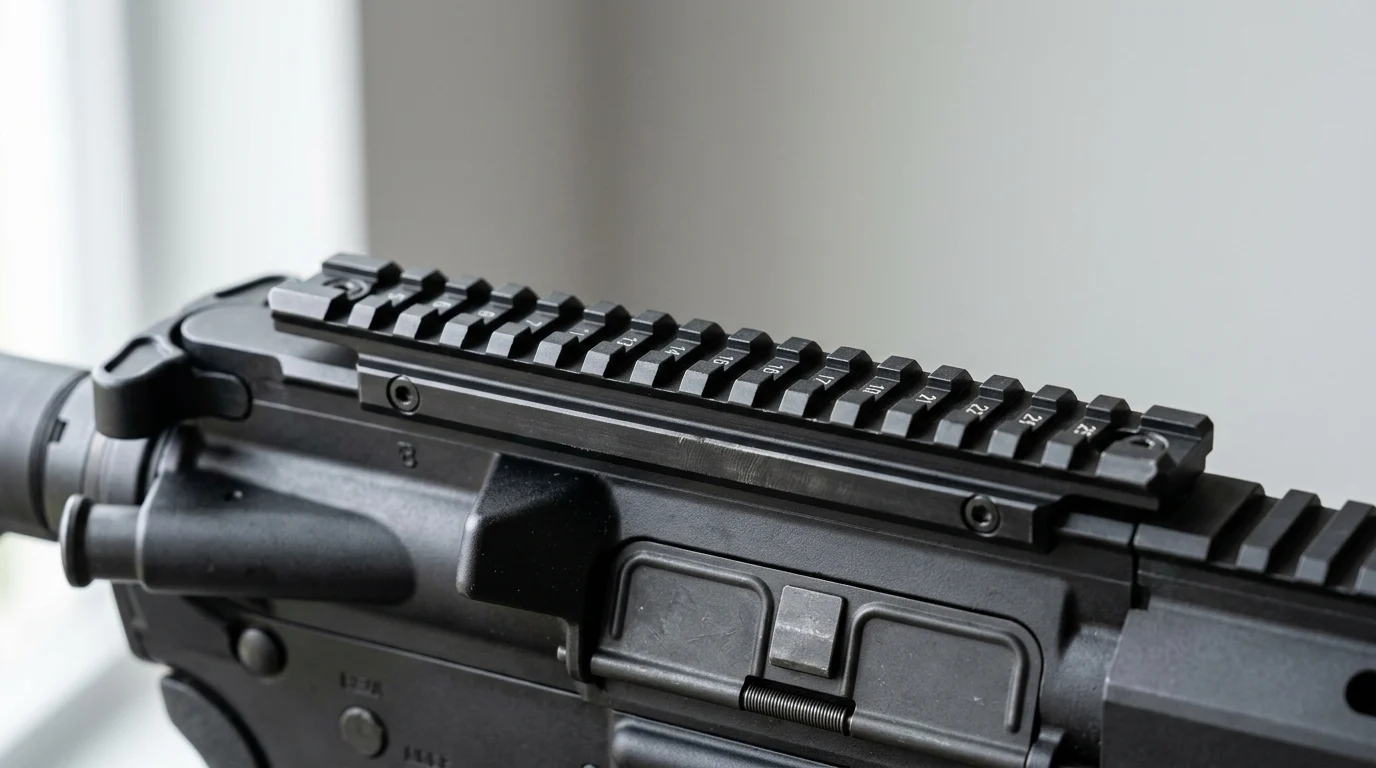
A 12-gauge shotgun can make short work of weak mounting hardware. Add a red dot or scope, and every slug or magnum shell sends recoil energy through the receiver, testing the rail, rings, screws, and optic as one system. The right Picatinny setup is not just about accessory compatibility; it determines whether your sight picture stays consistent after repeated shots. This guide looks at receiver fit, rail styles, optic placement, eye relief, and recoil-lug engagement so you can build a more dependable shotgun platform for hunting, defensive use, or range work without sacrificing zero retention.
Positioning a Picatinny Rail Shotgun Mount
Shotguns are inherently demanding on attached hardware. Every time the trigger is pulled, heavy recoil forces attempt to shift attached accessories off the top of the receiver. Understanding how to properly position and anchor this foundation is the crucial first step in building a reliable tactical or heavy-duty hunting rig.
Receiver Fit and Optic Placement
Achieving the perfect receiver fit is the first major hurdle when mounting an optic. Depending on your firearm, you might use a receiver-drilled mount (offering the most secure, low-profile fit for heavy recoil), a saddle mount (which wraps around the receiver using existing pin holes to avoid permanent modifications), or a clamp-on vent rib mount (best suited for lighter loads and birdshot). Whichever style you choose, a quality Picatinny rail must contour closely to the curved or flat top of the shotgun receiver, ensuring maximum surface contact. If significant daylight is visible between the bottom of the rail and the top of the receiver, the setup may be compromised and could eventually rattle loose without proper shimming, bedding, or accounting for manufacturer tolerances.
Optic placement along this rail dictates the shooter's field of view and proper head alignment. Eye relief is a fixed optical property of the scope itself; the shooter must position the optic on the rail so that this required distance naturally aligns with their cheek weld. For a standard rifle scope mounted on a heavy-recoiling shotgun, a model with 3.5 to 4.5 inches of eye relief is typically recommended. Mount the optic too far back, and the aggressive recoil will quickly introduce the ocular bell to the shooter's eyebrow—a painful lesson commonly known as 'scope bite.' Furthermore, the rail alone does not secure the scope; you must select recoil-resistant rings of the correct height and apply proper ring torque to ensure the optic survives 12-gauge recoil.
12-Gauge Recoil and Mount Stability
The brute force of a 12-gauge firing a 1-ounce magnum slug generates significant recoil energy, depending on the specific load and the weight of the firearm. This kinetic energy travels directly backward through the receiver, while basic inertia dictates that the heavy optic wants to stay exactly where it is in space. This opposing force places immense shearing stress directly on the optic mount.
If the rail positioning is off-center or improperly tensioned, the resulting harmonic vibration can shake the optic loose. Maximum stability requires ensuring deep engagement between the rail's cross-slots and the mount's integrated recoil lugs to prevent the hardware from shifting during the intense recoil cycle.
Key Picatinny Rail Specifications
Not all rails are created equal, and throwing cheap, unverified metal on top of a 12-gauge is a guaranteed recipe for a wandering zero. Understanding the underlying specifications of a true MIL-STD-1913 Picatinny rail is essential for keeping optics firmly anchored during heavy recoil.
It is important to distinguish between Picatinny and older Weaver-style rails. While Weaver accessories can often fit on a Picatinny rail, the reverse is rarely true. A true Picatinny specification requires a slot width of precisely 0.206 inches and a center-to-center slot spacing of 0.394 inches. Deviating from these rigid dimensions even slightly means optic mounts will not sit flush, leading to uneven pressure and potential mechanical failure under the stress of shotgun recoil.
Steel vs Aluminum Rail Comparison
The debate between steel and aluminum components involves balancing structural durability with weight savings. For a shotgun carried all day in the field, every ounce matters, but the metal must survive the blast. Ultimately, the specific alloy choice matters less than proper overall design, deep recoil-lug engagement, and meticulous installation.
Note: Rail weights can vary significantly by length and profile, making the comparisons below approximate. Additionally, material properties like the yield strength of 4140 steel vary widely depending on heat treatment. Consider surface finish—such as hard-coat anodizing for aluminum or Parkerizing for steel—to ensure proper corrosion resistance for field use.
| Material Type | Typical Weight (oz) | Yield Strength (MPa) | Best Use Case |
|---|---|---|---|
| 6061-T6 Aluminum | 1.5 – 2.5 | 276 | Light tactical, standard birdshot |
| 7075-T6 Aluminum | 1.5 – 2.5 | 503 | Premium lightweight performance |
| 4140 Steel | 4.5 – 6.0 | 655 | Heavy magnum recoil, dedicated slug guns |
While heavy 3-inch magnum slugs can benefit from the rigid nature of a machined 4140 steel base to prevent microscopic flexing, aircraft-grade aluminum is perfectly adequate for most applications. Many dedicated slug guns run quality 7075-T6 aluminum rails successfully, proving that a well-designed and properly installed aluminum rail will outperform a poorly fitted steel alternative.
Common Mount Failure Points
When a mounting system fails under 12-gauge recoil, the most common culprits are sheared or stripped receiver screws. Shooters often overdrive the fasteners during installation, stretching the tiny metal threads beyond their structural limits. While standard practice typically suggests torquing aluminum rail screws to approximately 15–20 inch-pounds and steel fasteners up to 25 inch-pounds, these are strictly generic ranges. You must use a calibrated inch-pound torque wrench, and the manufacturer's specific torque specifications always take precedence.
Another frequent issue is the shearing of subpar cross-bolts on poorly cast mounting accessories. To prevent this, shooters must push the optic mount entirely forward against the front face of the Picatinny slot before tightening down the clamps. If the cross-bolt does not sit perfectly flush against this forward face, the mount acts like a tiny, high-speed hammer against the rail with every single trigger pull. Over time, this repeated battering will dent rails and snap cross-bolts in half.
Buying and Installing a Picatinny Rail
Properly buying
Key Takeaways
- Choose a receiver-drilled Picatinny rail for the most secure and low-profile setup on a heavy-recoiling 12-gauge shotgun.
- Use a saddle mount when avoiding permanent receiver modification, but confirm that it locks tightly into the shotgun’s existing pin holes.
- Avoid relying on clamp-on vent rib mounts for heavy slug loads, since they are better suited to lighter loads and birdshot.
- Select a shotgun optic with 3.5 to 4.5 inches of eye relief to maintain a safe cheek weld and reduce the risk of scope bite.
- Check for gaps between the rail and receiver, because poor surface contact can allow recoil vibration to loosen the mount.
- Ensure the mount’s recoil lugs fully engage the Picatinny cross-slots to prevent optic movement during repeated 12-gauge recoil.
Frequently Asked Questions
What type of Picatinny rail is best for a 12-gauge shotgun?
A receiver-drilled rail is usually the most secure option for heavy 12-gauge recoil because it mounts directly to the receiver and offers a low-profile fit.
Can a saddle mount handle shotgun recoil?
A quality saddle mount can work well, especially when you want to avoid drilling the receiver, but it must fit tightly and use the shotgun’s pin holes securely.
Is a vent rib Picatinny mount suitable for slugs?
Clamp-on vent rib mounts are generally better for lighter loads and birdshot. Heavy slug recoil can shift weaker clamp-on setups if they lack strong engagement.
How much eye relief should a shotgun scope have?
For a 12-gauge shotgun, choose a scope with about 3.5 to 4.5 inches of eye relief to reduce the risk of scope bite under heavy recoil.
Why does receiver fit matter for a shotgun rail?
A rail should closely match the receiver contour. Visible gaps can reduce surface contact and may cause the mount to loosen unless corrected with shimming or bedding.
Post time: Jul-10-2026