
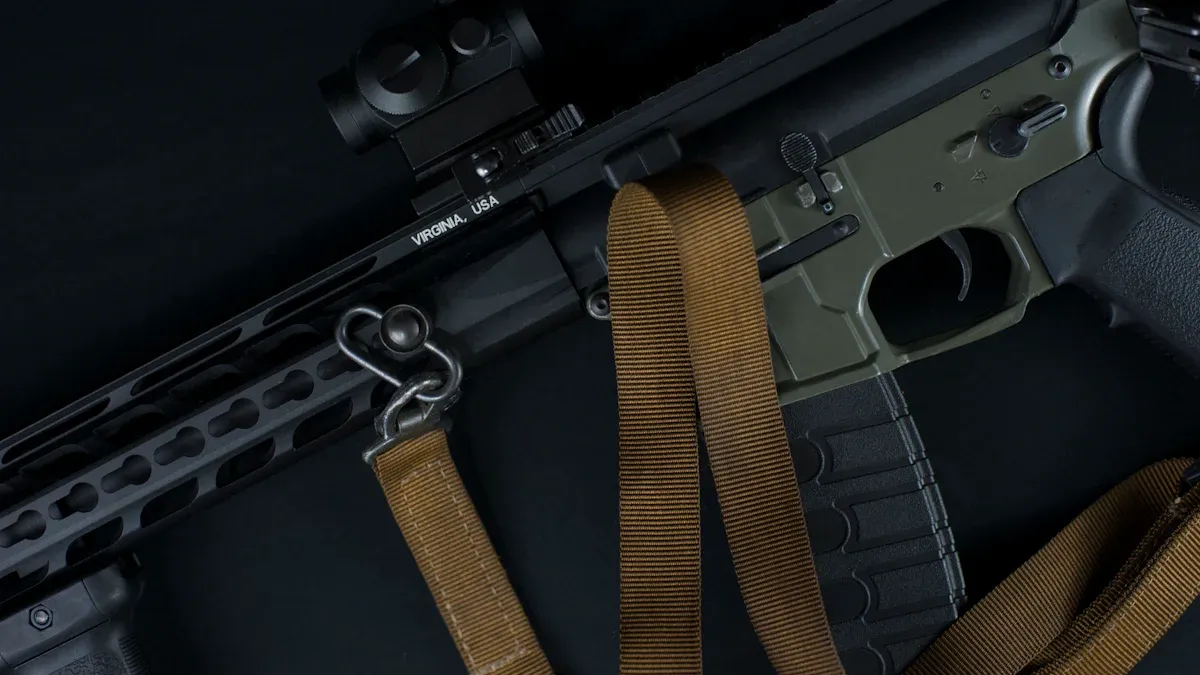
A Picatinny Rail provides a standardized mounting system for firearms. This robust Rail, adopted by the US military and NATO, ensures universal compatibility for accessories. Shooters can quickly attach a rifle scope or a Rifle bipod, easily swapping items without special tools. This secure Mount keeps accessories stable, making reconfigurations simple.
Key Takeaways
- Picatinny rails offer a standard way to attach accessories to firearms. They have exact measurements for slots. This ensures a secure fit for items like scopes and lights.
- Picatinny rails are different from Weaver rails. Picatinny slots are wider and always spaced the same. This means most Weaver accessories fit Picatinny rails, but not always the other way around.
- When choosing a Picatinny rail, check if it fits your firearm. Think about the accessories you will use. Pick a material like aluminum or steel based on strength and weight needs. Also, consider the rail’s length and how many slots you need.
Understanding the Picatinny Rail Standard
What Defines a Picatinny Rail?
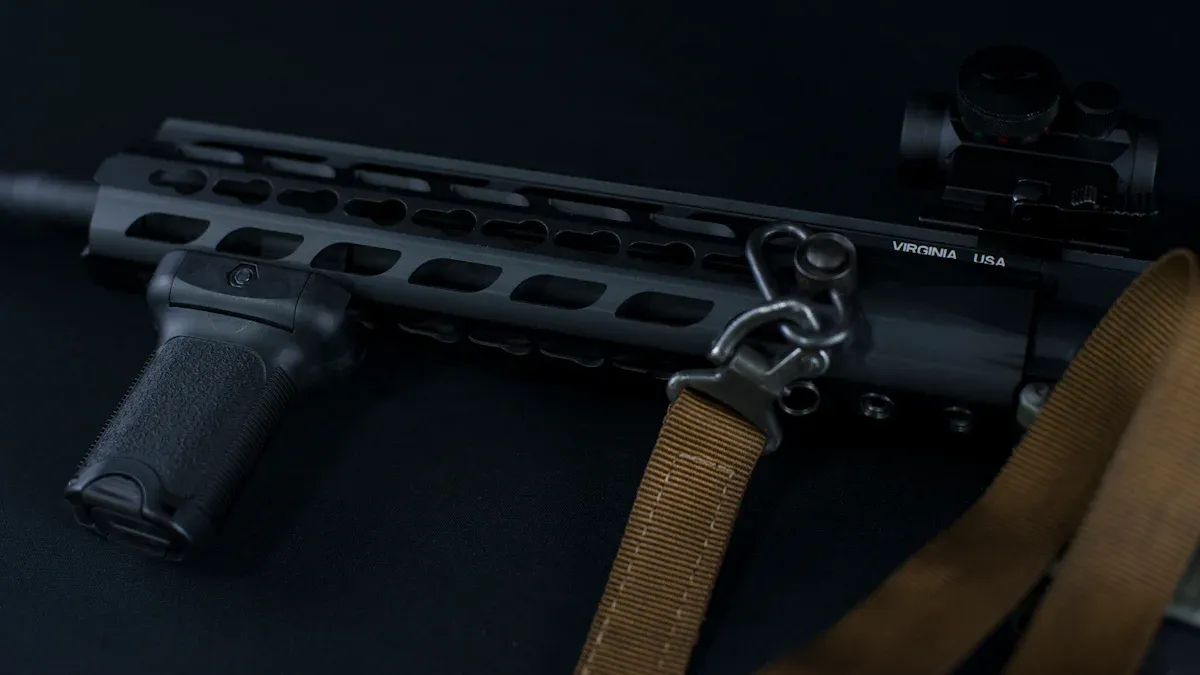
Imagine a world where every accessory fits every firearm perfectly. That dream became a reality with the Picatinny Rail. This clever invention did not just appear out of thin air. Engineers at the Picatinny Arsenal in New Jersey designed and developed it. They aimed to create a universal mounting system for military rifles. In 1995, this system officially became the MIL-STD 1913 rail, a true game-changer. Later, in 2009, NATO even upgraded it to a metric format, making it an international superstar!
What makes a Picatinny Rail so special? It is all about precision. This rail boasts very specific dimensions, ensuring everything locks into place just right. For instance, its locking slots are exactly 0.206 inches (5.23 mm) wide. The center of one slot to the center of the next measures precisely 0.394 inches (10.01 mm). These slots also have a depth of 0.118 inches (3.00 mm). This exactness means your gear stays put, even during the wildest adventures. The rail’s base width ranges from 0.607 to 0.617 inches, and its outer edges measure between 0.830 and 0.835 inches. These tight tolerances guarantee a snug fit for any compatible accessory.
Manufacturers build these rails tough. They often use materials like 6061-T6 aircraft aluminum, which offers a great mix of strength and lightness. Sometimes, they opt for even stronger 7075-T6 aluminum, also a favorite in aerospace. For those who prefer something super light and corrosion-resistant, reinforced composite materials (polymers) are a fantastic choice. And for ultimate toughness, some rails use low carbon steel, cold-drawn for extra strength. These materials ensure your Picatinny Rail can handle whatever you throw at it.
Picatinny Rail vs. Weaver Rail: Key Differences
Before the Picatinny Rail took the stage, the Weaver rail was the go-to guy. It appeared in the mid-20th century, starting as two separate pieces before evolving into a single strip. However, the Weaver rail had a few quirks. Its slots were not always consistent, leading to some head-scratching when trying to attach accessories. This inconsistency created a need for a more uniform solution, paving the way for the Picatinny system.
While they look similar, these two rails have some important differences. Think of them as cousins: they share a family resemblance, but they are not identical twins. Here is a quick look at how they stack up:
| Feature | Picatinny Rail (MIL-STD-1913) | Weaver Rail |
|---|---|---|
| Groove Width | 0.206 inches | 0.180 inches |
| Groove Spacing | 0.394 inches (center-to-center), evenly spaced | Not necessarily consistent, may be irregular |
| Recoil Groove Depth | 0.118 inches (standardized), square-shaped | Not standardized, generally shallower, often rounded |
The main takeaway? Picatinny slots are wider and always spaced the same. Weaver slots are narrower and can be a bit all over the place. This difference creates a compatibility puzzle. Accessories designed for a Weaver system usually fit on a Picatinny Rail because the Picatinny’s slots are wider. It is like putting a smaller key into a larger lock – it works! However, the reverse is not true. Picatinny accessories often will not fit on Weaver rails because their locking notches are too wide for the narrower Weaver slots. So, while your Weaver scope mount might feel at home on a Picatinny Rail, your fancy new Picatinny flashlight mount might get stuck trying to fit onto an old Weaver rail. Always double-check before you buy!
Choosing the Right Picatinny Rail for Your Firearm
## Choosing the Right Picatinny Rail for Your Firearm

### Assessing Firearm Compatibility with Picatinny Rail

Finding the perfect Picatinny Rail for a firearm feels like a treasure hunt. First, shooters must determine if their firearm already has a rail or if it needs an addition. Many modern sporting rifles, for instance, come factory-equipped with these handy mounting systems. This standard, adopted by the military in 1995, makes accessory attachment simple.

Consider some popular models. Ruger Mark IV®, Ruger Mark III®, and Ruger 22/45® pistols often feature factory-installed rails. The Marlin Model 1895 SBL also boasts a factory-equipped Picatinny Rail. This provides a stable surface for scopes and other optics. Shooters can easily check their firearm's manual or manufacturer's website for compatibility information. Some firearms have pre-drilled holes, ready for a rail attachment. Others might require a specialized mount or adapter. Always ensure the chosen rail matches the firearm's specific make and model. A proper fit guarantees stability and safety for all mounted accessories.

### Matching Picatinny Rail to Accessory Needs

Once a shooter confirms compatibility, they consider their accessory needs. Different accessories demand different rail characteristics. A small red dot sight might only need a short rail section. A large rifle scope, however, requires a longer rail for proper eye relief and secure mounting. Think about future additions too. Planning for a flashlight, laser, or bipod means selecting a rail with enough length and slots.

Consider the weight and size of the accessories. Heavy optics or multiple attachments might benefit from a more robust rail material, like steel. Lighter setups might work perfectly with aluminum or polymer rails. Also, think about the accessory's mounting style. Some accessories clamp directly onto the rail. Others use quick-detach levers. Ensure the chosen Picatinny Rail accommodates these specific mounting mechanisms. A little foresight here saves time and money later.
Exploring Different Picatinny Rail Mounting Systems
Standard Picatinny Rail Applications
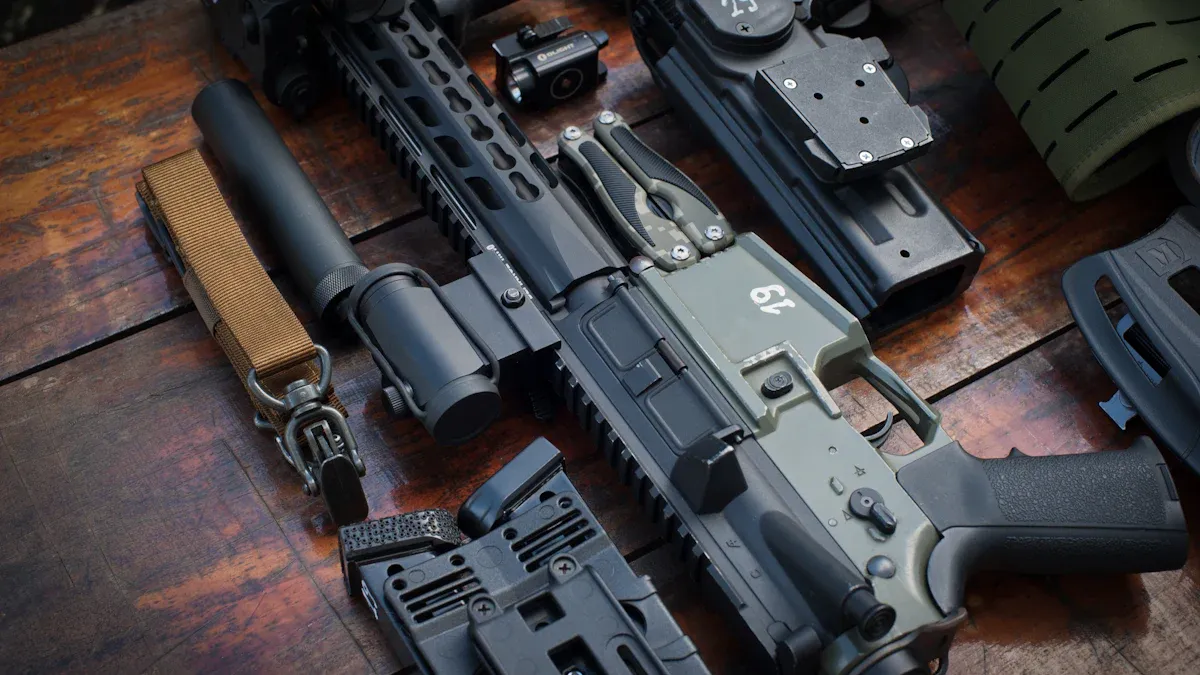
The standard Picatinny Rail is a true workhorse. It provides a solid foundation for many firearm accessories. Shooters use it for essential items. These include:
- Sights
- Lasers
- Lights
- Scopes
- Bipods
Imagine a rifle ready for any mission. The Picatinny Rail makes this possible. It allows quick changes and secure attachments. This system ensures your gear stays put, even during intense action.
KeyMod and M-LOK Systems vs. Picatinny Rail
For years, the Picatinny Rail dominated the accessory world. However, it often added extra weight and bulk to firearms. This led to a new generation of mounting systems in the 2010s. These systems aimed for lighter designs and more flexibility. KeyMod and M-LOK became the two primary contenders. They both use a slot design instead of the traditional rail system.
| System | Mounting Mechanism | Slot Shape and Size |
|---|---|---|
| M-LOK | Uses T-shaped nuts. These nuts rotate 90 degrees inside the slot when screws tighten. They clamp against the handguard. | Rectangular slots, evenly spaced. |
| KeyMod | Employs a nut inserted into the larger part of the keyhole. It slides forward into the narrower portion to lock. | Keyhole-shaped slots with a larger circular opening connected to a narrower slot. |
M-LOK, developed by Magpul in 2014, uses T-nuts. These T-nuts lock into rectangular slots. KeyMod features its own style mounting slots with a keyhole profile. Both systems offer direct accessory mounting. They create lighter handguards.
Offset and Cantilever Picatinny Rail Mounts
Sometimes, a straight-up mount just does not cut it. That is where offset and cantilever mounts come in. Offset mounts are fantastic for users who want a secure head position. They also provide a low height over bore. Competitors in dynamic marksmanship events, like 3-Gun, love them. They offer stability from a consistent head position.
Offset mounts allow users to achieve both top accuracy and speed. This was once a trade-off. They are often used with magnified scopes. This setup allows quick transitions between close and long-distance targets. Angled offsets position a red dot beside the primary optic. This happens at a 35- to 45-degree angle. Users rotate the rifle inward. This technique, once mastered, provides an excellent cheek weld. It helps with accuracy and recoil control during rapid fire.
Material and Durability of Your Picatinny Rail
Choosing the right material for your rail is like picking the perfect armor for your firearm. Each material offers a unique blend of strength, weight, and cost. Let’s explore the champions of durability.
Aluminum Picatinny Rails: Pros and Cons
Imagine a featherweight champion for your firearm accessories. That is often an aluminum rail! Manufacturers love aircraft-grade aluminum for its excellent strength-to-weight ratio. They often use CNC machining, specifically milling on horizontal mills, for high-volume production. This ensures precision. Aluminum extrusion is another method, but it faces challenges meeting the tight tolerances required for these rails. Aluminum rails offer significant weight savings compared to steel versions. Steel is approximately 2.5 times denser than aluminum. This means a lighter overall component. For example, M-LOK handguards, typically aluminum, can weigh 40-50% less than quad rails of the same length. This shows aluminum’s potential for weight reduction.
Steel Picatinny Rails: Strength and Weight
If you need a rail that laughs in the face of danger, steel is your go-to. Steel rails offer unmatched strength and rigidity. They can withstand extreme abuse without bending or flexing. This makes them perfect for heavy optics or firearms that experience significant recoil. However, this incredible strength comes with a trade-off. Steel is heavier than other materials. It can add noticeable weight and bulk to a firearm. This might make your setup feel less nimble. Consider your needs: ultimate toughness or a lighter feel?
Polymer Picatinny Rails: Lightweight Options
Looking for the ultimate lightweight contender? Polymer rails step into the ring. These rails are often the most affordable and lightest option. They are fantastic for reducing overall firearm weight. Some high-tech composite polymer rails, like the nTHERM Handguard, show excellent thermal resistance. One test showed it only reached about 150 degrees Fahrenheit after 300 rounds. This kept it cool to the touch. LWRCI Railskins, made from a durable space-age polymer, also provide heat-resistant properties. However, polymer rails can be susceptible to extreme temperatures. High heat may compromise their integrity. It can lead to warping or deformation over time. They also offer less rigidity than their metal counterparts.
Selecting the Optimal Picatinny Rail Length and Slot Count
Determining Ideal Picatinny Rail Length
Choosing the correct rail length is a big decision. It directly impacts your firearm’s setup. First, consider your primary accessory. A small red dot sight needs only a short rail section. A large rifle scope, however, demands a longer rail. This longer rail provides proper eye relief. It also ensures secure mounting for the scope. Think about the firearm itself. Pistols typically use shorter rails. Rifles often benefit from longer ones. Measure your accessory and the available space on your firearm. This helps you pick the perfect length. You want enough space for your main optic without unnecessary bulk.
Slot Count for Multiple Accessories on a Picatinny Rail
Now, let’s talk about slots. Each accessory needs a slot to attach. More slots mean more options for you. You might want a flashlight, a laser, or a bipod. These items all need their own space on the rail. Plan for future additions too. A rail with many slots offers great flexibility. It lets you change your setup easily. Count the accessories you have now. Then, add a few extra slots for later. This ensures you have enough room for everything. A longer rail usually means more slots. This gives you the freedom to customize your firearm exactly how you like it.
Proper Installation and Maintenance of Your Picatinny Rail
Step-by-Step Picatinny Rail Installation
Installing a Picatinny Rail correctly makes a big difference. It ensures your accessories stay put. First, gather your tools. A torque screwdriver is your best friend here. It helps you tighten screws just right. Brands like Wheeler and Wiha make great ones. You also need the correct size screwdriver tip. This prevents damage to screw slots. Many experts suggest using Blue Loctite. It helps secure screws, especially on aluminum receivers.
Now, for the fun part! Place the rail onto your firearm. Align it carefully with the mounting holes. Insert the screws. Then, use your torque screwdriver. Tighten the screws to the manufacturer’s specifications. For example, OuterImpact rails often require 25 inch-pounds of torque. Q The Fix M1913 accessory rail screws need 40 inch-pounds. Talley Manufacturing suggests 20 inch-pounds for ring screws and 65 for crossbolts. Proper torque prevents stripping threads. It also keeps your rail from wiggling loose.
Essential Maintenance for Picatinny Rail Longevity
A little care goes a long way for your Picatinny Rail. After a day at the range, wipe down the rail. Use a clean cloth to remove dirt and carbon buildup. This keeps the slots clear for accessories. Periodically, check all mounting screws. Make sure they remain tight. Recoil can sometimes loosen them. If you notice any play, re-torque the screws to their correct settings. This simple routine ensures your rail stays reliable. It keeps your accessories secure for many adventures to come.
Choosing a Picatinny Rail is an exciting adventure! Remember these key points:
- Check your firearm’s compatibility.
- Match the rail to your accessory dreams.
- Pick the right material for toughness and weight.
- Select the perfect length and slot count.
This guide helps you make a super smart decision for your unique setup.
FAQ
Can I use Weaver accessories on a Picatinny rail?
Yes, most Weaver accessories fit Picatinny rails. Picatinny slots are wider. This allows the smaller Weaver mounts to fit securely.
Which material is best for a Picatinny rail?
It depends on your needs! Aluminum is light. Steel is super strong. Polymer offers a lightweight, affordable option. Choose based on your accessory weight and desired durability.
Do I need a gunsmith to install a Picatinny rail?
Not always! Many rails are user-installable. Follow instructions carefully. Use a torque screwdriver for proper tightening. A gunsmith ensures perfect alignment and security.
Post time: Nov-07-2025