
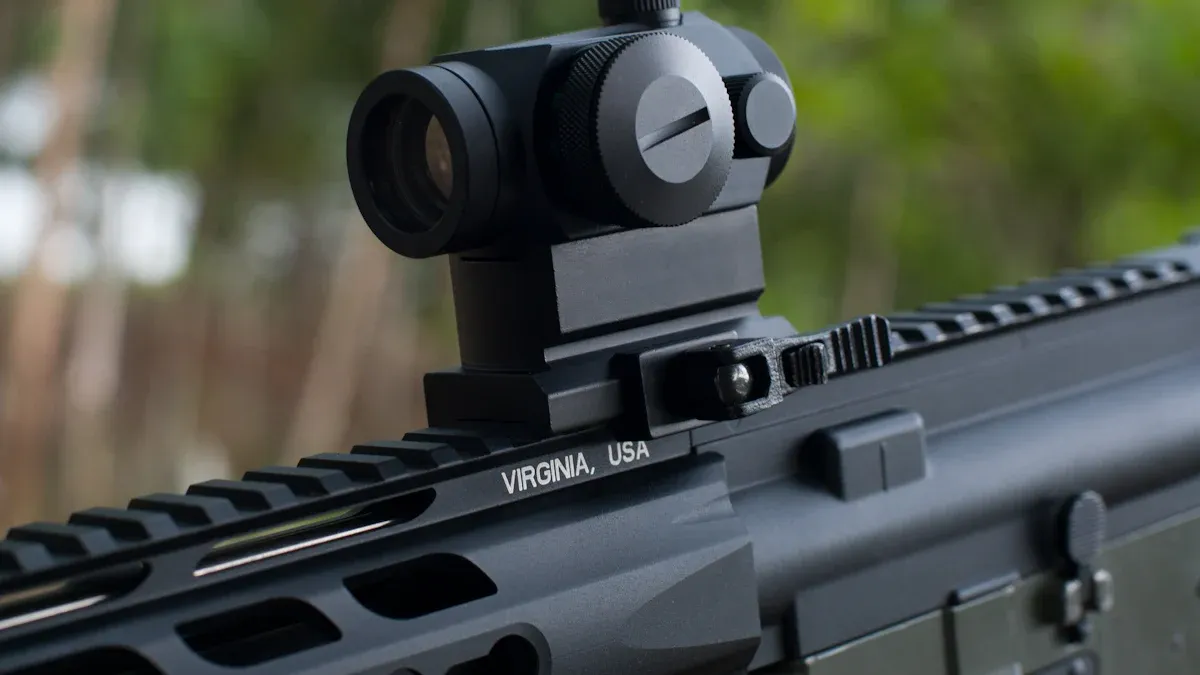
Red dot sights have witnessed a remarkable surge in popularity within shooting sports. The market for these sights, valued at 0.58 billion USD in 2023, is expected to reach 0.92 billion USD by 2032. These optics offer significant advantages, including enhanced accuracy, as studies reveal they outperform iron sights in precision across various target zones. Additionally, their intuitive design enables faster target acquisition, making them indispensable for both beginners and competitive shooters. Mastering red dot techniques ensures shooters can fully leverage these benefits for peak performance.
Key Takeaways
- Red dot sights help you aim faster and more accurately. They are great for new and skilled shooters. Practice often to get the most out of them.
- Learn methods like the press-out technique and focusing on targets. These can make your shooting much better. Train regularly to improve.
- Be ready for sight problems by having backup iron sights. Check and clean your gear often to keep it working well.
Basics of Red Dot Sights
Advantages of Using a Red Dot
Red dot sights offer numerous benefits that make them a preferred choice for shooters. Studies have shown that these optics significantly improve accuracy across all skill levels. A four-year study by Sage Dynamics revealed that shooters, from beginners to experts, achieved higher precision with red dot sights compared to traditional iron sights. This improvement was consistent in both standard shooting tests and dynamic force-on-force scenarios.
Additionally, red dot sights enable faster target acquisition. Their design allows shooters to focus on the target while aligning the reticle, reducing the time needed to aim. This advantage proves invaluable in competitive shooting and self-defense situations. The ability to perform well in low-light conditions further enhances their versatility, making them suitable for various environments.
Common Challenges with Red Dot Sights
Despite their advantages, red dot sights come with challenges, especially for new users. Many shooters struggle to locate the dot quickly during initial presentations. This issue becomes more pronounced without backup iron sights.
"Addressing optic failure is crucial. All mechanical and electrical devices can fail, and red dots are no exception. Backup iron sights provide a reliable alternative when optics malfunction."
Maintenance is another critical factor. Regular lens cleaning, battery checks, and proper installation are essential for optimal performance. Departments and individuals must also consider the learning curve, as effective use often requires dedicated training sessions.
Red Dot vs. Iron Sights: Key Differences
| Aspect | Red Dot Sights | Iron Sights |
|---|---|---|
| Hit Ratio | Higher | Lower |
| Accuracy | Higher | Lower |
| Target Acquisition Speed | Faster | Slower |
| Performance in Low Light | Better | Worse |
| Study Context | New Shooters | New Shooters |
Red dot sights outperform iron sights in several key areas. They offer superior accuracy, faster target acquisition, and better performance in low-light conditions. These advantages make them an excellent choice for shooters seeking to enhance their skills. However, iron sights remain a reliable backup option, especially in situations where optics may fail.
Techniques for Mastering Red Dot Sights
Finding the Dot Quickly
Locating the red dot efficiently is a fundamental skill for shooters. Many beginners struggle with this, especially during rapid presentations. To overcome this challenge, consistent practice is essential. High repetition training helps shooters develop muscle memory, ensuring the dot aligns naturally with their line of sight. Beginners can benefit from affordable and safe training tools like airsoft guns, which allow them to practice draw and presentation techniques without the cost or risk of live ammunition.
A recommended drill involves aiming at a target, retracting the firearm until the dot disappears, and then pressing out to reacquire it. This exercise trains the shooter to locate the dot instinctively, even on small targets. Performance metrics from experienced shooters show that with practice, they can achieve 80% of their normal speed while maintaining 100% accuracy on the first shot. This demonstrates the importance of mastering this skill for both speed and precision.
The Press-Out Method
The press-out method is a proven technique for improving red dot alignment during the draw. This method involves extending the firearm directly toward the target while maintaining a consistent grip and sight alignment. By pressing out in a straight line, shooters minimize unnecessary movement, ensuring the red dot appears in the reticle quickly and consistently.
Training programs like the SIG Sauer Academy offer courses focused on pistol-mounted optics, where students learn the press-out method under the guidance of experienced professionals. These courses emphasize the importance of smooth, deliberate movements to enhance accuracy and speed. Incorporating this technique into regular practice sessions can significantly improve a shooter’s ability to acquire the red dot under various conditions.
Target Focus vs. Reticle Focus
One of the key advantages of red dot sights is their ability to simplify visual focus. Unlike iron sights, which require shooters to align the front and rear sights while focusing on the target, red dot sights allow for a single point of focus. This eliminates the need to shift focus between multiple elements, reducing eye strain and improving accuracy.
| Benefit | Red Dot Sights | Iron Sights |
|---|---|---|
| Accuracy | Enhanced accuracy and repeatable shot placement | Limited accuracy with fixed sights |
| Target Acquisition | Faster target acquisition with both eyes open | Slower due to focus shift between sights |
| Situational Awareness | Improved peripheral vision and awareness | Reduced awareness due to sight focus |
| Low-Light Performance | Illuminated reticle for visibility in darkness | Difficult to use in low-light conditions |
| Eye Strain | Reduced eye strain by keeping both eyes open | Increased strain from focusing on sights |
Experts like Buck Buckner, U.S. Director of Training for Aimpoint, emphasize that focusing on the target rather than the reticle enhances situational awareness. This approach allows shooters to maintain awareness of their surroundings while engaging threats, which is critical in high-stress scenarios. Steve Fisher, a consultant for red-dot manufacturers, also highlights that this simplified focus improves overall shooting performance by enabling users to concentrate on a single visual element.
Advanced Red Dot Shooting Tips
Drills for Speed and Accuracy
Improving speed and accuracy with a red dot sight requires consistent practice and structured drills. Shooters can benefit from exercises designed to enhance their ability to locate the dot quickly and maintain precision during rapid engagements. One effective drill involves setting up multiple targets at varying distances and practicing transitions between them. This exercise sharpens the shooter’s ability to reacquire the dot efficiently while maintaining accuracy.
Competitive shooting scenarios demonstrate the advantages of red dot sights in enhancing performance. Shooters using red dots have reported up to a 25% improvement in accuracy compared to traditional iron sights. Additionally, red dot optics increase hit probabilities during target transitions, making them a preferred choice in competitions like IDPA and USPSA.
For measurable progress, shooters can apply advanced techniques to drills like the Wilson 5×5. Initial scores often improve significantly after incorporating red dot-specific tips. For example:
- An initial score of 28.44 seconds can improve to 21.66 seconds, placing the shooter in the Expert category.
- Time taken for individual strings can decrease, with improvements such as 3.77 seconds for the first string and 4.46 seconds for the last.
These results highlight the importance of structured practice and the impact of red dot sights on competitive performance.
Managing Malfunctions
Red dot sights, while reliable, are not immune to malfunctions. Shooters must prepare for scenarios where the optic fails, ensuring they can continue engaging targets effectively. Backup iron sights provide a critical solution, allowing shooters to transition seamlessly when the red dot becomes unusable.
Regular maintenance minimizes the risk of malfunctions. Cleaning the lens, checking battery levels, and inspecting the mounting system are essential steps. Shooters should also familiarize themselves with troubleshooting techniques, such as adjusting brightness settings or reseating the optic.
Training sessions should include drills that simulate optic failure. For example, shooters can practice switching to iron sights mid-engagement or firing without the red dot to build confidence in handling unexpected situations. These exercises ensure readiness and adaptability, even under challenging conditions.
Transitioning Between Targets
Transitioning between multiple targets is a skill that separates proficient shooters from novices. Red dot sights excel in this area, offering faster target acquisition compared to traditional iron sights. Shooters can maintain focus on the target without needing to realign sights, which is particularly advantageous at distances beyond seven yards.
Key techniques for smooth transitions include maintaining a consistent grip and minimizing unnecessary movement. Shooters should practice transitioning between targets of varying sizes and distances to refine their skills. Competitive pistol shooters often report significant improvements in speed and accuracy when using red dots for target transitions.
Unordered list of benefits observed during transitions:
- Faster aiming compared to iron sights.
- Enhanced focus on the target without sight realignment.
- Improved performance in competitive settings.
These advantages explain the growing popularity of red dot sights among competitive shooters. Structured drills and consistent practice ensure shooters can fully leverage these benefits, achieving superior performance during target transitions.
Choosing the Right Red Dot Equipment

Recommended Red Dot Brands
Selecting a reliable red dot sight begins with choosing a trusted brand. Leading manufacturers consistently deliver high-performance optics that meet the needs of shooters across various disciplines. Some of the most recommended brands include:
- Trijicon
- Aimpoint
- Holosun
- Sig Sauer
- Leupold
- Vortex Optics
- Bushnell
These brands are recognized for their durability, accuracy, and innovative features. For instance, Aimpoint’s Acro P-2 offers an enclosed emitter and an impressive 50,000-hour battery life, making it ideal for extended use. Similarly, Trijicon’s RMR series provides unmatched reliability with its battery-free reflex style optics, perfect for harsh conditions. Shooters should evaluate their specific requirements, such as battery life, reticle size, and durability, before making a purchase.
Essential Accessories for Red Dot Sights
To maximize the performance of a red dot sight, shooters should invest in essential accessories. A sturdy mount ensures the optic remains securely attached to the firearm, even under heavy recoil. Lens covers protect the glass from scratches and debris, while anti-reflective devices reduce glare for better visibility.
Other useful accessories include:
- Backup iron sights for optic failure scenarios.
- High-quality batteries to ensure uninterrupted operation.
- Cleaning kits designed for optics to maintain lens clarity.
These additions enhance the functionality and longevity of the sight, ensuring consistent performance in various conditions.
Maintenance Tips for Red Dot Longevity
Proper maintenance is crucial for extending the lifespan of a red dot sight. Regularly cleaning the lens with a microfiber cloth prevents dirt and smudges from obstructing the reticle. Shooters should also inspect the mounting system to ensure it remains secure.
Battery checks are equally important. Replacing batteries before they deplete avoids unexpected failures during critical moments. For waterproof models, verifying the integrity of seals prevents moisture damage. Following these practices ensures the optic remains reliable and effective over time.
Red dot sights offer unmatched accuracy and rapid target acquisition, especially in dynamic shooting scenarios. Consistent practice, including dry-fire drills and live-fire sessions, refines skills and builds muscle memory. Shooters should apply these techniques to improve performance, ensuring they maximize the benefits of this versatile optic in any situation.
FAQ
What is the ideal reticle size for a red dot sight?
The ideal reticle size depends on the shooter’s purpose. A 2-3 MOA dot works well for precision, while larger dots (4-6 MOA) suit close-range or dynamic shooting.
How often should a red dot sight’s battery be replaced?
Replace the battery annually or after heavy use. Regularly check the battery level to avoid unexpected failures during critical moments. Always carry a spare battery.
Can red dot sights be used with astigmatism?
Yes, but astigmatism may distort the reticle. Shooters can use holographic sights or corrective lenses to improve clarity. Testing different optics helps find the best option.
Post time: Apr-30-2025