
A rifle scope transforms shooting precision by magnifying distant targets and boosting confidence. Beginners often notice measurable improvements. For instance, novice shooters can reduce group sizes from 1.5 inches to three-quarters of an inch with practice. Pairing the right scope with tools like a Rifle bipod and a sturdy Rail enhances stability, ensuring consistent accuracy.
Key Takeaways
- Knowing the main parts of a rifle scope, like zoom and reticle style, helps you choose wisely.
- Setting up your rifle scope correctly improves aim and boosts confidence; use clear steps for success.
- Taking care of your scope, like cleaning and storing it right, makes it last longer and work well.
Understanding the Basics of Rifle Scopes
Key Components of a Rifle Scope
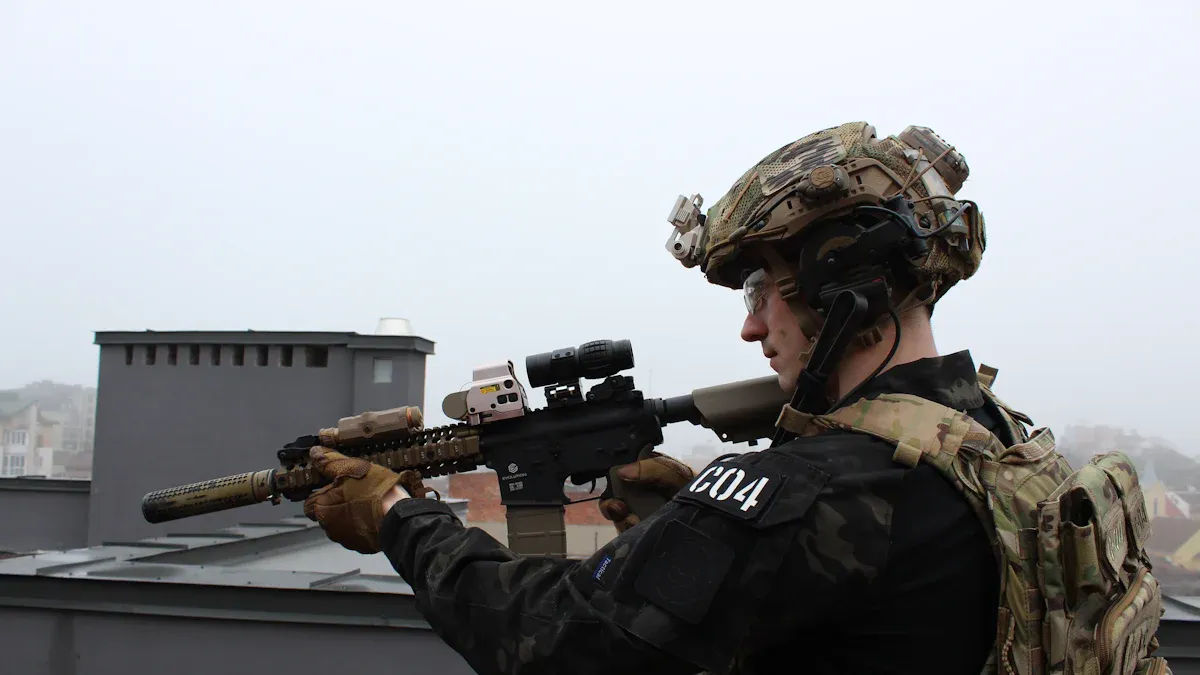
A rifle scope consists of several critical components that work together to enhance shooting accuracy. Each part plays a unique role in delivering a clear and precise view of the target. Beginners should familiarize themselves with these elements to make informed decisions when selecting a scope.
- Magnification Range and Focal Plane: Magnification determines how much closer the target appears. Scopes can have fixed or variable magnification, with variable options offering greater flexibility.
- Lens Diameter and Quality: The objective lens gathers light, influencing visibility in low-light conditions. High-quality lenses improve clarity and reduce distortion.
- Turret Quality: Turrets allow shooters to adjust windage and elevation, compensating for environmental factors like wind or distance.
- Reticle Selection: The reticle, or crosshair, serves as the aiming point. Options range from simple crosshairs to advanced designs with distance and windage markers.
- Total Elevation Adjustment: This feature determines how much vertical adjustment the scope can handle, crucial for long-range shooting.
Tip: When choosing a rifle scope, prioritize optical clarity and turret tracking. These features significantly impact performance and ease of use.
Common Terminology for Beginners
Understanding the language of rifle scopes is essential for beginners. These terms often appear in product descriptions and user manuals, so knowing them can prevent confusion and improve the shooting experience.
| Term | Definition |
|---|---|
| Eye Relief | The distance between the scope’s rear lens and the shooter’s eye where the image appears sharp. |
| Reticle | A set of markings on the scope that serves as an aiming reference, aiding in distance and windage. |
| Magnification | The level of zoom provided by the scope, affecting target visibility at different distances. |
| Objective Lens Diameter | The size of the front lens, which influences light gathering and visibility in low-light conditions. |
| Windage and Elevation | Adjustments made to compensate for environmental factors affecting bullet trajectory. |
| Parallax Adjustment | Ensures the target and reticle remain aligned regardless of eye position, enhancing shooting accuracy. |
Many beginners mistakenly believe that higher magnification always leads to better performance. However, excessive magnification can narrow the field of view, making it harder to track moving targets. Another common misconception involves eye relief. Maintaining the correct distance between the eye and the scope is vital for safety and comfort. Over-tightening scope mounts is another frequent error, as it can damage the scope and affect its functionality.
How a Rifle Scope Works
A rifle scope operates by using a series of lenses to magnify the target and align the shooter’s aim. The process begins with the objective lens, which gathers light from the target area. This light passes through the internal lenses, where it is focused and magnified. The reticle provides a reference point for aiming, while the eyepiece ensures the image appears sharp and clear.
Modern scopes incorporate advanced technology to improve performance. For example, computer-aided designs have enhanced lens systems, allowing for higher magnification and better accuracy. Variable-power scopes, which became popular in the 1990s, offer shooters the flexibility to adjust magnification based on the shooting scenario. These innovations have made rifle scopes indispensable tools for both beginners and experienced marksmen.
Did You Know? Early rifle scopes, developed in the 19th century, were fixed power and limited in functionality. Today’s scopes feature internal adjustments and high-magnification capabilities, revolutionizing shooting accuracy.
Types of Rifle Scopes
Fixed Power Scopes
Fixed power scopes offer a single magnification level, making them simple and reliable. Their straightforward design eliminates the need for adjustments, allowing shooters to focus entirely on their target. These scopes are particularly valued in hunting and tactical scenarios where durability and consistency are critical.
Hunters often prefer fixed power scopes for predictable shooting ranges. For example, a 4x fixed scope provides excellent clarity for mid-range shots without the distractions of variable magnification. Additionally, their lightweight and compact design make them ideal for long treks in rugged terrain.
| Advantage | Description |
|---|---|
| Simplicity and Reliability | Fewer moving parts lead to higher reliability, especially in critical situations like hunting or tactical missions. |
| Durability and Ruggedness | Built to withstand harsh conditions, making them suitable for military, tactical, and hunting environments. |
| Optimal for Specific Range Engagement | Fixed magnification provides a clear view without distractions, ideal for low-to-mid-range shooting. |
Tip: Fixed power scopes are an excellent choice for beginners due to their ease of use and affordability.
Variable Power Scopes
Variable power scopes provide adjustable magnification, offering versatility for different shooting conditions. This flexibility makes them a popular choice among hunters and competitive shooters. For instance, a scope with a 3-9x magnification range allows users to switch between close-range and long-range targets seamlessly.
Modern advancements have improved the reliability and brightness of variable scopes, making them comparable to fixed scopes in performance. While they are slightly heavier, their adaptability outweighs this drawback for many users.
| Aspect | Variable Power Scopes | Fixed-Power Scopes |
|---|---|---|
| Magnification Flexibility | Adjustable magnification for various conditions | Single magnification only |
| Use Cases | Versatile for different hunting scenarios | Best for specific situations |
| Weight | Generally heavier but advancements have reduced this | Usually lighter |
Specialty Scopes for Specific Activities
Specialty scopes cater to unique shooting needs, such as long-range precision, night vision, or thermal imaging. These scopes are designed for specific applications like military operations, law enforcement, or competitive shooting. For example, a thermal scope can detect heat signatures, making it invaluable for nighttime hunting or tactical missions.
| Category | Types/Applications |
|---|---|
| By Type | Optical, Mechanical |
| By Application | Hunting, Military, Competitive Shooting, Law Enforcement, Other |
| By Magnification | Various ranges including 1-4x, 5-8x, 9-12x, Above 12x |
Shooters should match the scope to their activity. A competitive shooter might choose a high-magnification optical scope for precision, while a hunter might prefer a rugged, low-magnification scope for quick target acquisition.
Did You Know? Specialty scopes often incorporate cutting-edge technology, such as laser rangefinders or ballistic calculators, to enhance performance.
Choosing the Right Rifle Scope
Factors to Consider: Magnification, Reticles, and Eye Relief
Selecting the right rifle scope involves understanding key features that directly impact performance. Magnification is one of the most critical factors. Shooters should choose magnification based on their typical shooting distances. For close-range targets, 1-4x magnification works best, while 9-12x suits long-range precision. Variable magnification scopes offer flexibility, making them ideal for diverse shooting scenarios.
Reticles also play a significant role. A duplex reticle is simple and effective for general use, while a BDC reticle helps estimate bullet drop for long-range shots. For law enforcement or tactical purposes, a mil-dot reticle provides distance estimation. Eye relief, the distance between the scope and the shooter’s eye, ensures safety and comfort. Scopes with generous eye relief reduce the risk of recoil-related injuries, especially for high-recoil firearms.
Tip: Always test optical clarity and reticle visibility in various lighting conditions before purchasing a scope.
Budget-Friendly Options for Beginners
Beginners often seek affordable yet reliable rifle scopes. Many budget-friendly options deliver excellent performance without breaking the bank. For instance, the Simmons 8-Point 3-9x50mm scope is praised for its clarity, durability, and light-gathering ability. Scopes under $100, such as the Bushnell Banner series, perform well in diverse weather conditions, making them suitable for new shooters.
Durability and ease of use are essential for beginners. Affordable scopes often feature simple designs, reducing the learning curve. While these scopes may lack advanced features, they provide a solid foundation for honing shooting skills.
Did You Know? Many budget scopes come with lifetime warranties, ensuring long-term value for beginners.
Matching the Scope to Your Rifle and Shooting Goals
Compatibility between the rifle and scope is crucial for optimal performance. Shooters should consider magnification, objective lens size, and reticle type based on their shooting goals. For example, a 3-9x40mm scope with a BDC reticle is ideal for a novice hunter targeting big game at medium distances. Close-range shooters might prefer a 1-4x scope with a duplex reticle for quick target acquisition.
Objective lens size also matters. A 28mm lens suits low-recoil firearms and close-range shooting, while a 50mm lens excels in low-light, long-range scenarios. Additionally, choosing between first focal plane (FFP) and second focal plane (SFP) reticles depends on the shooter’s needs. FFP reticles adjust with magnification, making them suitable for long-range accuracy, while SFP reticles remain consistent, ideal for general use.
Pro Tip: Test the scope on your rifle before purchase to ensure proper fit and alignment.
How to Zero a Rifle Scope
What Zeroing Means
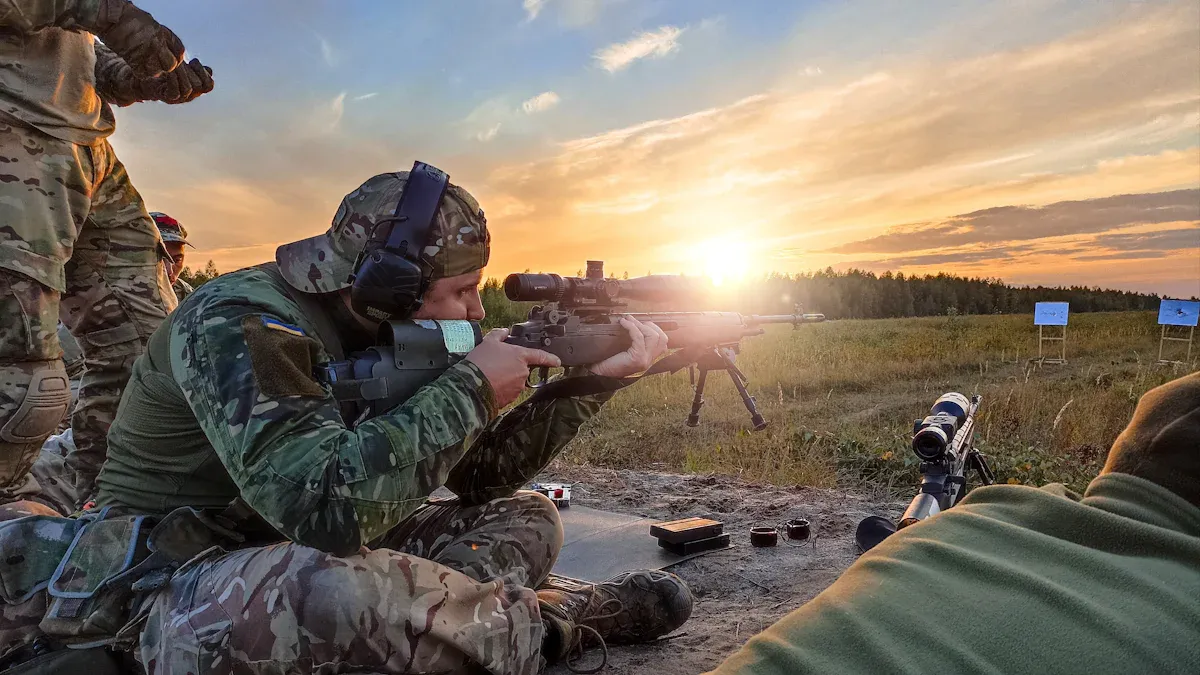
Zeroing a rifle scope ensures that the point of aim aligns with the bullet’s point of impact at a specific distance. This process compensates for the bullet’s curved trajectory as it travels, while the scope’s line of sight remains straight. By zeroing, shooters can achieve consistent accuracy, whether targeting game or practicing at the range.
Most American hunters prefer to zero their rifles at 100 yards, a standard distance that balances precision and practicality. However, some shooters opt for 50 or 200 yards based on their preferences or shooting conditions. A rough zero can be achieved using a laser bore sighter, which simplifies windage adjustments before live firing.
Pro Tip: Always confirm your zero with live ammunition after using a bore sighter to ensure accuracy under real conditions.
Step-by-Step Guide to Zeroing
Zeroing a rifle scope requires a systematic approach to achieve optimal results. Follow these steps to align your scope effectively:
- Set the Magnification: Begin with the lowest practical magnification setting. Lower magnification provides better stability and a wider field of view for initial adjustments.
- Secure the Rifle: Place the rifle on a stable platform, such as a shooting bench or bipod, to minimize movement during the process.
- Fire a Test Group: Shoot a group of three to five rounds at the target from the desired zeroing distance (e.g., 100 yards). Aim at the center of the target and observe the bullet impacts.
- Adjust the Turrets: Use the windage and elevation turrets to move the reticle toward the bullet group. For example, if the bullets hit low and to the right, adjust the elevation turret upward and the windage turret to the left.
- Repeat and Refine: Fire another group of rounds to verify the adjustments. Continue refining until the bullet impacts align perfectly with the reticle.
- Confirm at Different Distances: Test the zero at varying distances to ensure accuracy across your intended shooting range.
Alternatively, shooters can use tools like ballistic calculators or apps such as Strelok to calculate adjustments before live firing. These tools save time and improve precision by providing exact turret settings based on the rifle, ammunition, and environmental factors.
Did You Know? Zeroing not only improves accuracy but also builds confidence, allowing shooters to focus on their technique rather than worrying about alignment.
Common Mistakes to Avoid
Zeroing a rifle scope can be challenging for beginners, especially without proper preparation. Avoid these common mistakes to ensure a smooth and effective process:
| Common Mistake | Description |
|---|---|
| Over Torquing of the Scope | Applying excessive torque when mounting the scope can lead to misalignment and inaccurate shooting. |
| Improper Height Over Bore Measurement | Failing to measure the height from the optic to the barrel accurately can result in incorrect zeroing. |
| Lack of Specific Chronograph Data | Not using chronograph data specific to the firearm and ammunition can lead to miscalculations in trajectory. |
Other frequent errors include shooting from an unstable platform, which causes inconsistent results, and using different ammunition types or bullet weights during the process. Consistency in equipment and setup is critical for achieving a reliable zero.
Tip: Always use the same ammunition type and weight during zeroing to maintain consistency. A stable shooting position is equally important for accurate results.
Tips for Maintaining and Using Rifle Scopes
Cleaning and Protecting Your Scope
Proper maintenance ensures a rifle scope performs reliably over time. Regular cleaning prevents dirt, dust, and moisture from affecting its clarity and functionality. Shooters should use a microfiber cloth to gently wipe the lenses, avoiding abrasive materials that could scratch the surface. Lens cleaning solutions designed for optics can remove smudges and fingerprints effectively.
Protective covers are essential for safeguarding the scope during transport or storage. Flip-up lens caps or neoprene covers shield the lenses from debris and accidental damage. For outdoor enthusiasts, weatherproofing measures, such as applying anti-fog solutions, can enhance visibility in humid or rainy conditions.
Tip: Avoid using household cleaners on the scope, as they may damage the lens coatings.
Proper Storage and Handling
Storing a rifle scope correctly extends its lifespan. A cool, dry environment prevents moisture buildup, which can lead to internal fogging or corrosion. Gun safes with dehumidifiers are ideal for long-term storage. When transporting the scope, padded cases provide additional protection against impacts.
Handling the scope with care is equally important. Avoid dropping or bumping it, as even minor impacts can misalign the internal components. Always use a secure mounting system to keep the scope firmly attached to the rifle.
Did You Know? Extreme temperature changes can cause the scope’s seals to expand or contract, potentially compromising its waterproofing.
Practicing for Consistent Accuracy
Consistent accuracy with a rifle scope requires regular practice and data collection. Shooters should aim to fire larger sample sizes during accuracy testing. While five-shot groups are common, they often lack sufficient data for reliable conclusions. Instead, firing 20 to 30 shots provides a more comprehensive understanding of the rifle’s performance.
To gather this data effectively, shooters can fire multiple groups at different aiming points without adjusting the scope. This method allows for a detailed analysis of the dispersion pattern, helping to identify areas for improvement. Regular practice not only refines shooting technique but also builds confidence in the scope’s reliability.
Pro Tip: Keep a shooting log to track performance over time. This record can help identify trends and guide future adjustments.
Mastering rifle scopes begins with understanding their components and functionality. Choosing the right scope and practicing zeroing builds confidence and improves accuracy. Reliable zeroing requires larger sample sizes, such as 20 shots, to ensure precision. This approach, used by experts like Hornady, highlights the importance of accurate data collection for consistent results.
Note: Patience and regular practice are essential for beginners to refine their skills and achieve long-term success.
FAQ
What magnification is best for beginners?
Beginners should start with 3-9x magnification. It balances versatility and ease of use for both close-range and mid-range shooting scenarios.
Tip: Test different magnifications to find your comfort zone.
How often should a rifle scope be cleaned?
Clean the scope after every shooting session. Dust, moisture, and fingerprints can reduce clarity and affect performance.
Pro Tip: Use a microfiber cloth and lens-safe cleaning solution.
Can budget scopes deliver reliable performance?
Yes, many affordable scopes offer durability and clarity. Models like the Simmons 8-Point are ideal for beginners seeking quality without overspending.
Did You Know? Budget scopes often include lifetime warranties for added value.
Post time: Apr-23-2025