
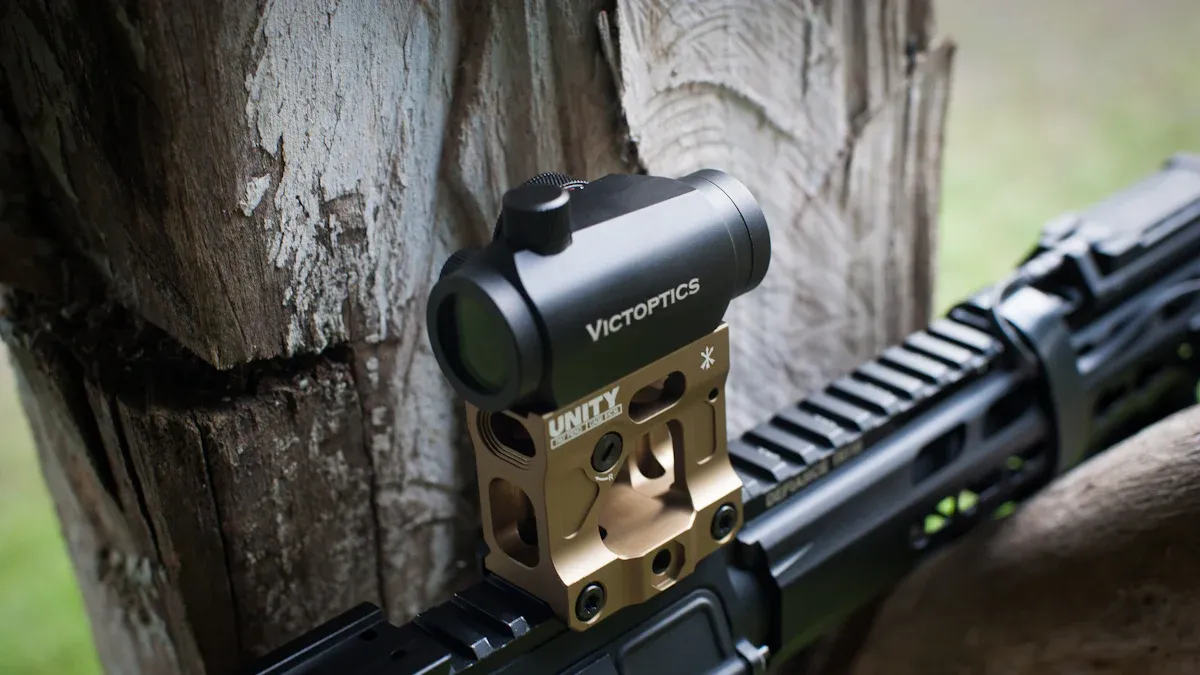
Selecting the right red dot sight transforms shooting accuracy and performance. Test results reveal that some models minimize aiming errors at 100 yards, ensuring consistent precision. Others, like the MRO, can cause alignment issues, leading to missed IPSC target zones. By evaluating factors such as features, compatibility, and budget, shooters can elevate their experience with reliable dot sights.
Key Takeaways
- Picking the right red dot sight helps you shoot better and faster. Look at features, what it works with, and your budget to choose the best one.
- Learn about the types of red dot sights—tube-style, open/reflex, holographic, and miniature. Each type works well for different shooting situations.
- Take care of your red dot sight by cleaning the lens and checking for damage. This keeps it working well for a long time.
What Are Red Dot Sights and How Do They Work?
Overview of Red Dot Technology
Red dot sights are advanced optical devices designed to enhance aiming precision. These sights project a red dot onto a lens, allowing shooters to align their target quickly and accurately. Unlike traditional iron sights, dot sights eliminate the need to align multiple points, making them faster and more intuitive to use.
The technology behind red dot sights relies on a combination of components working seamlessly. The table below outlines the key elements and their functions:
| Component | Function |
|---|---|
| Optical Lens | Reflects LED light to form the red dot on target, affecting clarity and field of view. |
| LED Source | Produces the light that forms the visible red dot. |
| Control Buttons | Used for adjusting brightness and powering the sight on/off. |
| Battery | Powers the LED light, with long battery life under typical use. |
| Housing/Mount | Protects internal components and secures the sight to the weapon. |
| Adjustment Knobs | Allows for windage and elevation adjustments to align the sight with the weapon’s point of impact. |
These components work together to provide a reliable and user-friendly aiming solution, making red dot sights a popular choice among shooters.
Benefits of Using Dot Sights for Firearms
Dot sights offer several advantages that improve the shooting experience:
- Faster target acquisition due to the single-point aiming system.
- Enhanced accuracy, especially in dynamic shooting scenarios.
- Improved performance in low-light conditions with adjustable brightness settings.
- Simplified aiming process, reducing the learning curve for beginners.
- Versatility across various firearms, from pistols to rifles.
While some shooters may initially struggle to locate the dot, consistent practice resolves this issue. For experienced users, dot sights can provide a noticeable edge in precision and speed, particularly in competitive or defensive situations.
Types of Red Dot Sights
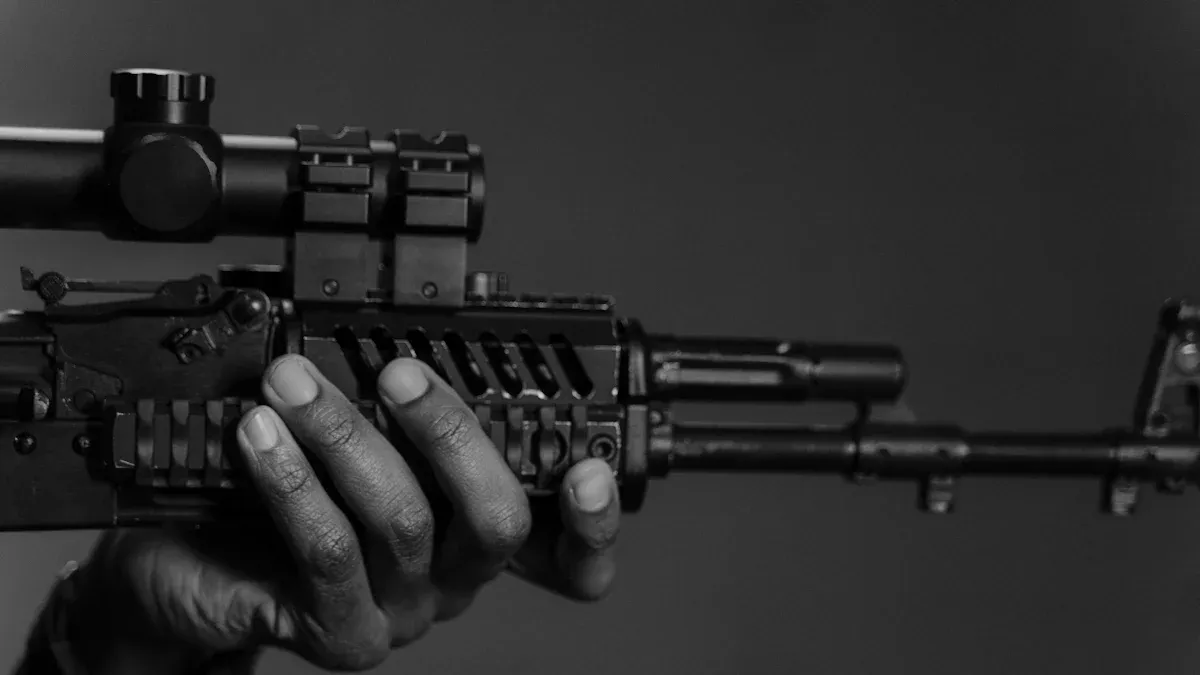
Red dot sights come in various designs, each tailored to specific shooting needs. Understanding the differences between these types helps shooters select the best option for their firearm and intended use.
Tube-Style Red Dot Sights
Tube-style red dot sights resemble traditional scopes in appearance. Their enclosed design protects internal components from environmental factors like dust, rain, and debris. This makes them highly durable and reliable in rugged conditions. These sights are particularly popular among hunters and tactical shooters who require precision over long distances.
Key advantages of tube-style sights include their ability to provide long eye relief and a tighter minute of angle (MOA), which enhances accuracy for distant targets. They also offer compatibility with rifles and shotguns, making them versatile for various firearms. However, their larger size and weight can limit the field of view and add bulk to the firearm.
Pro Tip: Tube-style sights are ideal for shooters who prioritize durability and precision in challenging environments.
Open/Reflex Red Dot Sights
Open or reflex red dot sights feature an exposed design, with the lens mounted on a flat base. This design reduces weight and bulk, making them an excellent choice for handguns and AR-platform rifles. Reflex sights are favored for their unobtrusive profile, which allows for quick target acquisition in dynamic shooting scenarios.
While reflex sights excel in speed and portability, they may lack the durability of tube-style sights. Their exposed components can be more susceptible to damage, and bright sunlight may cause glare on the lens. Despite these drawbacks, reflex sights remain a top choice for competitive shooters and those seeking a lightweight aiming solution.
Holographic Sights
Holographic sights represent a leap in optical technology. Unlike traditional red dot sights, they use a laser to project a holographic reticle onto the lens. This design provides a clearer and wider field of view, making it easier to track moving targets. Holographic sights are also parallax-free, ensuring the reticle stays aligned with the target regardless of the shooter’s head position.
These sights are particularly beneficial for tactical and defensive applications where speed and accuracy are critical. However, their advanced technology comes at a higher price point. They are also slightly larger than some miniature red dot sights, which may not suit every firearm setup.
Did You Know? Holographic sights are the go-to choice for many law enforcement and military professionals due to their precision and reliability.
Miniature Red Dot Sights (MRDS)
Miniature red dot sights, or MRDS, are compact and lightweight, designed for use on pistols and smaller firearms. Their small size makes them ideal for concealed carry and self-defense scenarios. Despite their compact design, MRDS still deliver excellent performance, offering fast target acquisition and improved accuracy.
These sights are often mounted on handgun slides or used as backup sights on rifles. While they may lack some of the advanced features of larger sights, their portability and ease of use make them a favorite among everyday carriers and competitive shooters.
| Type | Pros | Cons |
|---|---|---|
| Tube Red Dot Sights | Durable, good for long eye relief, good for rifles and shotguns. | Larger size can reduce the field of view, heavier. |
| Open/Reflex Red Dot Sights | Light, unobtrusive, good for handguns and AR platform rifles. | Can be less durable due to exposed components, and glare in bright sunlight. |
| Holographic Sights | Clearer, wider field of view, parallax-free. | More expensive, slightly bigger than some MRDS. |
Each type of red dot sight offers unique benefits and trade-offs. Shooters should consider their specific needs, firearm compatibility, and shooting environment when making a choice.
Key Features to Evaluate
Reticle Options and Adjustability
The reticle is the heart of any red dot sight. Shooters should evaluate the size, shape, and brightness of the reticle to ensure it meets their needs. Many sights offer adjustable reticle brightness, allowing users to adapt to varying light conditions. Some models even provide multiple reticle patterns, such as a simple dot, a circle-dot combination, or crosshairs, catering to different shooting scenarios.
Adjustability is equally important. Windage and elevation knobs allow precise alignment of the reticle with the firearm’s point of impact. This ensures accuracy at various distances. For example, a sight with 0.5 MOA adjustment increments provides finer control compared to one with 1 MOA increments. Shooters should prioritize models with tactile and audible clicks for easier adjustments in the field.
Tip: A smaller reticle size, such as 2 MOA, is ideal for precision shooting, while larger reticles, like 6 MOA, work better for close-range, fast-paced scenarios.
Durability and Build Quality
A red dot sight must withstand the rigors of real-world use. High-quality materials, such as aircraft-grade aluminum, ensure durability without adding excessive weight. Look for models with shockproof construction to handle recoil and accidental drops. Waterproof and fog-proof designs are also essential for maintaining performance in harsh weather conditions.
In one durability test, a sight endured multiple drops, submersion in water for 30 minutes, and freezing temperatures overnight. Despite these challenges, it continued to function flawlessly. The aluminum housing showed only minor cosmetic damage, and the waterproof seals prevented internal fogging. This level of robustness is crucial for shooters who rely on their equipment in demanding environments.
Note: Always check the manufacturer’s specifications for impact resistance and waterproof ratings, such as IPX7 or IPX8.
Battery Life and Power Source
Battery life directly impacts the reliability of a red dot sight. Modern sights often boast impressive runtimes, with some models lasting tens of thousands of hours on a single battery. For instance, one sight demonstrated a battery duration of 37,892 hours during testing, ensuring uninterrupted performance for years under typical use.
Shooters should also consider the type of battery used. Common options include CR2032 lithium batteries, which are compact and widely available. Some advanced models feature solar panels or motion-activated power-saving modes, further extending battery life. These features reduce the risk of the sight failing at a critical moment.
Pro Tip: Always carry a spare battery in your range bag to avoid unexpected downtime.
Lens Clarity and Coating
The lens quality of a red dot sight significantly affects target acquisition and overall performance. High-quality lenses provide excellent edge-to-edge clarity, minimal distortion, and no noticeable tint. Multi-coated lenses enhance light transmission, ensuring a bright and clear sight picture even in low-light conditions.
In one evaluation, a budget-friendly sight exceeded expectations with its optical quality. The multi-coated lenses delivered exceptional clarity, allowing shooters to maintain focus on their target without distractions. This level of performance is essential for both competitive and defensive applications.
Did You Know? Lens coatings also reduce glare, making it easier to aim in bright sunlight.
Size, Weight, and Footprint
The size and weight of a red dot sight influence the firearm’s balance and handling. Compact and lightweight models, such as miniature red dot sights (MRDS), are ideal for handguns and concealed carry setups. Larger tube-style sights may offer additional features but can add bulk, which may not suit every firearm.
The physical footprint of the sight determines its compatibility with mounting systems. Shooters should ensure the sight fits their firearm’s rail or mounting plate. A smaller footprint is advantageous for pistols, while rifles can accommodate larger sights without compromising performance.
During testing, a sight with a compact design maintained a grouping of 0.75 MOA at 25 yards, 1.2 MOA at 50 yards, and 2.1 MOA at 100 yards. This demonstrates that even smaller sights can deliver exceptional accuracy when paired with the right firearm.
Tip: Choose a sight that complements your firearm’s size and intended use to achieve optimal performance.
Matching the Sight to Your Firearm and Intended Use
Compatibility with Different Firearms
Selecting the right red dot sight depends on its compatibility with the firearm. Each firearm type, whether a pistol, shotgun, or rifle, has unique requirements. For pistols, lightweight and compact optics maintain balance and ease of handling. Rifles and shotguns can accommodate larger sights, offering advanced features without compromising performance.
The table below highlights key compatibility factors:
| Factor | Description |
|---|---|
| Durability | Red dots must withstand recoil and harsh conditions; look for shockproof and weather-resistant models. |
| Size and Weight | Optics should be lightweight to maintain pistol balance; micro dots for smaller pistols, standard for larger. |
| Reticle Size and Type | Affects target acquisition speed and shooting precision; smaller dots for long-range, larger for close-range. |
| Battery Life and Type | Long battery life is crucial; consider models with motion activation or solar panels for longevity. |
| Mounting Compatibility | Ensure the red dot fits your pistol’s mounting system; compatibility is key for effective use. |
| Ease of Use | Simple controls and easy battery access enhance usability; features like automatic brightness adjustment are beneficial. |
| Price and Value | Balance budget with essential features; high-end options may offer better performance but budget-friendly choices exist. |
Matching the sight to the firearm ensures optimal performance and reliability, especially in demanding scenarios.
Choosing Based on Intended Use (Hunting, Competition, Self-Defense)
The intended use of a red dot sight significantly influences the selection process. Hunters benefit from durable sights that perform well in rugged terrain and adverse weather. Competitive shooters require fast and precise optics to excel in events like IDPA and USPSA. For self-defense, speed and accuracy are critical, making compact and reliable sights essential.
| Scenario | Evidence |
|---|---|
| Hunting | Red dot sights are favored by hunters for their reliability in rugged terrain and harsh weather conditions. |
| Self-Defense | In self-defense situations, red dot sights enhance speed and accuracy, crucial for effective response. |
| Competition | Shooters in competitive events like IDPA and USPSA consistently outperform those using traditional sights when equipped with red dot sights. |
Choosing a sight tailored to the intended use ensures better results and a more satisfying shooting experience.
Considerations for Caliber, Recoil, and Mounting Options
Firearm caliber and recoil play a vital role in selecting a red dot sight. High-caliber firearms generate significant recoil, requiring shockproof optics to maintain zero. Smaller calibers allow for lighter and more compact sights. Mounting options also vary; shooters must ensure the sight fits their firearm’s rail or mounting plate.
For example, a micro red dot sight works well on a concealed carry pistol, while a tube-style sight suits a hunting rifle. Proper mounting ensures stability and alignment, enhancing accuracy and reliability.
Tip: Always verify the mounting system’s compatibility before purchasing a red dot sight.
Budget Considerations and Brand Recommendations
Entry-Level Options for Beginners
Entry-level red dot sights offer an affordable way for beginners to enhance their shooting experience. These models typically focus on essential features, such as a simple reticle and decent battery life, while keeping costs low. Shooters new to optics can benefit from these sights without feeling overwhelmed by advanced settings. Many entry-level options also provide adequate durability for casual use, making them a practical choice for recreational shooting or training.
| Segment Type | Price Range |
|---|---|
| Entry-level | Lower price range |
Tip: Look for entry-level sights with user-friendly controls and basic weather resistance to ensure a smooth learning curve.
Mid-Range Choices for Versatility
Mid-range red dot sights strike a balance between affordability and performance. These models often include features like multiple reticle options, improved lens coatings, and extended battery life. Shooters seeking versatility will appreciate the adaptability of mid-range sights, which perform well across various firearms and shooting scenarios. Whether for hunting, competition, or home defense, these optics deliver reliable performance without breaking the bank.
| Segment Type | Price Range |
|---|---|
| Mid-range | Moderate price range |
Pro Tip: Mid-range sights with motion-activated power-saving modes can maximize battery efficiency during extended use.
Premium Models for Advanced Users
Premium red dot sights cater to experienced shooters who demand top-tier performance. These models feature advanced technologies, such as holographic reticles, solar power integration, and rugged construction. Designed for tactical applications and professional use, premium sights excel in durability, precision, and clarity. While they come at a higher price point, their reliability and cutting-edge features justify the investment for serious users.
| Segment Type | Price Range |
|---|---|
| Premium | Higher price range |
Did You Know? Premium sights often undergo rigorous testing to ensure they withstand extreme conditions, making them a favorite among military and law enforcement professionals.
Trusted Brands Known for Quality Dot Sights
Several brands have earned a reputation for producing high-quality red dot sights. Companies like Trijicon, Aimpoint, and Holosun consistently deliver optics that combine innovation with reliability. For budget-conscious buyers, brands like Vortex and Sig Sauer offer excellent value without compromising performance. Choosing a trusted brand ensures long-term satisfaction and dependable performance in the field.
Note: Always verify warranty terms and customer support options when selecting a brand to ensure peace of mind with your purchase.
Mounting and Maintaining Your Red Dot Sight
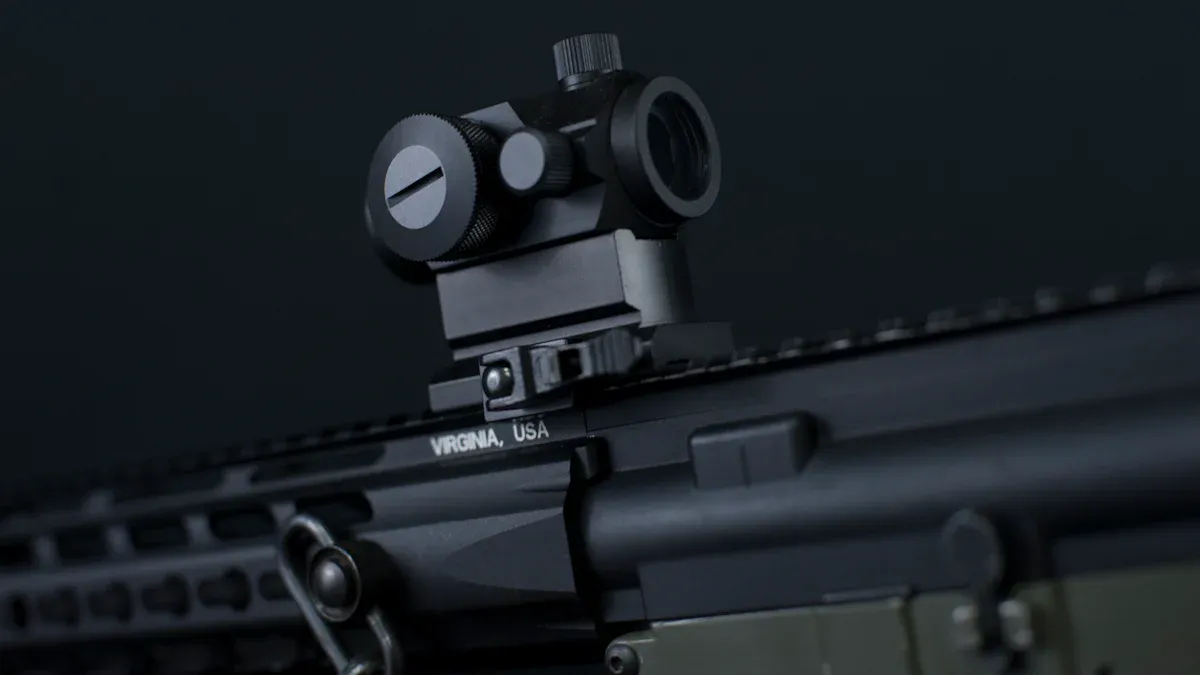
Step-by-Step Mounting Guide
Properly mounting a red dot sight ensures accuracy and reliability. Follow these steps to secure your sight effectively:
- Choose the Right Mount: Select a mount compatible with your firearm’s rail system, such as Picatinny or Weaver.
- Clean the Mounting Surface: Wipe the rail and mount with a lint-free cloth to remove dust and debris.
- Position the Sight: Place the sight on the rail. Align it with your dominant eye for a clear view of the reticle.
- Secure the Screws: Tighten the screws evenly using a torque wrench. Follow the manufacturer’s recommended torque settings to avoid over-tightening.
- Check Alignment: Ensure the sight is level and aligned with the barrel. Adjust if necessary.
Tip: Use thread-locking compound on screws to prevent loosening during recoil.
Tips for Zeroing Your Sight
Zeroing aligns the red dot with the firearm’s point of impact. Here’s how to do it:
- Set Up a Stable Rest: Use a shooting bench or sandbags to stabilize the firearm.
- Start at Close Range: Begin at 25 yards to ensure the dot is on paper.
- Adjust Windage and Elevation: Use the sight’s adjustment knobs to move the reticle. For example, if shots hit low, raise the reticle.
- Confirm at Desired Distance: Test at your preferred range, such as 50 or 100 yards, and fine-tune as needed.
Pro Tip: Fire three-shot groups to verify adjustments and maintain consistency.
Maintenance and Care for Longevity
Regular maintenance keeps your red dot sight in top condition. Follow these practices:
- Clean the Lens: Use a microfiber cloth and lens cleaner to remove smudges and dirt.
- Inspect for Damage: Check for loose screws, cracks, or worn seals after each use.
- Store Properly: Keep the sight in a protective case when not in use. Avoid extreme temperatures and humidity.
- Replace Batteries: Monitor battery life and replace it before it depletes.
Note: Routine care extends the lifespan of your sight and ensures peak performance.
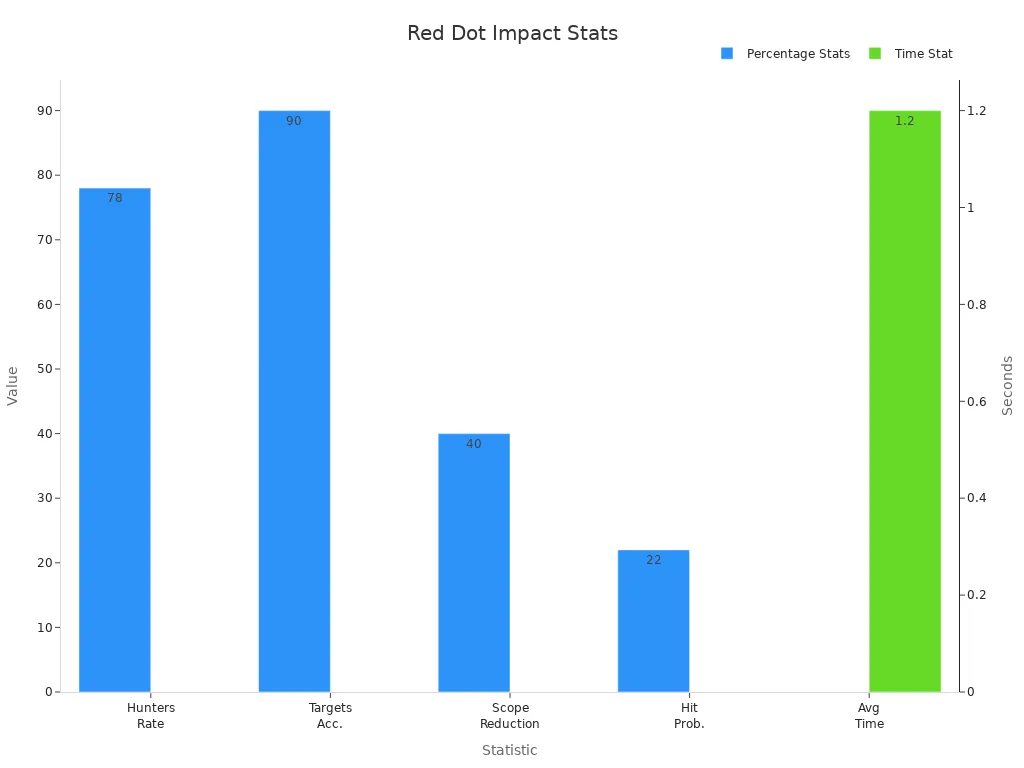
Selecting the right red dot sight transforms shooting accuracy and performance. Shooters who choose optimal sights report a 15% improvement in hit probability on 8-inch plates at 25 yards and a 40% reduction in target acquisition time compared to traditional scopes.
| Statistic Description | Value |
|---|---|
| Percentage of hunters reporting faster acquisition | 78% |
| Accuracy on targets up to 250 yards | 90% |
Assessing personal needs, firearm compatibility, and budget ensures the best choice. A well-chosen sight enhances precision, speed, and confidence in every shot.
FAQ
What is the best red dot sight for beginners?
Beginners should consider entry-level models like the Vortex Crossfire. It offers ease of use, durability, and affordability, making it ideal for new shooters.
How often should you replace the battery in a red dot sight?
Replace the battery annually or when the sight shows dimming. Regular checks ensure reliability, especially before important shooting sessions.
Can red dot sights be used in low-light conditions?
Yes, most red dot sights feature adjustable brightness settings. This allows shooters to adapt to low-light environments, enhancing visibility and accuracy.
Post time: Apr-30-2025