
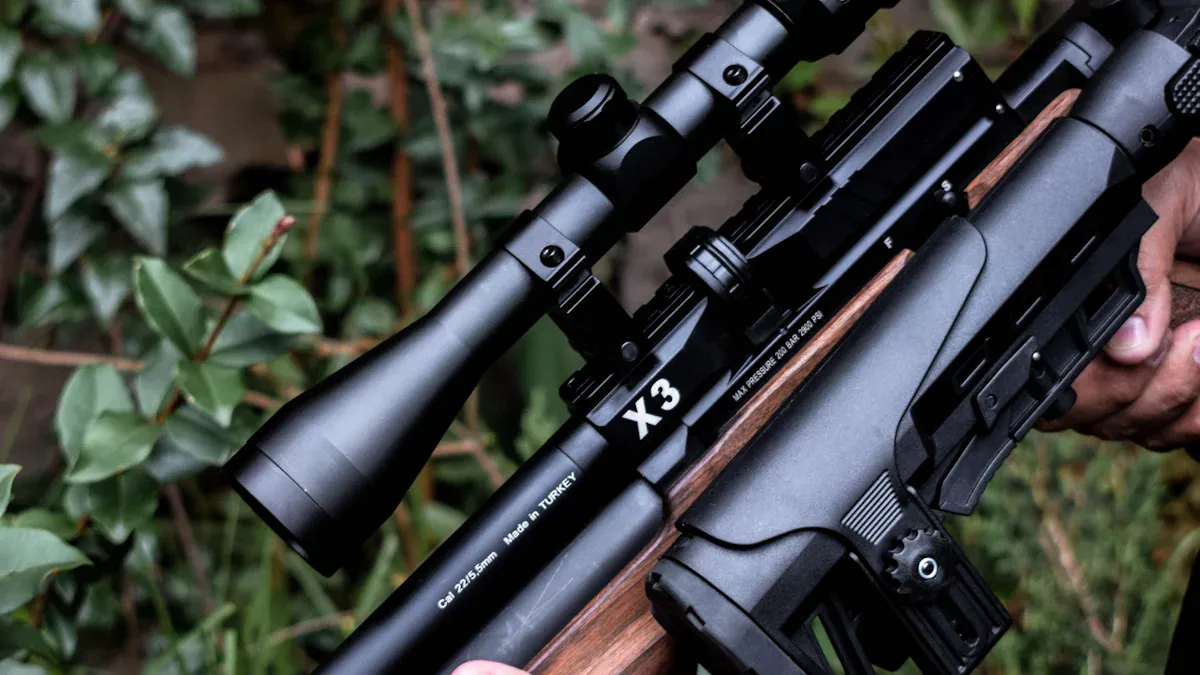
Proper torque for scope rings ensures accuracy and extends equipment life. Torque specifications have evolved, with modern values ranging from 15-25 inch-pounds for scope rings and 35-60 inch-pounds for base screws. Over-tightening risks damaging the scope, while under-tightening can cause movement, affecting accuracy. Tools like torque wrenches help achieve precision when mounting on rails or other accessories.
Key Takeaways
- The right torque for scope rings is 15-25 inch-pounds. This keeps your scope accurate and safe from harm.
- A torque wrench is very important. It helps set the right torque and stops problems like bending or misalignment.
- Check the torque often, especially after shooting 500 rounds. This keeps your scope working well and lasting longer.
Torque and Its Role in Scope Rings
What is torque?
Torque refers to the rotational force applied to an object, such as a screw or bolt. It is measured in inch-pounds (in/lb) or Newton-meters (Nm). In the context of scope rings, torque ensures that screws are tightened to the correct level, securing the scope without causing damage. The principle of torque relies on the relationship between force, distance, and rotation. For example, applying force to a wrench at a specific distance from the pivot point generates torque.
Torque plays a critical role in maintaining the stability of scope rings. Insufficient torque can cause the scope to shift under recoil, while excessive torque may deform the scope or its mounting hardware. The balance between these extremes ensures optimal performance and durability.
| Torque Condition | Consequence |
|---|---|
| Insufficient Torque | Can cause optics to move due to inertial force, leading to potential physical damage and warranty voiding. |
| Excessive Torque | May deform the aluminum housing of the optics, resulting in severe damage and warranty voiding. |
Why torque matters for scope rings
Proper torque is essential for the functionality and longevity of scope rings. When a scope is mounted, the rings must hold it securely in place to maintain accuracy. If the screws are too loose, the scope may shift during use, leading to inconsistent performance. On the other hand, over-tightening can damage the scope’s body or the rings themselves.
Case studies have shown that a scope’s accuracy depends heavily on its mounting setup. Loose rings or poor alignment often result in significant performance issues. Using a torque wrench to tighten screws to the manufacturer’s specifications ensures a stable foundation for the scope. This practice not only improves accuracy but also protects the equipment from unnecessary wear and tear.
How manufacturers determine torque specifications
Manufacturers use precise methods to establish torque specifications for scope rings. These specifications are based on extensive testing and quality control measures. The process often involves simulating real-world conditions to ensure the rings perform reliably under various stresses.
- Calibration weights and a calibration lever arm simulate torque during testing.
- Dynamometers or engines generate nominal torque, which is measured using a reference load cell or proving ring.
- The reference load cell provides a baseline measurement for torque calibration.
Manufacturers also specify torque values for different components. For example:
| Component | Torque Specification |
|---|---|
| Cap Screws on Scope Rings | 17-20 in/lb |
| Scope Mounts to Action | Depends on receiver |
These values are carefully calculated to balance security and safety. Following these guidelines ensures that the scope rings function as intended, providing a reliable and accurate shooting experience.
Consequences of Improper Torque
Over-tightening scope rings
Applying excessive torque to scope rings can lead to severe damage. Over-tightening often deforms the scope tube, creating permanent indentations or even crushing the tube in extreme cases. This damage affects the internal components, such as the lenses and adjustment mechanisms, which are critical for maintaining accuracy.
Excessive torque can permanently damage the tube, ‘crimping’ the metal and even crushing the tube in extreme cases. Inside your optic, the mechanical and optical components responsible for providing a sharp image and dialing your point of aim can be restricted. Not only does this limit your dialing range, it can diminish your riflescope’s ability to hold a zero.
Mechanical stress measurements also highlight the risks of over-tightening.
- Stress on the scope tube can cause backlash in the side focus and create tight spots.
- Non-concentric inner surfaces of scope rings may bend the scope body, leading to internal damage.
- Lapping scope rings can reduce stress and improve stability.
Under-tightening scope rings
Under-tightening scope rings poses a different set of challenges. Loose screws fail to secure the scope properly, allowing it to shift during recoil. This movement disrupts alignment, leading to inconsistent accuracy and potential damage to the scope.
| Issue | Description |
|---|---|
| Under-tightening | Can lead to scope damage and misalignment, affecting accuracy. |
| Scope misalignment | Often results from improper tightening, leading to potential damage if not addressed correctly. |
Field studies reveal that under-tightening often results in misalignment. For example, scopes without proper torque may show indentations on the tube, indicating movement during use. These issues emphasize the importance of using a torque wrench to achieve the correct specifications.
Impact on scope performance and durability
Improper torque, whether excessive or insufficient, directly impacts scope performance and durability. Over-tightening restricts internal components, reducing the scope’s ability to hold zero and limiting adjustment ranges. Under-tightening causes misalignment, leading to erratic accuracy and potential damage over time.
Both scenarios highlight the importance of proper torque application. Using high-quality tools and following manufacturer specifications ensures that scope rings provide a stable and secure mount. This practice not only protects the scope but also enhances its long-term performance.
Step-by-Step Guide to Properly Torque Scope Rings
Tools required for the job
Using the right tools ensures precision and prevents damage during the installation of scope rings. A torque wrench is the most essential tool for this process. It allows users to apply the exact amount of torque specified by the manufacturer. Most manufacturers recommend torque settings between 15-25 inch-pounds for scope rings and 35-60 inch-pounds for base screws.
Other necessary tools include a bubble level to ensure proper alignment, a screwdriver set compatible with the screws, and a soft cloth to protect the scope from scratches. Some users may also find a boresighter helpful for initial alignment. These tools, when used correctly, help achieve a secure and accurate setup.
Preparing scope rings and scope for installation
Proper preparation reduces errors during installation. Start by cleaning the scope rings and screws to remove any debris or oil that could affect torque application. Verify that the scope rings match the diameter of the scope tube. Mismatched sizes can lead to improper tightening and potential damage.
Next, ensure the scope is level on both horizontal and vertical axes. Use a bubble level to check alignment. This step prevents misalignment, which can affect accuracy. Begin the boresighting process at a shorter distance, such as 25 yards, to make alignment corrections easier. Following these steps ensures a smooth installation process.
Correct tightening process for scope rings
Tightening scope rings requires a systematic approach to achieve the recommended torque levels. Begin by securing the scope rings to the base at the specified torque value, typically 35-45 inch-pounds. Then, place the scope in the rings and lightly tighten the screws to hold it in place.
Incrementally tighten the screws in a zig-zag pattern, turning each screw 1/2 turn at a time. This method ensures even pressure distribution and prevents over-tightening. Use a torque wrench to tighten the screws to the recommended value, usually 15-18 inch-pounds. Avoid using thread-locking compounds unless specified by the manufacturer. This process ensures the scope is securely mounted without risking damage.
Ensuring even pressure and avoiding damage
Applying even pressure during installation is crucial for maintaining the integrity of the scope and rings. Tighten the screws gradually and monitor the gap between the scope rings. The gap should remain consistent on both sides to avoid uneven pressure.
Double-check the alignment of the scope after tightening. Ensure the reference level is perpendicular to the barrel and that the index level matches the reference level. These steps prevent misalignment and ensure the scope performs optimally. Following these protocols protects the scope from damage and enhances its durability.
Best Practices for Torqueing Scope Rings
Follow manufacturer torque specifications.
Adhering to the torque specifications provided by the manufacturer ensures the proper functioning of scope rings. These values are determined through rigorous testing to balance security and safety. Using a torque wrench calibrated to the recommended settings prevents over-tightening or under-tightening. For example, a manufacturer may specify 15-18 inch-pounds for ring screws. Following these guidelines protects the scope from damage and ensures consistent accuracy. Ignoring these specifications often leads to performance issues, such as misalignment or deformation of the scope tube.
Avoid thread-locking compounds unless specified.
Thread-locking compounds, while useful in some applications, can cause problems when used on scope rings. These substances act as lubricants, which may lead to over-torquing. Over-tightening can deform the scope tube or damage the screws. Additionally, thread lockers alter torque values, making it difficult to achieve the precise settings recommended by the manufacturer.
- Thread-locking compounds can cause over-torquing of the rings.
- They may hold screws in place but often lead to damage if torque values are not followed.
- Manufacturers generally advise against using thread lockers on ring screws unless explicitly stated.
Avoiding these compounds ensures the integrity of the scope and its mounting system.
Use high-quality scope rings and tools.
Investing in high-quality scope rings and tools enhances the reliability of the setup. Premium scope rings are manufactured with precise tolerances, ensuring a secure fit without damaging the scope. Tools like torque wrenches and bubble levels provide the accuracy needed for proper installation. For instance, a poorly made torque wrench may deliver inconsistent results, leading to improper torque application. High-quality equipment minimizes these risks and ensures a stable and durable mounting system.
Regularly check and maintain torque settings.
Regular maintenance of torque settings helps preserve the performance of scope rings. Over time, screws may loosen due to recoil or environmental factors. Periodic checks with a torque wrench ensure that screws remain at the recommended settings. For example, a shooter might inspect the torque after every 500 rounds or during seasonal equipment maintenance. This practice prevents misalignment and extends the lifespan of both the scope and its mounting hardware.
Proper torque application ensures accuracy and protects scopes from damage. Following manufacturer guidelines and using tools like torque wrenches prevent common issues such as misalignment or deformation.
Tip: Regularly check torque settings to maintain performance. Consistent maintenance and adherence to best practices extend the lifespan of both the scope and its mounting system.
FAQ
What happens if I don’t use a torque wrench for scope rings?
Without a torque wrench, achieving precise torque becomes difficult. This can lead to over-tightening or under-tightening, causing damage or misalignment of the scope.
Can I reuse scope ring screws after removing them?
Yes, but inspect the screws for wear or damage. Replace any stripped or deformed screws to ensure a secure and reliable mounting system.
How often should I check the torque on my scope rings?
Check torque settings after every 500 rounds or during seasonal maintenance. Regular inspections prevent loosening and maintain consistent accuracy over time.
Post time: May-09-2025