
Selecting the right magnification for a rifle scope significantly impacts shooting performance. Different shooting activities demand tailored magnification levels to ensure accuracy and efficiency. For instance:
- Close-quarters defense or brush hunting requires 1x–4x magnification for distances up to 100 yards.
- Deer hunting in wooded areas benefits from 3x–9x magnification for up to 200 yards.
- Long-range target shooting often necessitates 8x–16x or higher for precision beyond 300 yards.
Matching magnification to shooting distance and environment ensures optimal results, whether mounting a scope on a Rail for stability or adapting to varied terrains.
Key Takeaways
- Pick magnification based on what you are shooting. For short distances, use 1x–4x. For deer hunting, go with 3x–9x. For far distances, choose 8x–16x or more.
- Learn about First Focal Plane (FFP) and Second Focal Plane (SFP) scopes. FFP scopes change the reticle size as you zoom in or out. SFP scopes keep the reticle size the same, which can change accuracy.
- Match magnification with field of view (FOV). Higher magnification makes FOV smaller, which helps with precise shots. Lower magnification gives a wider view to see more around you.
Understanding Rifle Scope Magnification
How magnification works
Magnification in a rifle scope determines how much closer a target appears compared to viewing it with the naked eye. This is achieved through a series of lenses inside the scope that manipulate light to enlarge the image. For example, a 4x magnification makes the target appear four times closer. The internal mechanism adjusts magnification by altering the distance between the lenses, which changes the focal length.
Scopes are categorized into two main types based on their magnification mechanism: First Focal Plane (FFP) and Second Focal Plane (SFP). In FFP scopes, the reticle size changes with magnification, maintaining proportionality to the target. SFP scopes, however, keep the reticle size constant, which can affect accuracy at varying magnifications.
| Aspect | Description |
|---|---|
| Types of Scopes | FFP and SFP scopes differ in how the reticle behaves with magnification changes. |
| Magnification Mechanism | Internal adjustments control magnification, windage, and elevation. |
| Practical Tips | Adjusting controls and understanding parallax are crucial for optimal performance. |
Field of view and magnification
Field of view (FOV) refers to the width of the area visible through the scope at a specific distance. It is inversely related to magnification. As magnification increases, the FOV narrows, allowing the shooter to focus on finer details but reducing situational awareness. For instance, at 18x magnification, the FOV is significantly smaller than at 4x magnification.
A balance between magnification and FOV is essential for different shooting scenarios. Close-range shooting benefits from a wider FOV, while long-range precision shooting requires higher magnification. Studies show that optical clarity, FOV, and zoom ratio contribute to a scope’s performance, as outlined below:
| Aspect | Weight |
|---|---|
| Optical Clarity | 70% |
| Field of View | 15% |
| Zoom Ratio | 15% |
Key factors to consider
Several factors influence the choice of magnification in a rifle scope. These include the intended shooting activity, environmental conditions, and user preferences. High-power scopes, typically above 12x, are ideal for long-range precision shooting. However, they may not perform well in low-light conditions due to reduced exit pupil size. Lower magnification scopes, on the other hand, provide better light transmission and are more versatile in dynamic environments.
Other critical considerations include the type of reticle, integrated features like ballistic compensators, and the shooter’s specific needs. The table below summarizes these factors:
| Key Factor | Description |
|---|---|
| Magnification Range | High-power scopes are essential for long-range and precision shooting. |
| Type of Reticle | Reticle choice affects aiming precision and target acquisition. |
| Integrated Features | Features like ballistic compensators enhance performance in challenging conditions. |
| User Needs and Environment | Magnification selection varies based on specific user needs and shooting environments. |
Tip: Lower magnification increases the exit pupil size, improving image brightness. This is particularly useful in low-light conditions, such as early morning or dusk hunting.
Magnification Ranges and Applications
Low magnification: Close-range and dynamic shooting
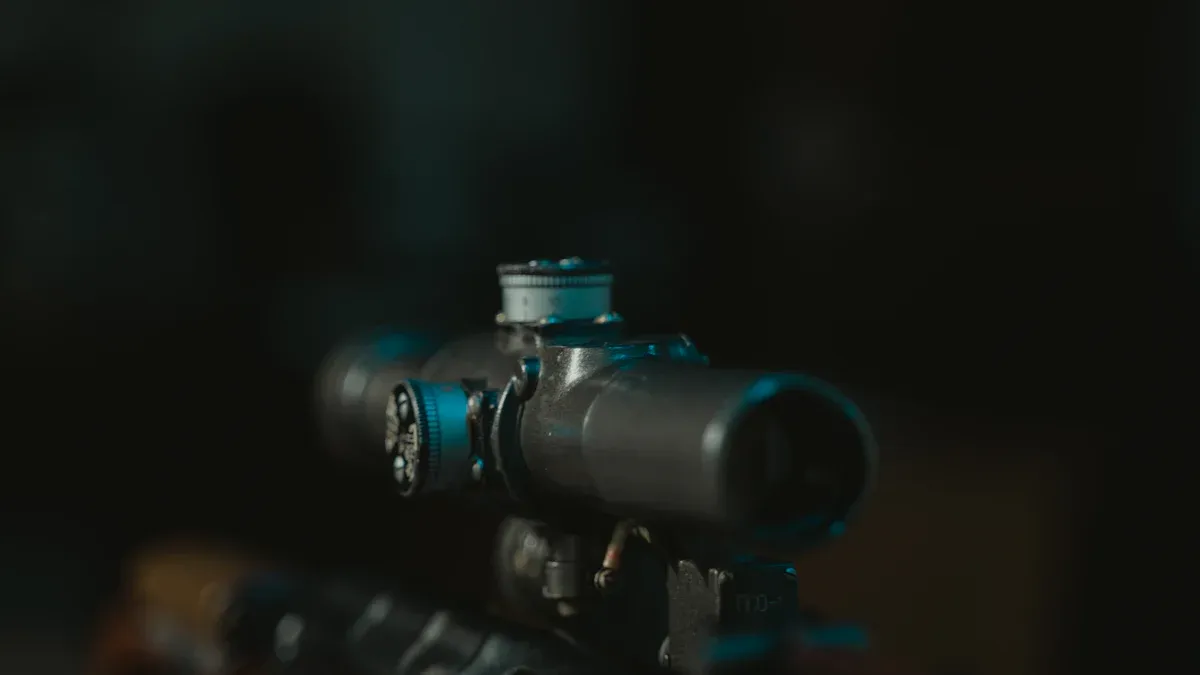
Low magnification settings, typically ranging from 1x to 4x, excel in close-range and dynamic shooting scenarios. These scopes provide a wide field of view, allowing shooters to maintain situational awareness while tracking fast-moving targets. For hunting in dense environments, such as wooded areas, or tactical applications requiring quick target acquisition, low magnification proves invaluable.
Recent market studies highlight the efficiency of low magnification scopes in dynamic situations. For instance:
| Scope Type | Advantages in Dynamic Situations | Disadvantages in Dynamic Situations |
|---|---|---|
| FFP | Maintains reticle size and accuracy across distances, enhancing situational awareness and usability. | N/A |
| SFP | N/A | Requires recalibration of aiming techniques as magnification changes, potentially leading to inaccuracies. |
Additionally, scopes with magnification ranges between 1x and 8x are widely recognized for their adaptability in hunting applications. Their ability to balance clarity and speed makes them a preferred choice for close-range engagements.
Tip: Low magnification scopes are ideal for environments where speed and agility are critical, such as brush hunting or tactical shooting drills.
Medium magnification: Versatility for mid-range
Medium magnification, typically between 3x and 9x, offers versatility for mid-range shooting. These scopes strike a balance between precision and adaptability, making them suitable for varied scenarios. Shooters benefit from enhanced target acquisition without sacrificing field of view, which is crucial for engagements at distances of 100 to 300 yards.
Several products demonstrate the effectiveness of medium magnification in mid-range shooting:
- Aimpoint 3x-C: Fixed 3x magnification enhances quick target acquisition.
- Aimpoint 3xmag-1: Offers flexibility between 1x and 3x, though adjustment time may impact speed.
- Hybrid Setup: Combines 1x for close-range and 3x for mid-range shooting, ensuring adaptability.
- Vudu 1-6x: Provides consistent magnification for precise shots, excelling in mid-to-long-range scenarios.
These setups are particularly effective on platforms like 10.5" AR rifles, enabling accurate shooting at distances up to 500 yards. The ability to transition seamlessly between magnifications underscores the importance of medium-range optics for hunters and sport shooters alike.
High magnification: Precision for long-range
High magnification scopes, typically above 12x, are essential for long-range precision shooting. These optics allow shooters to focus on distant targets with exceptional clarity, making them indispensable for competitive shooting and hunting at extended ranges.
Top shooters emphasize the importance of adjustable magnification for visibility in varying conditions. For example:
- Austin Orgain, a two-time PRS Champion, uses 16x magnification during matches.
- He adjusts to 20x for difficult-to-see targets, showcasing the need for higher magnification in challenging scenarios.
- His preferred range of 12x–18x highlights the versatility required for long-range accuracy.
LPVO optics also offer variable magnification, starting at 1x for close-range and extending to higher levels for precision shots. Key performance factors include optical clarity, reticle design, and ease of adjustment, all contributing to effective long-range shooting.
Note: High magnification scopes are ideal for scenarios where precision is paramount, such as competitive shooting or hunting in open terrains.
Choosing Magnification Based on Shooting Activity
Hunting: Adapting to varied environments
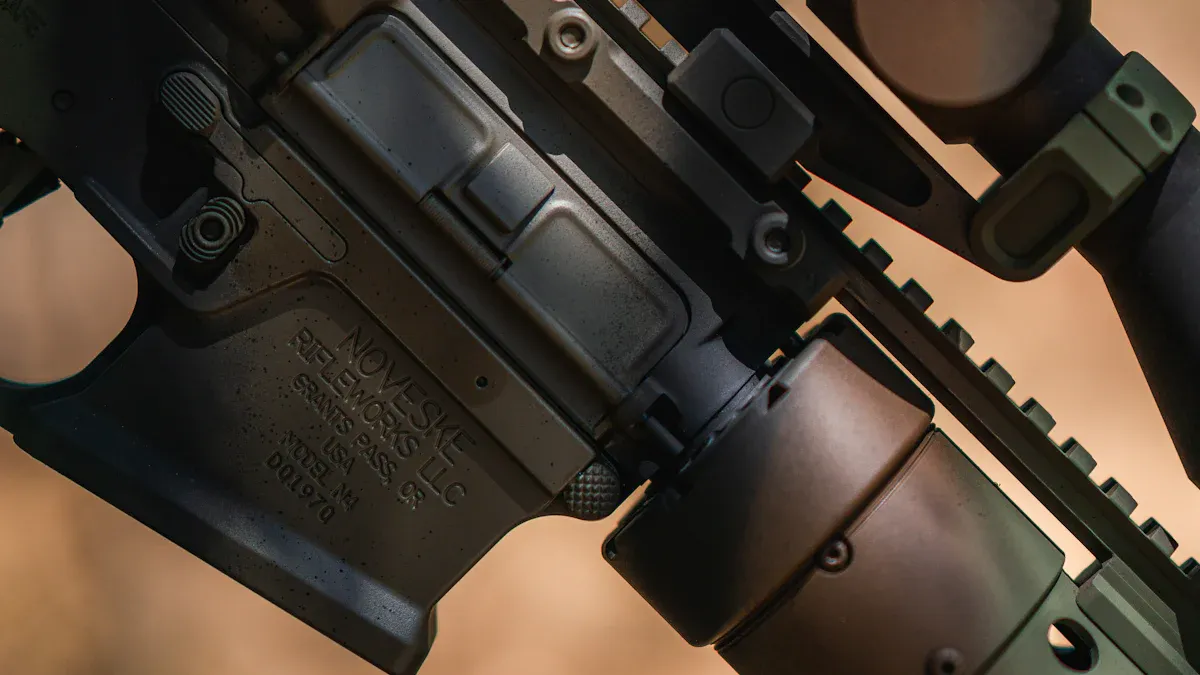
Hunters often face diverse environments, from dense forests to open plains. Selecting the right magnification ensures adaptability to these changing conditions. Low-power scopes, ranging from 1x to 4x, are ideal for close-quarter hunting in wooded areas. They provide a wide field of view, enabling quick target acquisition when tracking fast-moving game. On the other hand, medium-power scopes, such as those between 4x and 12x, offer versatility for mid-range shots in open fields or mixed terrains.
A technical comparison highlights the advantages of different magnification settings for hunting:
| Magnification Range | Ideal For | Pros | Cons |
|---|---|---|---|
| Low Power (1-4x) | Close-quarter hunting | Wide field of view for quick target acquisition | Limited detail at long distances |
| Medium Power (4-12x) | Versatile hunting | Good balance of magnification and field of view | Higher magnification limits field of view at lower settings |
Hunters should consider the terrain and the type of game they pursue. For example, a hunter in a dense forest may benefit from a low-power scope, while one in open plains may prefer medium magnification for longer shots.
Tip: A medium-power rifle scope offers the flexibility to adapt to varied hunting environments, making it a reliable choice for most hunters.
Target shooting: Prioritizing accuracy
Target shooting demands precision and consistency. Medium-power scopes, typically between 4x and 12x, provide the balance needed for accuracy at mid-range distances. For shooters aiming at targets beyond 100 yards, high-power scopes with magnifications of 14x to 20x are often preferred. Market research reveals that 83% of shooters favor magnifications within this range, with nearly half preferring 18x to 20x for enhanced clarity and precision.
Key considerations for target shooting include:
- Magnification range: Medium to high power ensures accuracy at varying distances.
- Field of view: A wider field of view aids in locating targets quickly.
- Stability: High magnification can amplify scope jitter, so a stable shooting platform is essential.
For competitive shooters, excessive magnification (above 25x) may hinder performance. It can reduce the field of view, making it harder to locate and track targets. Precision rifle competitors often use scopes set between 10x and 16x, balancing clarity and situational awareness.
Note: When selecting a scope for target shooting, prioritize magnification that aligns with the shooting distance and ensures a stable, clear view of the target.
Long-range shooting: Enhancing precision
Long-range shooting requires high magnification to achieve precise shots at extended distances. Scopes with magnifications of 16x or higher allow shooters to focus on distant targets with exceptional detail. However, selecting the right magnification involves balancing clarity, field of view, and stability.
Research from long-range shooting competitions highlights the importance of adjustable magnification:
- Most competitors prefer scopes set between 10x and 16x for better field of view and target tracking.
- High magnification scopes (25x to 30x) can hinder performance by increasing scope jitter and slowing target acquisition.
- A 10x to 30x scope range accommodates the preferences of most long-range shooters.
For optimal performance, shooters should consider the terrain and environmental conditions. Open terrains with minimal obstructions benefit from higher magnification, while mixed terrains may require adjustable scopes for flexibility.
Tip: Avoid excessive magnification unless necessary. A balanced magnification range ensures precision without compromising target acquisition speed.
Selecting the right magnification ensures optimal performance across various shooting activities. Advancements in 2025, such as digital range finders and ballistic calculators, enhance precision and usability. Shooters should explore scopes tailored to their needs, considering features like variable magnification for versatility or fixed power for simplicity. Informed decisions lead to improved accuracy and satisfaction.
FAQ
What magnification is best for beginners?
Beginners should start with a scope offering 3x–9x magnification. This range provides versatility for mid-range shooting and helps develop accuracy without overwhelming complexity.
How does magnification affect low-light performance?
Lower magnification improves low-light performance by increasing the exit pupil size. This allows more light to reach the shooter’s eye, enhancing visibility in dim conditions.
Can one scope cover all shooting activities?
A variable magnification scope, such as 3x–18x, offers flexibility for multiple activities. It adapts to close-range, mid-range, and long-range shooting scenarios effectively.
Post time: Apr-23-2025