
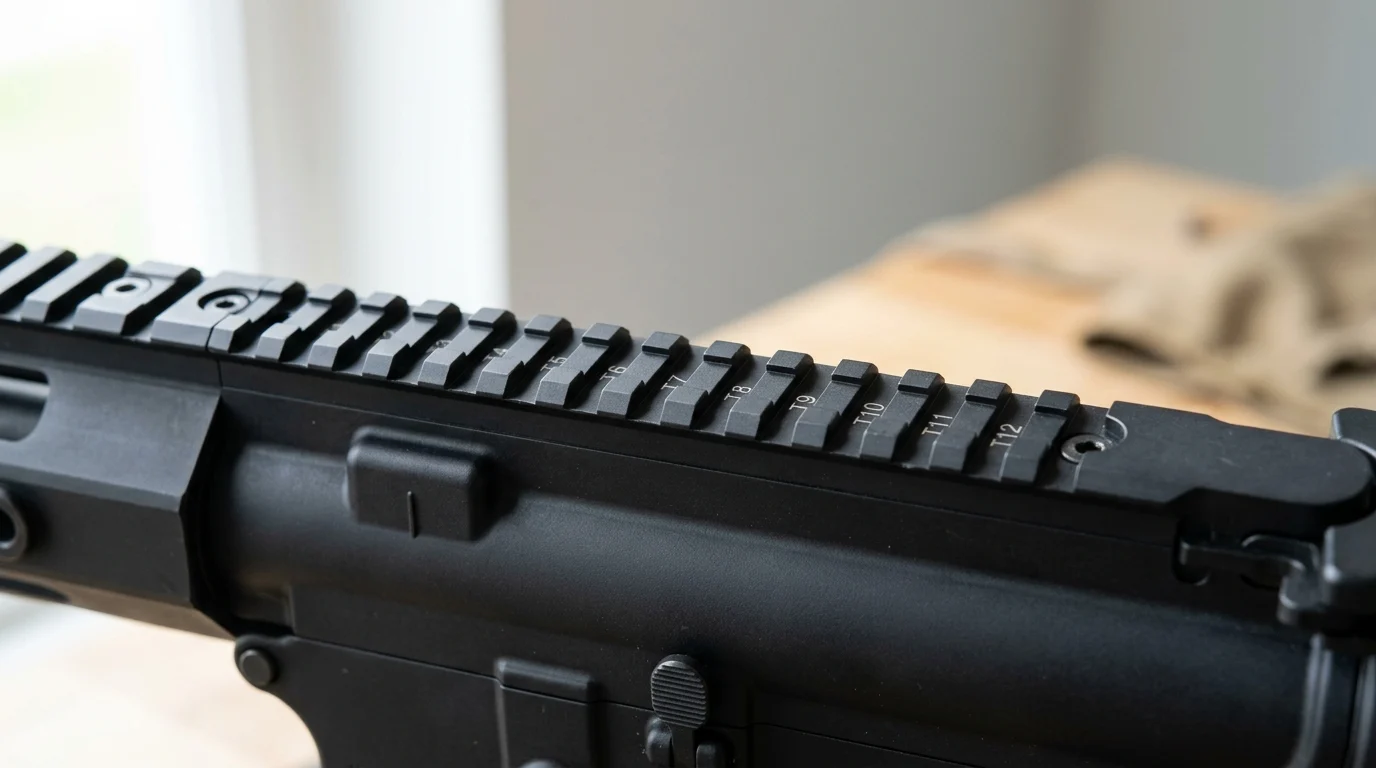
A rifle’s mounting system is only as reliable as the rail holding everything together. The Picatinny rail remains a go-to standard because its MIL-STD-1913 dimensions give shooters repeatable fit, strong recoil resistance, and broad accessory compatibility. Whether you are mounting a precision optic, adding a bipod, upgrading to a 20 MOA base, or improving ergonomics with rail covers, the right changes can make a rifle more capable without adding unnecessary complexity. This guide looks at practical upgrades that matter in real use: stronger lockup, better zero retention, smarter accessory placement, and compatibility choices that prevent frustrating fitment issues.
Why Picatinny Rails Still Matter
In the ever-evolving world of firearms, new mounting standards constantly vie for the spotlight. Yet, despite the sleek appeal of modern alternatives, the classic Picatinny rail refuses to fade into obsolescence. It remains a premier standard for modularity, offering a rugged, reliable foundation that turns a standard rifle into a highly adaptable tool.
The secret to its survival lies in a robust, overbuilt design. While newer systems focus on shaving off every possible fraction of an ounce, the Picatinny system prioritizes absolute rock-solid lockup, capable of withstanding recoil shock forces exceeding 10,000 Gs on heavy-caliber platforms like the .50 BMG. For shooters who demand that their gear stays exactly where they put it, regardless of recoil or rough handling, this ribbed platform is still the benchmark.
What Defines a True Picatinny Rail
To appreciate the platform, one must understand its DNA. Officially codified as MIL-STD-1913, a true Picatinny platform—whether an integrated receiver or an aftermarket scope base or rail—is defined by strict dimensional tolerances. The standard specifies a nominal slot width of 0.206 inches (with a tight tolerance of +0.008/-0.000 inches) and a center-to-center spacing of 0.394 inches. These standardized dimensions are what allow a scope ring manufactured in Europe to seamlessly mate with a base machined in the United States.
| Specification | MIL-STD-1913 (Picatinny) | Traditional Weaver |
|---|---|---|
| Slot Width | 0.206 in (+0.008 / -0.000) | 0.180 in (Typical) |
| Center-to-Center Spacing | 0.394 in (Consistent) | Variable / Unstandardized |
| Recoil Lug Compatibility | Fits Picatinny only | Fits Weaver & Picatinny |
| Typical Material | 6061-T6 or 7075-T6 Aluminum | Aluminum or Steel |
Unlike older Weaver systems—which feature narrower slots and sometimes varying slot spacing—the MIL-STD-1913 standard ensures that accessories can be swapped, moved, and reattached without losing their zero. Because Picatinny recoil lugs are wider, they often will not fit into Weaver rails, though Weaver accessories can typically mount onto a Picatinny rail. This universal consistency is why militaries and civilian enthusiasts alike continue to trust it with their most critical optical equipment. However, buyers should be aware of a common compatibility caveat: not all "Picatinny-style" rails on the market are true MIL-STD-1913. Some factory rails are Weaver or proprietary variants, so fit should always be verified before mounting critical optics.
When to Keep the Factory Rail
While the temptation to strip a rifle down and replace every part can be strong, there are plenty of scenarios where keeping the factory rail is the smartest move. Factory-installed top rails are typically milled directly into the receiver (such as integral AR-15 uppers) or attached as separate scope bases and dovetail-to-Picatinny adapters on bolt-action rifles. Receiver-integrated rails offer absolute rigidity compared to handguard-mounted rails, making them ideal for zero-sensitive equipment. Some traditional rifles may even require a gunsmith-installed rail to ensure proper alignment and secure attachment.
If the rifle is destined to wear a heavy precision optic (often weighing 25 to 40 ounces) or a thermal imaging device, the factory receiver rail is often the safest bet. These setups routinely demand high torque specs on the mounting hardware—sometimes reaching 65 inch-pounds for base-to-receiver screws or heavy tactical cross-bolts, depending on the manufacturer's specific guidelines. (By contrast, scope ring screws typically require a much lower 15 to 25 inch-pounds). A factory-integrated platform, often machined from 7075-T6 aluminum with a tensile strength of roughly 83,000 psi, resists that shear force effortlessly, ensuring the optic does not warp or slide during an intense string of fire.
Most Practical Picatinny Rail Upgrades
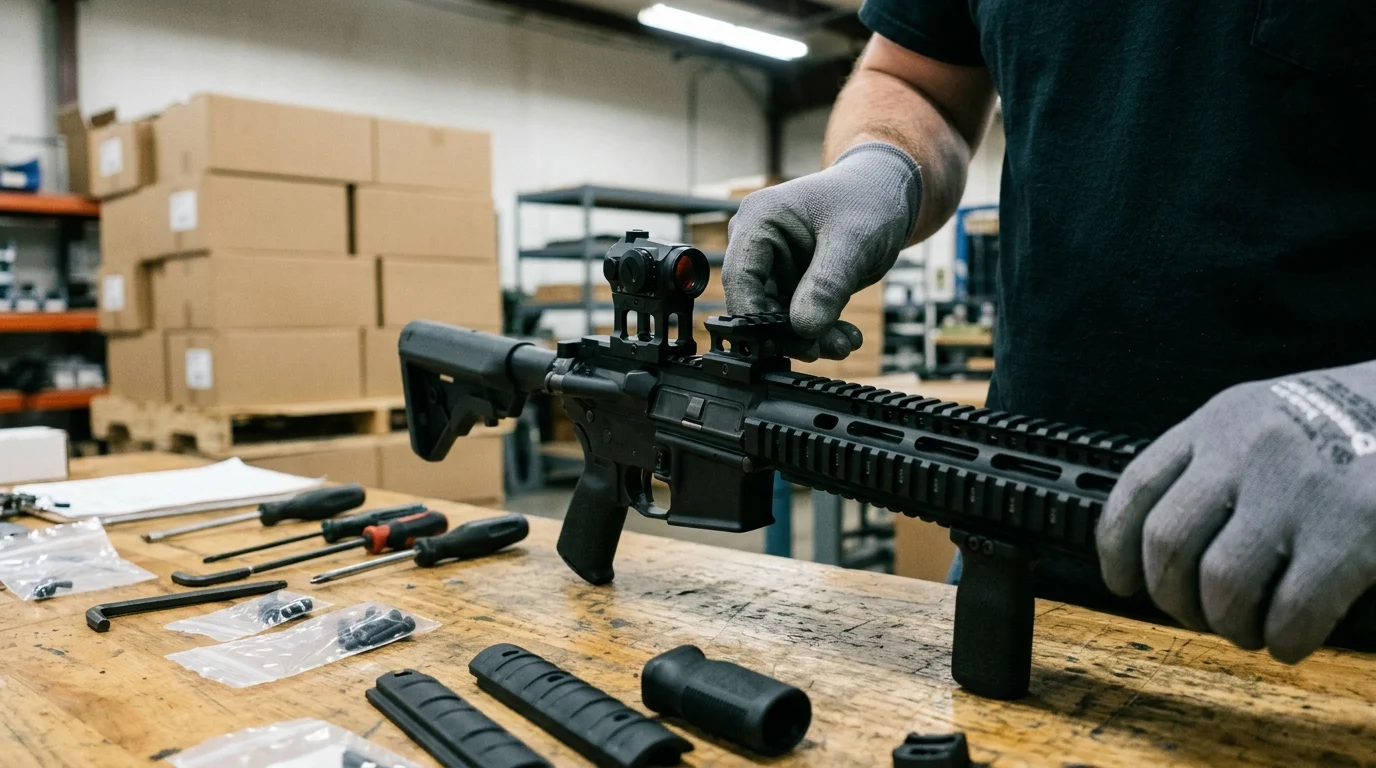
Once the value of the platform is established, the fun part begins: bolting on the upgrades. The aftermarket ecosystem is vast, occasionally overwhelming, and packed with gadgets ranging from essential to purely theatrical. Navigating this market requires a focus on practicality. To truly optimize a rifle, shooters should consider these seven highly practical upgrades:
- Optics Risers
- Cantilever Mounts
- Backup Iron Sights (BUIS)
- Bipod Adapters
- Sling Mounts
- Weapon Lights
- Angled Foregrips or Hand Stops
The most practical upgrades do not just look tough; they actively enhance the shooter's interface with the rifle. Whether the goal is faster target acquisition, better recoil management, or low-light visibility, the right additions transform a barebones firearm into a tailored instrument.
Optics Risers, Cantilever Mounts, and Backup Sights
Optics are only as good as their connection to the rifle. Selecting a purpose-built optic mount is often the first and most critical step a shooter takes.
1. Optics Risers: Modern shooting stances have driven a massive surge in the popularity of optics risers. Elevating a red dot sight to an absolute co-witness (typically 1.54 inches), a lower 1/3 co-witness (1.70 inches), or a 1.93-inch to 2.26-inch height allows for a heads-up posture. This reduces neck strain and accommodates specific cheek weld preferences, night vision goggles, or protective masks. Shooters must note, however, that taller risers add mechanical offset, requiring specific holdovers of 2 to 3 inches at close distances.
2. Cantilever Mounts: For magnified optics on AR-style platforms, cantilever mounts are practically mandatory. They push the scope forward (typically offering 2 to 3 inches of offset) to provide proper eye relief. Buyers should match the mount's offset length to their specific scope's eye relief and tube length. Crucially, this allows the shooter to mount the optic entirely on the rigid receiver, avoiding the common pitfall of "bridging" the mount onto a flexible handguard, which can cause severe zero shifts.
3. Backup Iron Sights (BUIS): Rounding out the sighting package, folding backup iron sights remain a crucial insurance policy. Weighing as little as 1.5 to 3 ounces per set, they sit flat on the rail until the primary optic fails.
Bipod Adapters, Sling Mounts, and Light Mounts
Beyond glass, the rail serves as the perfect anchor point for stabilization and illumination.
4. Bipod Adapters: A quick-detach bipod adapter is a game-changer for precision shooters, allowing them
How to Choose Picatinny Rail Upgrades
Upgrading a firearm is a bit like tuning a high-performance engine. Bolting on the first piece of hardware you find will not win any matches. Selecting the perfect Picatinny rail requires balancing physics, ergonomics, and firepower.
Compare Material, Height, Weight, and Fit
Not all rails are forged equal. While the standard MIL-STD-1913 Picatinny rail relies on precise, standardized dimensions, manufacturers constantly tweak the recipe to optimize performance.
- Material: Aircraft-grade aluminum (specifically 6061-T6 or the stronger 7075-T6) remains the industry gold standard, offering a stellar strength-to-weight ratio. Polymer rails are budget-friendly and ultra-light but risk flexing under the weight of heavy optics.
- Weight: Ounces quickly feel like pounds during a long trek. Skeletonized aluminum rails shave off excess mass without sacrificing structural integrity.
- Height: Adding a riser rail is often necessary to achieve absolute or lower one-third co-witness with iron sights. Getting the height right ensures optics align perfectly with the shooter's eye, preventing the dreaded, uncomfortable "chin weld."
Match Accessories to Your Rifle Setup
Think of a Picatinny rail as prime real estate; how that space is developed dictates the rifle's handling. Overcrowding the front end with heavy bipods, lasers, and flashlights can quickly turn a nimble carbine into a nose-heavy crowbar.
- Prioritize Optics: Ensure the rail segment has enough continuous slots to securely anchor scope rings or a red dot footprint. Bridging an optic across two separate rail pieces can cause a devastating loss of zero.
- Check Clearances: Always leave adequate breathing room for brass ejection and unobstructed charging handle operation.
- Recoil Synergy: For high-caliber setups, match the recoil energy with a solid, single-piece Picatinny rail upgrade. Heavy recoil demands rigid mounting solutions to keep accessories from rattling loose during rapid fire.
By evaluating these core specifications, shooters can transform a standard factory platform into a highly efficient, custom-tailored system that handles exactly the way they want it to.
Key Takeaways
- Verify that any rail marketed as Picatinny follows MIL-STD-1913 dimensions before mounting critical optics.
- Keep a rigid factory-integrated receiver rail if it is properly aligned and already supports your optic setup.
- Choose a 20 MOA Picatinny base when you need additional elevation adjustment for long-range shooting.
- Use high-quality rings, cantilever mounts, or QD mounts that match the recoil level and optic weight of your rifle.
- Prioritize secure lockup and proper torque over cosmetic upgrades, because loose rail hardware can shift zero.
- Select 6061-T6 or 7075-T6 aluminum rails for a strong balance of durability and manageable rifle weight.
Frequently Asked Questions
What makes a Picatinny rail different from a Weaver rail?
A true Picatinny rail follows MIL-STD-1913, with 0.206-inch slots and consistent 0.394-inch spacing. Weaver rails usually have narrower, less standardized slots, so some Picatinny accessories may not fit Weaver bases.
Can Weaver accessories mount on a Picatinny rail?
Usually, yes. Weaver accessories often fit Picatinny rails because their recoil lugs are narrower. The reverse is less reliable because Picatinny recoil lugs may be too wide for Weaver slots.
Should I replace my factory rifle rail?
Not always. A factory-integrated receiver rail is often the most rigid and zero-stable option. Replace it only if you need better alignment, more elevation, improved material quality, or compatibility with specific optics and accessories.
What is a 20 MOA Picatinny rail used for?
A 20 MOA rail tilts the optic slightly downward to preserve elevation adjustment for long-range shooting. It is especially useful when dialing for distance with precision scopes.
Are all Picatinny-style rails true MIL-STD-1913 rails?
No. Some rails marketed as Picatinny-style use Weaver or proprietary dimensions. For critical optics, verify slot width, spacing, and manufacturer specifications before mounting.
Post time: Jul-09-2026