
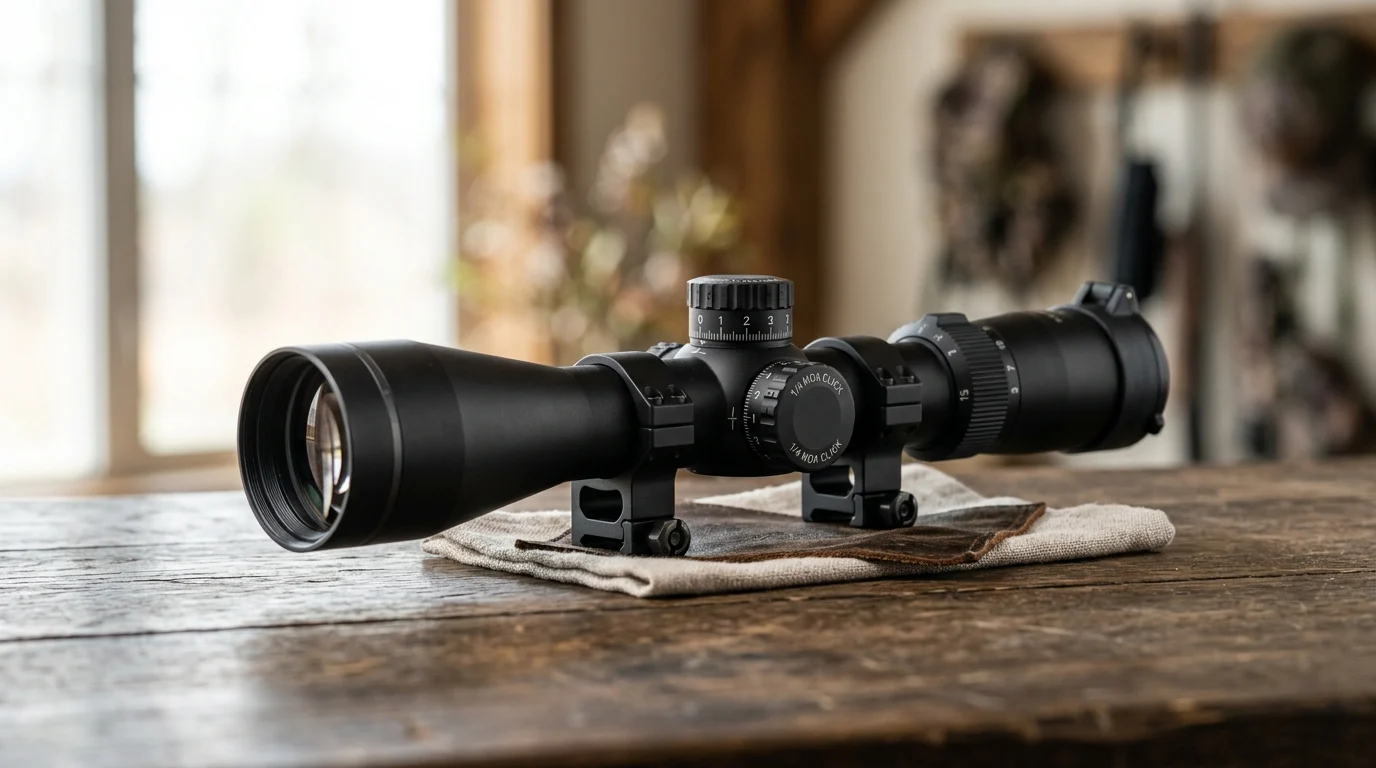
A dependable hunting optic no longer has to drain your gear budget. Thanks to better CNC machining, improved lens coatings, and stronger sealed tube designs, today’s sub-$500 scopes can deliver the clarity, recoil resistance, and weather protection hunters need in real field conditions. The challenge is separating practical performance from marketing noise. This guide focuses on the features that matter most—magnification range, reticle type, turret design, glass quality, durability, and warranty support—so you can choose a scope that stays zeroed, performs in low light, and leaves room in your budget for ammunition, tags, and time in the field.
Why the Best Hunting Scope Under $500 Still Matters
Gone are the days when outfitting a hunting rifle required a second mortgage. Today, the $500 price ceiling represents a sweet spot where modern CNC manufacturing and advanced glass coatings meet everyday affordability. Keep in mind that street prices, seasonal sales, and manufacturer rebates can push models above or below this threshold, so always verify current costs before buying. Ultimately, hunters no longer have to settle for foggy lenses, wandering crosshairs, or fragile turrets to save money.
The optical clarity and mechanical precision in this budget tier often rival what premium optics offered just a decade ago. This proves anyone can find a highly capable rifle scope without emptying their wallet, leaving room in the budget for premium ammunition, travel, and out-of-state tags.
What Defines a Reliable Hunting Scope
A reliable hunting optic must hold zero against heavy recoil, withstand harsh weather, and transmit enough light for an ethical shot. In the sub-$500 category, hunters can expect rugged 1-inch or 30mm main tubes machined from single pieces of aircraft-grade aluminum, which increases structural integrity over older multi-piece designs.
O-ring sealing combined with nitrogen or argon purging is now an industry standard, preventing internal fogging during rapid temperature changes. Additionally, modern entry-level scopes utilize fully multi-coated lenses to significantly improve low-light clarity and glare reduction without the premium price tag, helping the sight picture remain crisp even when the timber canopy is thick and shadows are long.
Real-World Benefits for Deer Hunters
For the everyday deer hunter, these technological leaps translate to tangible success in the field. Beyond just low-light performance at dawn and dusk, modern budget scopes offer reliable tracking and ruggedness that withstand drops or bumps in the woods.
A budget-friendly optic equipped with modern lens coatings and durable internals ensures that when a mature buck steps out, the crosshairs are visible and the zero hasn't shifted. That small window of reliability is often the difference between confidently tagging a deer and going home empty-handed.
Key Hunting Scope Specs to Compare Under $500
Navigating the crowded optics market means understanding which specifications dictate field performance. When keeping the budget under $500, buyers should prioritize core optical performance—like glass quality, reliable turret tracking, and strong manufacturer support—over flashy gimmicks that add little value in the woods. Critical purchasing differentiators heavily influence buying decisions in this tier. Shooters must weigh unconditional lifetime warranties against limited coverage. They should also consider capped turrets for hunting durability versus exposed turrets for dialing, as well as the optic's country of origin.
Magnification, Reticle, Glass, and Durability
The classic 3-9x40mm configuration remains highly versatile for the deer woods, offering a wide field of view for close encounters and enough magnification for a precise 300-yard shot. Stepping up to a 4-12x50mm setup provides more reach and a larger objective lens, though it often adds significant weight to the rifle.
In this price bracket, Second Focal Plane (SFP) reticles dominate. Because the crosshairs stay the same visual size regardless of magnification, hunters must remember that BDC (Bullet Drop Compensator) holdovers are accurate only at the reticle's designated magnification setting—which is often, but not always, the maximum power. Shooters should look for simple duplex or basic BDC reticles. Furthermore, be aware that many sub-$500 hunting scopes have their parallax fixed at 100 yards; while fine for standard ranges, shooting at significantly closer or further distances requires a perfectly consistent cheek weld to avoid accuracy shifts. Paired with a rugged erector system, these setups hold zero reliably. Don't forget to budget for quality accessories like flip-up caps to protect those lenses from mud and snow.
Field Comparison of Popular Budget Scopes
To illustrate what hunters can expect between $150 and $500, here is a breakdown of specific, reliable models that define this price tier, including their real-world handling, category strengths, and known trade-offs:
- Best Overall: Vortex Crossfire II 3-9x40mm: (Street price: ~$150) A rugged entry-level choice offering generous eye relief for heavy-recoiling rifles. It features durable capped turrets, is typically manufactured in China or the Philippines, and is backed by Vortex's unconditional VIP warranty. Its primary weakness is that the glass can be slightly soft around the edges at maximum magnification.
- Best Lightweight: Leupold VX-Freedom 4-12x40mm: (Street price: ~$350) This model steps up the optical clarity with advanced twilight light management. It is designed, machined, and assembled in the USA, and backed by Leupold's Full Lifetime Guarantee. While it excels in low light and remains lightweight, it lacks adjustable parallax, which can be a drawback for precision shooters at extended ranges.
- Best for Long Range: Burris Fullfield IV 3-15x44mm: (Street price: ~$350, though sales occasionally drop it closer to $250) Pushing the top of the budget, this scope introduces a broader magnification range and adjustable parallax for longer shots. Manufactured overseas and backed by the Burris Forever Warranty, its versatility comes with trade-offs: it is a heavier, bulkier optic, and its 3.1–3.8 inch eye relief sits at the lower threshold for hard-kicking rifles, requiring caution to avoid scope bite.
| Scope Model | Configuration | Approx. Weight | Eye Relief Range | FOV @ 100 yds (Low Mag) | Ideal Target Environment |
|---|---|---|---|---|---|
| Vortex Crossfire II | 3-9x40mm | ~15.0 oz | 3.8 – 4.4 inches | ~34 ft | Dense Brush / Timber |
| Leupold VX-Freedom | 4-12x40mm | ~13.1 oz | 3.7 – 4.2 inches | ~29 ft | Mixed Terrain / Hills |
| Burris Fullfield IV | 3-15x44mm | ~18.0 oz | 3.1 – 3.8 inches | ~36 ft | Open Plains / Long Range |
As the table shows, pushing closer to the $500 limit typically nets better glass and sometimes adjustable parallax settings. A minimum of 3.8 inches of eye relief is crucial for hard-kicking magnums to prevent scope bite, making scopes with shorter relief better suited for mild calibers.
How to Choose the Right Hunting Scope Under $500
Finding a high-quality hunting scope for under $500 often feels like searching for a unicorn, but modern optical manufacturing has made it entirely possible. At this price point, shooters must prioritize reliable tracking, durable construction, and clear glass over flashy, tactical extras. A solid sub-$500 optic should offer fully multi-coated lenses to maximize light transmission during dawn and dusk, alongside nitrogen or argon purging to prevent internal fogging during a damp morning hunt.
Mounting, Zeroing, and Field Setup Tips
Even a premium hunting scope will perform terribly if it wobbles on the receiver. Proper setup dictates field success, so treat the mounting process with precision.
- Invest in quality rings: Do not pair a $400 scope with bargain-bin mounting hardware. Use precision-machined aluminum or steel rings to ensure a rock-solid lockup.
- Level the reticle: Use a plumb bob or a specialized leveling kit to ensure the crosshairs are perfectly vertical. A canted reticle severely throws off bullet drop compensation at longer distances.
- Torque to spec: Over-tightening rings can crush the scope tube and permanently damage internal erector systems. Always use a specialized firearm torque wrench set to the manufacturer's specified inch-pounds (typically 15-18 in-lbs for ring screws).
- Bore sight before shooting: Save expensive ammunition by bore-sighting the rifle at 25 yards. Once it is on paper, move to 100 yards to dial in the final zero.
Final Buying Decision for Budget Hunters
When deciding which hunting scope ultimately makes the cut, evaluate the typical hunting environment. Heavy timber hunters chasing whitetail deer rarely need more than a classic 3-9x40mm configuration, while western hunters taking longer shots across open plains might require a 4-16x50mm setup to properly identify targets.
Always check the manufacturer's guarantee. Reputable brands offering a lifetime, no-questions-asked warranty provide peace of mind that a rough tumble down a rocky ridge will not ruin the investment. Ultimately, the right hunting scope balances optical clarity, rugged construction, and a forgiving eye box, ensuring hunters can quickly acquire their target when seconds matter most.
Key Takeaways
- Prioritize a scope with a one-piece aluminum tube, O-ring sealing, and nitrogen or argon purging for dependable field durability.
- Choose a 3-9x40mm scope for most deer hunting because it balances close-range visibility with enough magnification for precise shots around 300 yards.
- Look for fully multi-coated lenses to improve low-light clarity and reduce glare during dawn, dusk, and shaded woodland hunts.
- Favor capped turrets for general hunting use because they are less likely to shift accidentally while moving through brush or rough terrain.
- Compare warranty terms before buying, since strong manufacturer support can add long-term value to a sub-$500 optic.
- Check current street prices, rebates, and seasonal sales because scopes often move above or below the $500 mark.
Frequently Asked Questions
Can a hunting scope under $500 hold zero reliably?
Yes. Many sub-$500 scopes now use one-piece aluminum tubes, improved internal mechanisms, and recoil-rated construction that can hold zero well on common deer rifles when properly mounted.
What magnification is best for deer hunting?
A 3-9x40mm scope remains one of the most practical choices for deer hunting because it offers a wide field of view up close and enough power for careful shots out to about 300 yards.
Is a 50mm objective lens worth it?
A 50mm objective can improve light gathering, especially at higher magnification, but it usually adds weight and may require taller rings. For many hunters, a quality 40mm lens is more balanced.
Should I choose capped or exposed turrets for hunting?
Capped turrets are usually better for typical hunting because they resist accidental movement in brush or while carrying the rifle. Exposed turrets are useful if you plan to dial for longer shots.
Are fully multi-coated lenses important?
Yes. Fully multi-coated lenses improve light transmission, contrast, and glare control, which helps during dawn, dusk, and shaded timber—times when many hunting opportunities happen.
Post time: Jul-31-2026