
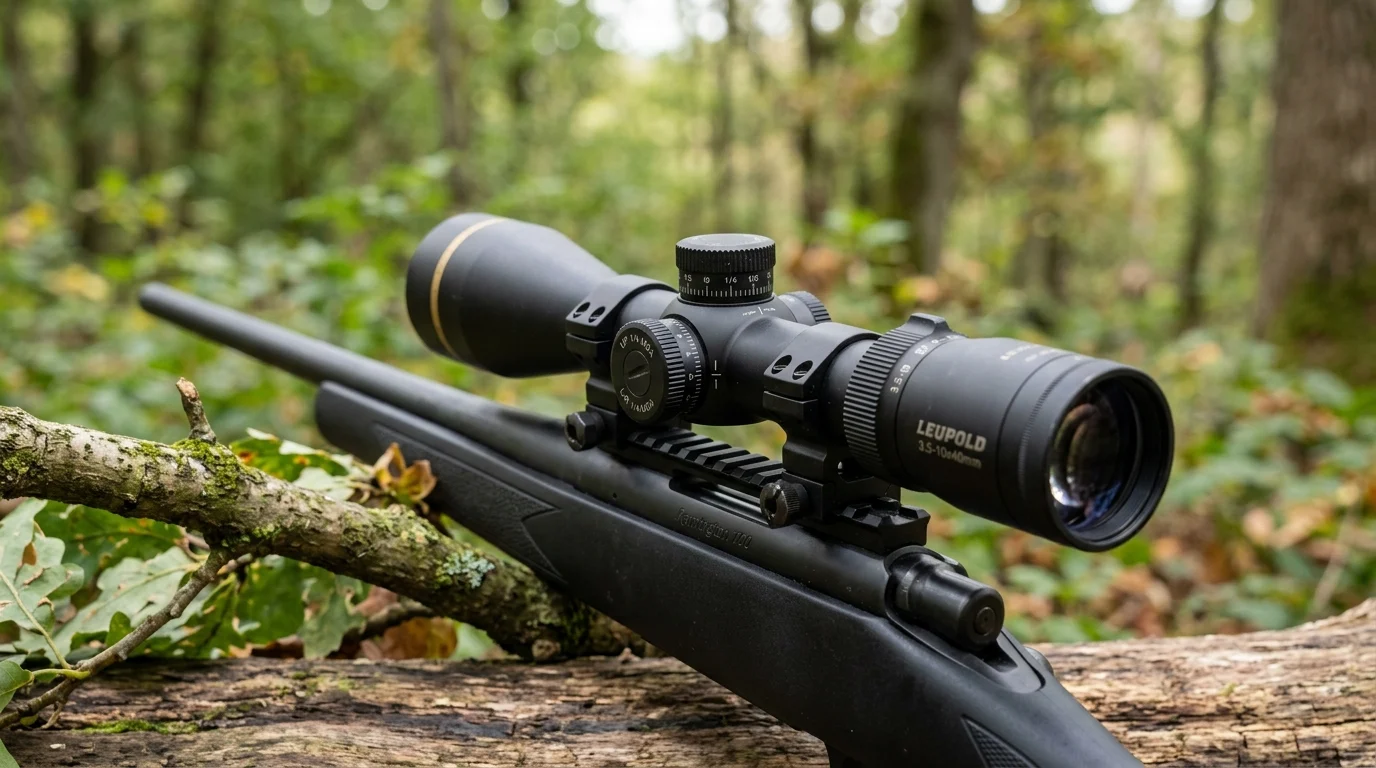
For modern hunters, choosing a scope is no longer as simple as assuming Europe means elite and China means budget. Manufacturing has changed, supply chains are global, and the optical gap between premium and mid-priced scopes is narrower than it was a decade ago. A German flagship may still deliver outstanding contrast, color control, and low-light performance, but a well-built Chinese scope can now offer impressive field-ready clarity at a fraction of the cost. This comparison looks at the factors that actually shape what you see through the eyepiece—glass quality, coatings, light transmission, edge sharpness, and quality control—so you can decide where your money is best spent.
Chinese vs German Hunting Scope Optical Clarity
The optics world has long been dominated by European manufacturers, but the landscape is shifting rapidly. For decades, hunters assumed that a top-tier hunting scope required a German pedigree and a premium price tag. Today, the choice between a Chinese and German hunting scope is a study in manufacturing evolution and tier-specific quality rather than a simple geographic binary.
While flagship German optics routinely command prices north of $2,500, premium Chinese OEMs are now producing highly capable scopes in the $300 to $800 range. This massive price disparity forces practical shooters to evaluate exactly how much optical clarity their money is buying, and whether the premium is justified for their specific style of hunting.
What Optical Clarity Means in a Hunting Scope
Optical clarity involves the harmonious combination of resolution, contrast, and color fidelity. When peering through a scope, true clarity requires the control of chromatic aberration—the purple or yellow fringing around high-contrast targets, like dark branches against a bright sky.
It also demands edge-to-edge sharpness, where the perimeter of the image remains crisp. In the field, a scope with superior clarity allows a hunter to distinguish fine details hidden in the brush rather than just seeing a brown blur. This level of detail becomes increasingly difficult to maintain as magnification increases, which is where premium glass components demonstrate their true value.
Why Scope Value Depends on More Than Country of Origin
Modern global supply chains have fundamentally changed how a rifle scope is built, making broad assumptions about manufacturing origins obsolete. It is now common to find a high-end Chinese optic utilizing premium Japanese Extra-Low Dispersion (ED) glass that outperforms entry-level European models.
Conversely, many renowned German brands source internal components globally to manage production costs in a highly competitive market. The true value of an optic lies in the strictness of the manufacturer's quality control tolerances, consistency, and lens coatings. It is also important to note that sample-to-sample variation is not exclusively an imported-optic issue; even premium German brands can occasionally exhibit inconsistencies, making rigorous quality assurance the true differentiator rather than just the national flag stamped on the main tube.
Key Specifications That Affect Optical Performance
Beneath the rugged exterior of any hunting scope lies a complex arrangement of lenses, prisms, and chemical coatings. Understanding the key specifications that govern this internal optical system is crucial for separating marketing claims from actual field performance. Even a marginal difference in light transmission can be the deciding factor during a challenging hunt.
Glass, Coatings, and Light Transmission
The most critical battleground for optical dominance is light transmission. German optics have historically led this category, utilizing fully multi-coated (FMC) glass. While marketing materials often cite light transmission rates in the "high 90s," it is important to distinguish per-surface coating efficiency from total system transmission. In reality, multi-element scopes rarely exceed 90–93% total system transmission, even at the flagship level.
Modern Chinese optics have closed this gap significantly. Thanks to advancements in chemical coatings, many mid-to-high-tier Chinese scopes deliver highly competitive transmission rates for standard low-light scenarios. Low-light performance also depends on objective lens diameter, exit pupil, and magnification, which dictate how much light ultimately reaches the hunter's eye.
| Feature | Premium German Scope | High-End Chinese Scope |
|---|---|---|
| Total System Light Transmission | Exceptional (~90-93% peak) | Highly Competitive (~85–90% peak) |
| Average Price Band | $2,000 – $3,500+ | $300 – $800 |
| Glass Origin | Germany / Europe / Global | China / Japan (ED) |
| Chromatic Aberration | Highly Controlled | Varies by Price Tier |
Build Quality, Alignment, and Durability
A scope with excellent glass loses its optical advantages if the internal erector system shifts under recoil. Build quality and mechanical alignment are necessary to maintain optical clarity and keep the reticle centered after seasons of field use. German scopes are renowned for their internal mechanical precision and robust long-term warranty support.
Chinese manufacturers have upgraded their durability standards as well, utilizing single-piece 6061-T6 aluminum tube construction to handle heavy recoil. Maintaining this optical alignment requires a solid foundation; hunters must pair their optic with a reliable mount or rail to prevent torque-induced stress on the scope body. Additionally, buyers should consider long-term repair support and warranty coverage, which can vary widely between premium European brands and imported alternatives.
How Buyers Should Choose the Right Hunting Scope
Armed with knowledge about glass quality and manufacturing origins, the final step is matching the hardware to the hunter. Choosing the right hunting scope requires moving past the spec sheet and evaluating how the optic performs in real-world scenarios, where unpredictable weather, fading light, and environmental variables come into play.
Practical Field Tests for Optical Clarity
The fluorescent lighting of a retail store is a poor environment for judging an optic. While some shooters mount their rifle on a stable rifle bipod to look at static targets, true field testing requires observable, real-world benchmarks.
A practical evaluation involves attempting to resolve fine details—such as distinguishing antler tines from surrounding branches at 200 yards—during the fading light of twilight. This is when optical clarity differences become obvious. A lesser scope will lose contrast and blur at the edges, turning the target into a dark silhouette, while a premium optic will efficiently transmit ambient light and maintain edge-to-edge sharpness, allowing the shooter to clearly define the animal against dark timber and make a safe, ethical shot.
When to Choose Chinese or German Optics
The final decision depends on the hunter's environment, budget, and performance expectations. If a hunter spends weeks in the backcountry and demands absolute reliability, superior edge-to-edge clarity, and robust warranty support, investing in a top-tier German optic is easily justified.
However, for hunters navigating standard distances under 300 yards, a high-end Chinese scope offers comparable optical performance for a fraction of the cost.
Key Takeaways
- Do not judge a hunting scope by country of origin alone; compare glass quality, coatings, and quality control standards before buying.
- Expect flagship German scopes to offer premium optical refinement, but also expect prices that often exceed $2,500.
- Consider premium Chinese scopes in the $300 to $800 range if you want strong practical clarity without paying flagship European prices.
- Evaluate total system light transmission realistically, because multi-element rifle scopes rarely exceed about 90–93% transmission even at the high end.
- Check for chromatic aberration and edge-to-edge sharpness at higher magnification, where weak glass and coatings become easier to spot.
Frequently Asked Questions
Are German hunting scopes always clearer than Chinese scopes?
Not always. Flagship German scopes often deliver excellent clarity, but premium Chinese scopes using ED glass, strong coatings, and tight quality control can outperform entry-level European models.
What matters most for optical clarity in a hunting scope?
Resolution, contrast, color fidelity, edge sharpness, chromatic aberration control, glass quality, and coating performance all affect how clearly you can identify detail in the field.
Is light transmission the same as optical clarity?
No. Light transmission affects brightness, especially in low light, but clarity also depends on contrast, resolution, color accuracy, and how well the scope controls distortion and fringing.
Why are German hunting scopes more expensive?
German scopes often cost more because of premium glass, advanced coatings, brand reputation, labor costs, and strict quality control. Many flagship models are priced above $2,500.
Can a $300 to $800 Chinese scope be good for hunting?
Yes. Many modern Chinese OEM scopes in this range offer practical clarity, durable construction, and solid coatings, making them a strong value for typical hunting conditions.
Post time: Jul-31-2026