
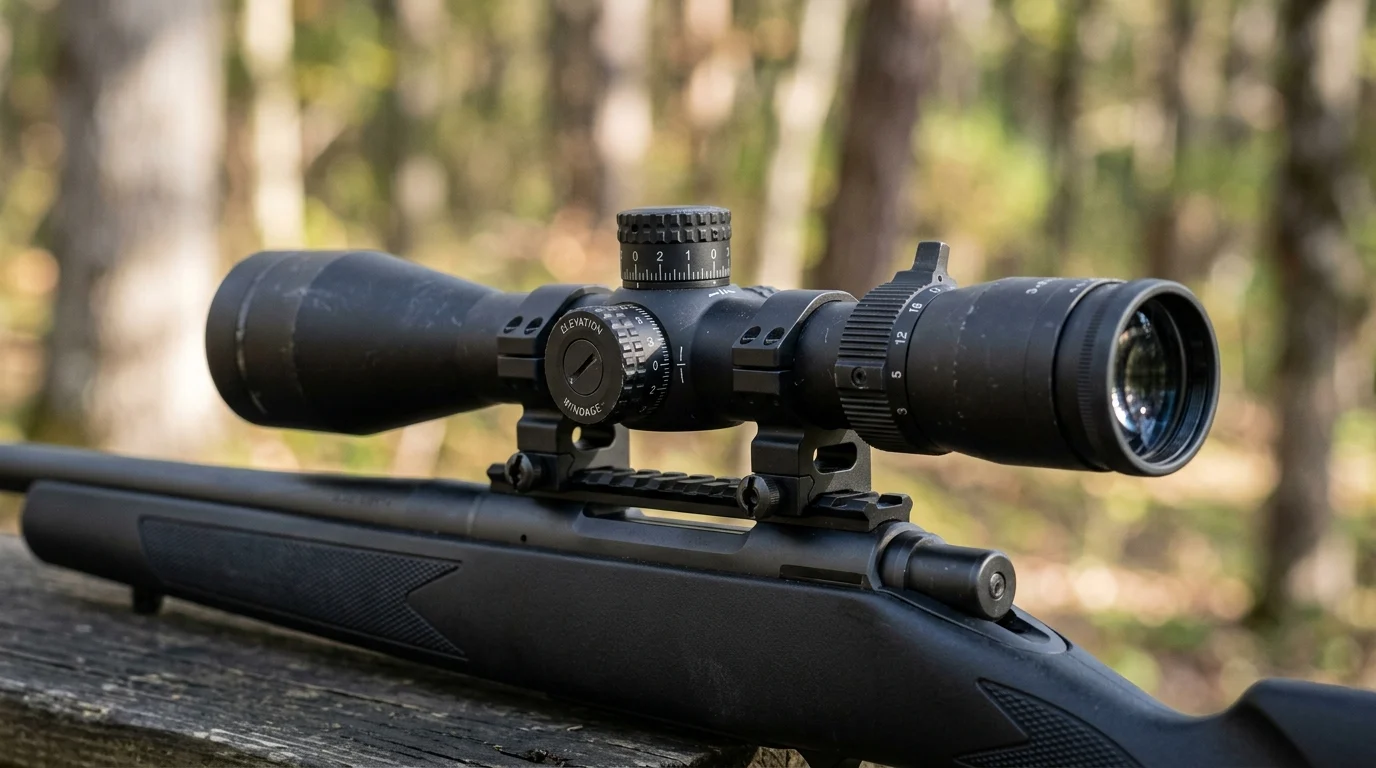
A first hunting rifle can feel incomplete without the right optic, but scope shopping quickly becomes confusing when every box is covered in numbers like 3-9×40, lens-coating claims, and tube-size specs. For beginners, the goal is not to buy the most powerful scope—it is to choose one that improves target identification, supports ethical shot placement, and stays reliable in real field conditions. This guide breaks down the core features that matter most, including magnification, objective lens size, light transmission, eye relief, and practical fit. With a clear understanding of these basics, you can avoid overpaying for unnecessary features and select a scope that builds confidence from the first range session.
Why Hunting Scopes Matter for Beginners
Stepping into the woods for the first time is thrilling, but staring down a bare barrel at a distant target can quickly drain that excitement. Before the advent of modern optics, hunters relied entirely on their own visual acuity, requiring perfect alignment of the rear sight, front sight, and the target. This three-point focal alignment is a tall order for a novice eye. A dedicated optic eliminates this complex alignment by placing the reticle and the target on the exact same focal plane, dramatically reducing eye strain and serving as the bridge between a beginner's raw enthusiasm and consistent, repeatable success in the field.
What a Hunting Scope Does
A rifle scope acts as a specialized telescope, gathering ambient light and focusing both the target and the aiming point into a single, clear image. Instead of squinting at a fuzzy brown blob 150 yards away, the shooter sees a crisp, magnified animal with a crosshair superimposed right on the vitals. This process relies on multiple glass lenses treated with lens coatings to reduce glare and maximize light transmission. When shopping, look for "fully multi-coated" lenses rather than just "coated" to ensure maximum brightness and clarity. Manufacturers often claim their high-quality modern scopes push beyond 90% light transmission efficiency, though actual performance varies by testing methodology. Note that this guide focuses primarily on centerfire rifle applications; shotguns, rimfires, and muzzleloaders often require different eye relief, recoil ratings, and parallax settings.
How a Scope Improves Accuracy and Confidence
These optics also buy crucial time during dawn and dusk when game animals are most active. A bare human eye struggles immensely in low-light conditions, but a scope's light-gathering capability can turn a shadowy silhouette into a highly confident, ethical shot. By removing the need to align iron sights perfectly, new hunters can focus their mental energy entirely on their breathing control, trigger pull, and the behavior of the animal. This streamlined aiming process dramatically shrinks shot groupings and builds the kind of deep-seated confidence that turns a stressful, nerve-wracking first hunt into a safe and successful harvest.
Key Hunting Scope Specs to Compare
Walking into a sporting goods store and browsing the optics counter often feels like deciphering a secret, highly mathematical code. Manufacturers slap numerical sequences like "3-9x40mm" on every box, leaving newcomers scratching their heads while salespeople rattle off jargon. Understanding these specs is the only way to separate a useful hunting tool from a heavy paperweight.
Magnification, Objective Lens, and Tube Size
The classic "3-9×40" designation tells the story of the optic: the scope magnifies the image anywhere from 3 to 9 times closer than the naked eye, and it features a 40mm objective lens at the front to gather incoming light. Dividing the objective lens diameter by the magnification gives the exit pupil—the size of the light beam hitting your eye. At dawn or dusk, dialing down to a lower magnification increases the exit pupil, preventing the image from darkening. A larger exit pupil also creates a more forgiving "eyebox," making it easier for novices to quickly align their eye behind the scope.
The main tube connecting the front and rear lenses usually measures either 1 inch or 30mm in diameter, which directly dictates which mount the shooter will need to purchase. A common beginner myth is that a 30mm tube gathers more light; in reality, it simply allows for a wider range of internal elevation adjustments. A standard 1-inch tube is only marginally lighter than a 30mm tube, but its real advantages for beginners lie in lower cost and wider ring availability. Additionally, beginners should be cautious with objective lens size: large 50mm+ objectives often require taller mounting rings that can degrade cheek weld and stock alignment, negatively impacting shooting ergonomics.
| Magnification Range | Objective Lens | Best Hunting Application | Typical Range |
|---|---|---|---|
| 1-4x or 2-7x | 20mm – 32mm | Dense brush, moving targets | 0 – 100 yards |
| 3-9x or 4-12x | 40mm – 44mm | All-around woods, fields, and big-game | 50 – 300 yards |
| 6-24x or higher | 50mm+ | Long-range varmint or target shooting | 300+ yards |
Reticles, Eye Relief, and Durability
Inside the scope sits the reticle, commonly known as the crosshair. Beginners should generally stick to a simple duplex reticle, which uses thick outer lines that taper to a thin center, naturally drawing the eye to the middle without cluttering the field of view with complex ballistic holdover grids. It is also important to distinguish between focal planes: a second focal plane (SFP) scope keeps the reticle the same size regardless of magnification, which is ideal for most hunting, whereas a first focal plane (FFP) reticle changes size and can become hard to see at low power. Additionally, capped turrets are highly recommended over exposed tactical turrets to prevent accidental adjustments while moving through brush. Before heading to the range, adjust the ocular focus (diopter) ring at the rear of the eyepiece to calibrate the reticle to your individual vision.
Eye relief—the physical distance from the rear lens to the shooter's eye—is another critical safety specification. A generous eye relief of 3.5 to 4 inches prevents the scope from painfully striking the brow during heavy recoil. Furthermore, many hunting scopes feature a factory-set parallax fixed at 100 or 150 yards for simplicity. Alternatively, some models offer adjustable parallax (AO or side focus), which provides flexibility for varying distances but adds complexity to the shooting process. Finally, true hunting optics must withstand harsh outdoor elements. Look for models explicitly labeled as nitrogen- or argon-purged. This specialized gas sealing prevents internal fogging when the ambient temperature drops rapidly from a warm vehicle to a freezing deer stand.
How to Choose Your First Hunting Scope
With the technical jargon out of the way, the final hurdle is matching the actual hardware to the reality
Key Takeaways
- Choose a beginner-friendly variable scope such as 3-9×40 to cover close woods shots and moderate-distance hunting without adding unnecessary complexity.
- Look for fully multi-coated lenses because they improve brightness, contrast, and glare control during dawn and dusk hunting conditions.
- Match the scope to the firearm type, since centerfire rifles, rimfires, shotguns, and muzzleloaders may require different recoil ratings, eye relief, and parallax settings.
- Prioritize generous eye relief and a comfortable sight picture to help prevent scope bite and support consistent shooting form.
- Avoid buying based on magnification alone; compare objective size, tube size, lens quality, durability, and adjustment reliability before deciding.
Frequently Asked Questions
What does 3-9×40 mean on a hunting scope?
It means the scope offers variable magnification from 3x to 9x and has a 40mm objective lens. This is a common beginner-friendly range for deer and general big-game hunting because it balances field of view, brightness, weight, and practical shooting distance.
What magnification is best for a beginner hunting scope?
For most new hunters, a 3-9x or 2-10x scope is a practical starting point. Lower power helps with close shots and faster target acquisition, while higher power supports more precise aiming at moderate distances.
Are fully multi-coated lenses worth it?
Yes. Fully multi-coated lenses generally transmit more usable light, reduce glare, and improve contrast compared with basic coated lenses. This matters most at dawn, dusk, and in wooded terrain where game often appears in low light.
How important is eye relief on a hunting scope?
Eye relief is very important, especially on centerfire rifles with noticeable recoil. Beginners should look for generous, consistent eye relief to reduce the risk of scope bite and maintain a comfortable shooting position.
Do beginners need an expensive hunting scope?
Not necessarily. Beginners should prioritize reliable adjustments, clear glass, durable construction, and a sensible magnification range over premium features. A dependable mid-range scope is often more useful than an oversized or overly complex optic.
Post time: Jul-31-2026