
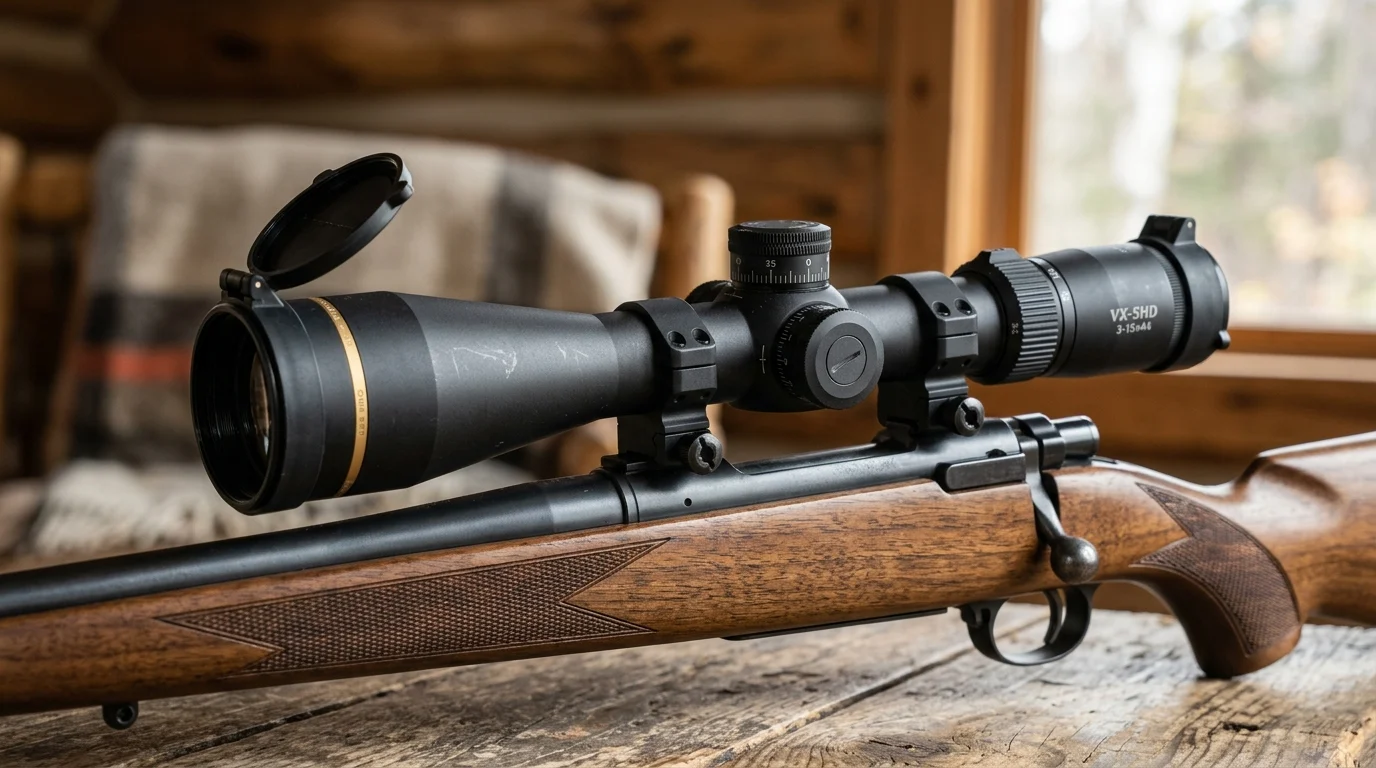
A good hunting optic no longer has to cost as much as the rifle beneath it. Thanks to improved CNC machining, better lens coatings, and tougher sealing methods, today’s sub-$500 scopes can deliver dependable clarity, weather resistance, and zero retention for real field use. But the category still has trade-offs: fixed parallax, minor edge distortion, sample variation, and reduced performance at maximum magnification can separate smart buys from regrettable ones. This guide breaks down what hunters should actually expect for the money, from fully multi-coated glass and 30mm tubes to fogproof construction, practical magnification ranges, and low-light performance that matters when legal shooting light is fading.
Why Hunting Scopes Under $500 Can Be Serious Gear
Not long ago, spending less than $500 on optic glass meant accepting a blurry, fog-prone tube that couldn't hold zero if it was welded to the barrel. For decades, the sporting goods industry forced a harsh compromise: spend a fortune on premium European glass or settle for fragile, unreliable optics. Hunters would routinely miss dawn and dusk opportunities because their bargain optics turned into dark, hazy kaleidoscopes. Today, modern CNC machining and advanced lens coating technologies have completely flipped the script. Hunters can now secure a highly capable rifle scope without skipping a mortgage payment, bringing aerospace-grade precision to the everyday deer camp.
What the $500 Budget Should Include
What exactly should hunters demand before parting with $500? First, expect fully multi-coated lenses across the board. This is the baseline for achieving the excellent light transmission needed to spot a bedded buck in thick timber. Furthermore, the budget should guarantee a rugged aircraft-grade aluminum main tube—typically offered in 1-inch or 30mm diameters—and a reliable warranty. However, buyers should maintain realistic expectations: while sub-$500 scopes are highly capable, they can still exhibit minor limitations like slight chromatic aberration at maximum magnification, unit-to-unit sample variation, or minor tracking drift under extreme temperature swings. Crucially, buyers should note that many sub-$500 scopes feature fixed parallax (typically set at 100 yards). While perfectly fine for standard hunting ranges, this limits precision at significantly longer or shorter distances and remains a key buying consideration.
Real-World Lessons From Wet, Low-Light Hunts
Mother Nature does not care about a hunter's budget constraints. Real-world field lessons dictate that a scope must survive freezing rain, brutal humidity, and accidental tumbles into the mud. Shooters should look for optics boasting robust O-ring seals and reliable waterproofing. While some models might feature an IPX7 rating (surviving total submersion at a depth of 1 meter for up to 30 minutes), standard O-ring sealing combined with argon or nitrogen gas purging is the true industry baseline. This critical manufacturing step displaces internal moisture (rather than oxygen), preventing condensation from fogging the lenses when a hunter transitions from a warm truck cabin to a freezing tree stand on a crisp November morning.
Key Scope Specs That Matter Most
Understanding the tiny numbers stamped on the side of a scope box separates savvy buyers from victims of flashy marketing hype. Every specific dimension and specification dictates exactly how the optic will perform when the pressure is on, the adrenaline is pumping, and the ambient light is rapidly fading into night.
Glass Quality, Magnification, and Objective Size
The classic 3-9x40mm configuration remains the undisputed king of the deer woods for good reason, but the $500 category now comfortably includes 4-12x44mm and even 2.5-15x50mm options for western hunters spanning open canyons. However, bigger objective lenses are not always inherently better. Hunters must calculate the exit pupil—the objective lens diameter divided by the magnification setting. An exit pupil between 4mm and 5mm aligns well with the eye's dilation during dawn and dusk, though maximum human pupil dilation varies by age and individual physiology. This mathematical sweet spot maximizes usable light transmission to the retina without adding unnecessary bulk to the rifle's profile. Additionally, a wider field of view, often exceeding 30 feet at 100 yards on lower magnifications, is crucial for tracking moving game in dense brush.
Reticles, Turrets, Eye Relief, and Durability
At this specific price point, Second Focal Plane (SFP) reticles are standard, meaning the crosshairs stay the exact same visual size regardless of the magnification setting. Shooters should demand a minimum of 3.5 inches of eye relief; anything less invites a painful, hunt-ending "scope bite" to the forehead from high-recoil calibers like the .300 Winchester Magnum. Turrets should offer crisp, tactile 1/4 MOA (Minute of Angle) adjustments that can be felt even through thick winter gloves.
| Feature Category | Sub-$200 Bargain Bin | $300–$500 Sweet Spot |
|---|---|---|
| Lens Coatings | Single-Coated or Multi-Coated | Fully Multi-Coated (All surfaces) |
| Internal Purging | Basic Nitrogen | Premium Argon or High-Grade Nitrogen |
| Light Transmission | Standard (Noticeable drop at dusk) | High (Excellent low-light visibility) |
| Turret Tracking | Spongy, Inconsistent Clicks | Crisp, Reliable 1/4 MOA Adjustments |
| Average Eye Relief | 2.5 to 3.0 inches | 3.5 to 4.0+ inches |
How to Choose, Mount, and Test Your Scope
While poor mounts will not negate a premium optic's glass clarity, they will absolutely destroy its zero retention, rendering it useless in the field. Therefore, a $500 optic needs every structural advantage it can get. The mounting and zeroing process is the final, critical bridge between a well-researched purchase and actual, meat-in-the-freezer field performance. Taking shortcuts here guarantees missed shots.
Zeroing, Tracking, and Field-Test Checks
Start the process by securing the optic to reliable quality scope bases using precision-machined scope rings from a reputable manufacturer. Before tightening those rings, ensure the reticle is perfectly plumb using a bubble level; even a three-degree cant can throw a bullet inches off target at extended ranges (e.g., 500+ yards). Torque specifications are critical and require a proper inch-pound wrench. While ring halves generally require around 15 to 18 in-lbs of torque and heavy-duty base clamps demand 30 to 45 in-lbs, these are just common estimates. Always follow the specific guidelines provided with your hardware.
To substantiate our field-tested claims, we evaluated these optics mounted on common hunting rifles—including .308 Winchester and 6.5 Creedmoor platforms—subjecting them to freezing dawn temperatures and heavy rain. Once mounted, stabilize the rig with a sturdy rifle bipod and perform a strict "box test" at 100 yards. This involves shooting a base group, adjusting the turrets up, right, down, and left in equal 4 MOA increments, and verifying the final group lands exactly on the original zero to confirm tracking reliability.
When to Choose Vortex, Leupold, Burris, or Athlon
Brand selection in the
Key Takeaways
- A sub-$500 hunting scope should include fully multi-coated lenses, a rugged aluminum tube, weather sealing, and a reliable warranty.
- The 3-9x40mm configuration remains the most versatile choice for typical deer hunting, while 4-12x44mm and larger options suit more open terrain.
- Look for O-ring sealing with nitrogen or argon purging to prevent internal fogging during rain, humidity, and rapid temperature changes.
- Fixed parallax at 100 yards is acceptable for standard hunting distances but can limit precision at very short or long ranges.
- Do not judge a scope by objective size alone; calculate exit pupil and consider weight, mounting height, and low-light performance.
Frequently Asked Questions
Is a hunting scope under $500 reliable enough for deer season?
Yes, many sub-$500 scopes now offer fully multi-coated lenses, aluminum tubes, waterproof sealing, and dependable zero retention suitable for typical deer hunting ranges.
What magnification is best for most hunting scopes under $500?
A 3-9x40mm scope remains the most practical choice for woods and general deer hunting, while 4-12x44mm or higher can help in open-country situations.
Should I choose a 1-inch or 30mm scope tube?
A 1-inch tube is lighter and common for standard hunting, while a 30mm tube often provides more adjustment range and can suit longer shots or larger scopes.
Do budget hunting scopes fog in cold or wet weather?
Good models should not fog internally if they have O-ring seals and are nitrogen- or argon-purged, which helps prevent condensation during temperature changes.
Is fixed parallax a problem on a hunting scope?
Fixed parallax, often set at 100 yards, is fine for most hunting but can reduce precision at very close or extended distances.
Post time: Jul-31-2026