
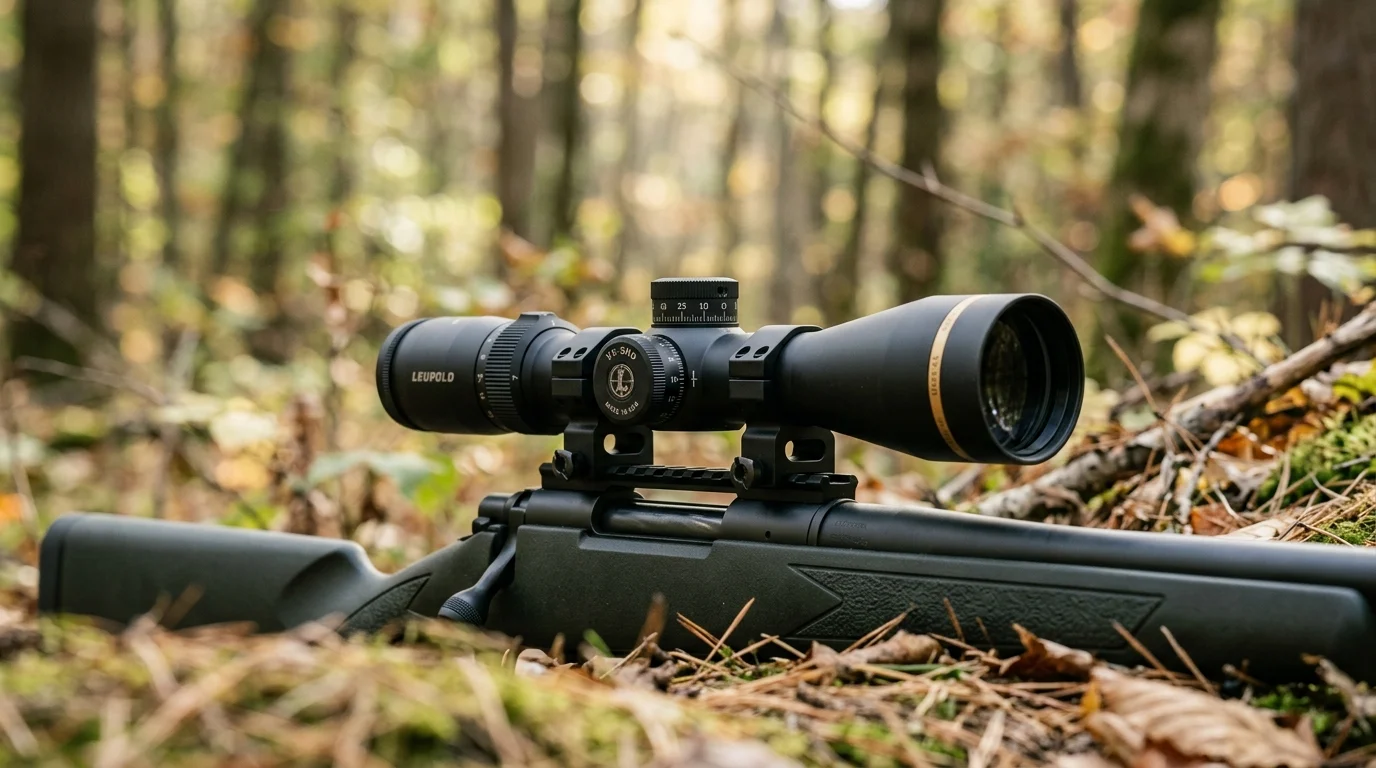
A dependable deer scope no longer has to cost as much as the rifle it rides on. Thanks to better CNC machining, improved lens coatings, and more consistent sealing standards, today’s sub-$500 optics can perform well in real hunting conditions—not just on a clean range bench. The challenge is knowing which features actually matter when legal light is fading, rain is blowing sideways, or a buck steps through timber at close range. This guide focuses on practical field criteria: zero retention, low-light image quality, weather protection, magnification range, and reticle usefulness, so hunters can spend wisely without sacrificing confidence in the deer woods.
Why a Hunting Scope Under $500 Can Be Field-Ready
Just a generation ago, dropping half a paycheck on optics was the unspoken rule of deer season, but modern manufacturing has completely flipped the script. Today, finding a hunting scope under the $500 mark does not mean settling for a fragile tube of glass that loses zero at the slightest bump. Advancements in automated CNC machining and computer-aided lens grinding mean hunters can now secure premium features without the premium price tag. Rather than relying on marketing claims, this buyer's guide focuses on proven reliability criteria—return-to-zero consistency, low-light clarity, and weather resistance—to help you find a dependable optic without overspending.
What Defines a Reliable Deer-Rifle Scope
What exactly transforms a budget-friendly optic into a reliable deer-rifle companion? It ultimately comes down to optical efficiency and mechanical precision. A capable rifle scope in this tier consistently delivers strong light transmission, ensuring a crisp, bright image when deer are most active. While many modern budget optics can hold a strict zero against heavy recoil, buyers must be aware of budget realities. Sub-$500 scopes often feature limited elevation travel and can suffer from unit-to-unit quality control variance compared to flagship models. The sweet spot in this price range lies in prioritizing functional, high-quality glass over tactical gimmicks, illuminated reticles, or unnecessarily complex turrets that drive up production costs without adding real hunting value.
How Timber Hunts Reveal Real-World Performance
The true test of any hunting optic happens miles away from a comfortable, padded shooting bench. When dragging a rifle through dense timber, scopes face abrasive brush, dust, sudden torrential downpours, and dramatic temperature shifts. Field-ready models under $500 must feature water-resistant designs, utilizing standard industry protections like tight O-ring seals to survive the elements. Furthermore, nitrogen or argon gas purging is now an industry standard rather than a luxury. This process removes internal moisture, greatly reducing the risk of internal fogging when a hunter steps out of a heated truck cabin into freezing wilderness air. If an optic cannot survive wet, freezing conditions in the deer woods, the appealing price tag is completely irrelevant.
Key Specs to Compare Before Buying
Navigating the vast sea of optical specifications can often feel overwhelming. However, focusing on a few critical metrics quickly separates the reliable workhorses from the fragile showpieces that look good only on paper.
Magnification, Glass Quality, and Reticle Choice
Magnification ranges, glass clarity, and reticle designs dictate exactly how well an optic performs when a trophy buck steps into a clearing. For decades, the classic 3-9x40mm configuration has reigned supreme across North America, offering an ideal balance. It provides a wide enough low-end field of view for sudden brush encounters and sufficient high-end magnification for open clearcuts. Modern hunters should insist on fully multi-coated lenses, a chemical treatment process that dramatically reduces glare, maximizes contrast against woodland backgrounds, and optimizes light transmission for dawn and dusk hunting. Reticle choice should generally remain uncluttered; a classic duplex or a simple BDC (Bullet Drop Compensator) prevents visual confusion. Buyers should note that most sub-$500 scopes utilize Second Focal Plane (SFP) construction, meaning BDC holdovers are only accurate at maximum magnification. Additionally, pay close attention to tube diameter (typically 1 inch vs. 30mm), as this dictates your ring compatibility and total elevation adjustment travel.
Note: The table below presents illustrative ranges for field of view and weight; actual specifications vary significantly by manufacturer and individual model.
| Scope Configuration | Field of View (at 100 yds) | Ideal Hunting Terrain | Typical Optic Weight |
|---|---|---|---|
| 2-7x32mm | ~40 to 45 feet | Dense Woods / Brush | 12 to 14 ounces |
| 3-9x40mm | ~30 to 35 feet | Mixed / General Purpose | 15 to 18 ounces |
| 4-12x50mm | ~20 to 25 feet | Open Fields / Prairies | 18 to 22 ounces |
| 3-15x44mm | ~25 to 30 feet | Western / Long Range | 20 to 24 ounces |
Durability, Eye Relief, and Low-Light Performance
A brilliantly clear image means absolutely nothing if the scope shatters under heavy recoil or gives the shooter a painful black eye. Proper eye relief is a non-negotiable safety and comfort feature; hunters should demand a strict minimum of 3.5 to 4 inches of clearance to safely accommodate the rearward snap of standard deer rifles. Securing the optic properly is equally critical to maintaining accuracy. Pairing the scope with a high-quality mount or a rugged, perfectly machined rail ensures the crosshairs remain dead-on even after a bumpy, jarring ATV ride up a mountain. Finally, low-light performance also hinges mechanically on the objective lens size and the resulting exit pupil. A 40mm to 50mm objective lens gathers ample light to create an exit pupil that matches the human eye's natural dilation during prime hunting hours.
How to Choose the Best Scope for Your Hunt
Throwing money at a popular brand logo will not guarantee a successful harvest if the optic does not align with the specific environment of the hunt. A heavy target scope on a lightweight mountain rifle ruins the balance, meaning tailoring the glass to the geography is the final, crucial step. It is also important to understand budget trade-offs. In the sub-$500 tier, you might sacrifice absolute edge-to-edge clarity at maximum magnification, advanced turret tracking reliability, or premium warranty lengths compared to top-tier optics.
Recommended Picks for the Field: To deliver on our reliability criteria, here are three standout options under $500 evaluated for their weather resistance, tracking consistency, and overall value:
- Leupold VX-Freedom 3-9x40mm (Approx. $300): Performance Notes: Shows exceptional dusk clarity in low-light comparisons and withstands standard heavy recoil to maintain a strict zero. Pros: Legendary durability and a lifetime warranty. Cons: Lacks exposed turrets for dialing adjustments.
- Vortex Diamondback 4-12x40mm (Approx. $250): Performance Notes: Proven to withstand wet conditions and temperature shifts without fogging, confirming the integrity of its O-ring seals.
Key Takeaways
- A sub-$500 deer scope can be field-ready if it delivers reliable zero retention, low-light clarity, and weather resistance.
- The classic 3-9x40mm configuration remains one of the most versatile choices for timber, brush, and moderate open-country deer hunting.
- Fully multi-coated lenses are worth prioritizing because they reduce glare and improve contrast during dawn and dusk movement.
- Water resistance, O-ring seals, and nitrogen or argon purging are essential for preventing moisture problems in cold, wet hunting conditions.
- Avoid paying for tactical gimmicks or overly complex turrets when dependable glass, simple controls, and mechanical consistency matter more.
Frequently Asked Questions
Is a hunting scope under $500 reliable enough for deer hunting?
Yes, many sub-$500 scopes are field-ready if they hold zero, provide usable low-light clarity, and offer waterproof and fog-resistant construction.
What magnification is best for most deer hunting?
A 3-9x40mm scope remains a practical all-around choice, offering a wide field of view in timber and enough magnification for clearcuts or moderate open shots.
Which scope features matter most in low light?
Prioritize fully multi-coated lenses, good contrast, and a practical objective size over excessive magnification or flashy features.
Do budget hunting scopes hold zero after recoil?
Many do, but quality varies by model. Look for proven return-to-zero consistency and avoid scopes with overly complex turrets at this price.
Why are O-ring seals and gas purging important?
O-ring seals help keep water out, while nitrogen or argon purging reduces internal fogging during temperature swings in wet or freezing conditions.
Post time: Jul-31-2026