
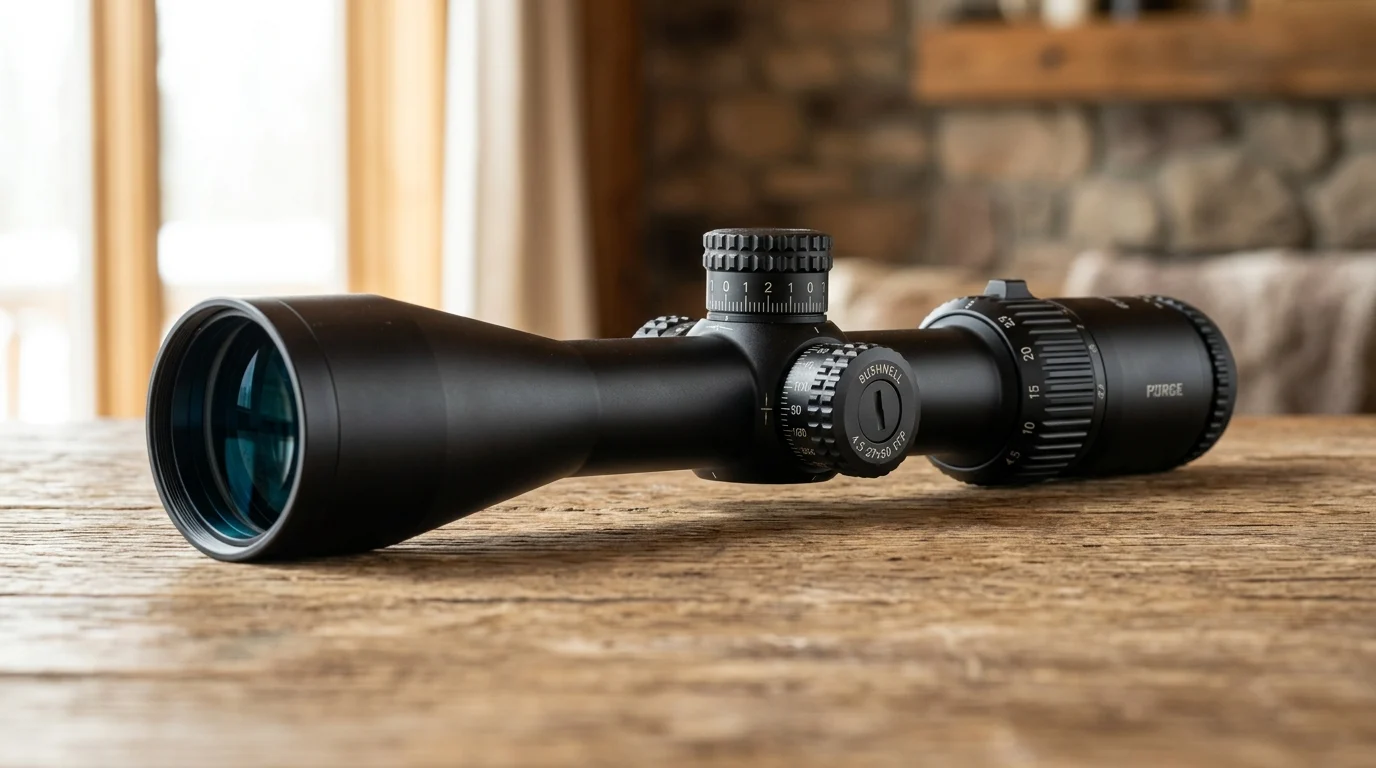
In the backcountry, every ounce has a job—or it becomes a liability. A scope that feels reasonable at the range can become dead weight after miles of climbing, sidehilling, and glassing under a loaded pack. The challenge is not simply choosing the lightest optic available, but finding one that still delivers reliable zero retention, useful magnification, weather resistance, and enough low-light performance for ethical shots. This guide breaks down what “lightweight” really means, why sub-16-ounce scopes are so popular among mountain hunters, and how magnification, objective size, and added accessories affect the total rifle system.
Why Lightweight Hunting Scopes Matter
For the wilderness hunter, the mountains offer unmatched thrills and unforgiving terrain. Navigating steep ridges, crossing scree fields, and busting through dense timber requires gear that will not anchor you to the valley floor. The optics sitting atop a rifle play a critical role in this equation, often shifting the balance from an agile mountain setup to an unwieldy, fatiguing load. Every piece of gear is scrutinized on a multi-day expedition, and the rifle system is usually the heaviest single item carried in the hands or strapped to the pack.
Backcountry Weight and Fatigue
The physical toll of a multi-day hunt is severe. By day three of a grueling high-altitude pursuit, a standard hunting rifle system weighing between 9 and 11 pounds feels significantly heavier. Fatigue directly impacts shooting accuracy by increasing heart rate and muscle tremors, making every saved ounce a tactical advantage. When hunters bolt on accessories, such as a sturdy rifle bipod for long-range stability across a canyon, the overall mass climbs quickly. Shaving weight off the primary optic counteracts these additions, keeping the rifle maneuverable and the hunter energized for the critical moment when a target finally steps into the clearing.
What Counts as Lightweight
In the optics industry, the term "lightweight" is heavily debated, though many seasoned backcountry guides and mountain hunters share specific preferences. A standard modern optic often hovers around 24 to 30 ounces, especially if it features large tactical turrets, illuminated reticles, and a 34mm main tube. Conversely, many guides consider a true lightweight hunting scope to be one that weighs under 16 ounces (roughly 450 grams), a benchmark met by several classic hunting models. The ultra-lightweight category pushes the boundaries even further, with minimalist models weighing an impressive 9 to 12 ounces. Achieving these numbers means stripping away excess material—like oversized objective bells and complex parallax adjustments—without compromising the core ability to hold a precise zero after miles of abuse.
Key Scope Specs to Compare
Mounting the lightest possible rifle scope onto a receiver is easy, but finding one that actually performs in low light and harsh weather requires a deeper understanding of optical specifications. The goal is to find the perfect intersection of optical clarity, mechanical reliability, and minimal mass.
Weight, Magnification, and Objective Size
There is a direct, unavoidable correlation between magnification, objective lens size, and physical weight. A large 5-25x56mm optic gathers incredible light and offers extreme precision, but it easily weighs over 30 ounces due to the sheer volume of glass and the heavy housing required to support it. For wilderness use, the classic 3-9x40mm or the modernized 2-10x42mm remains the undisputed sweet spot. These configurations offer enough magnification for an ethical 400-yard shot on a mule deer while keeping weight strictly managed, usually staying well under the 16-ounce threshold. While true lightweight scopes stay under 16 ounces, hunters in open terrain often accept a heavier compromise—such as an 18- to 22-ounce 4-16x44mm optic—for extended-range capabilities.
| Scope Configuration | Tube Diameter | Average Weight Range | Best Application |
|---|---|---|---|
| 2-7x32mm | 1-inch | 9 – 12 oz | Dense timber, ultra-light rifles |
| 3-9x40mm | 1-inch | 12 – 15 oz | General backcountry hunting |
| 4-16x44mm | 30mm | 18 – 22 oz | Extended range (heavier compromise for open terrain) |
| 5-25x56mm | 34mm | 28 – 35+ oz | Static target shooting (Avoid for backcountry) |
Durability, Glass Quality, and Reticle Choice
Trimming excess material from a scope usually means utilizing a 1-inch aluminum tube rather than a thicker 30mm or 34mm tube. Hunters should also look for capped hunting turrets instead of exposed tactical turrets. Exposed turrets are discouraged for rugged use because they create snag hazards in thick brush and are highly prone to accidental rotation.
However, hunters must understand the mechanical limitations inherent to ultralight scopes. The transition to a 1-inch tube significantly reduces maximum internal elevation travel, which can leave shooters short on adjustment for long-range mountain shots and often requires a 20 MOA canted base. Additionally, to save weight, these optics frequently rely on fixed parallax settings (typically set at 100 or 150 yards) rather than adjustable side focus knobs. Internally, the miniaturized erector systems and lighter springs may present turret tracking trade-offs, occasionally struggling to maintain precise, repeatable dial returns when subjected to the violent, repetitive shock of magnum recoil.
High-quality, fully multi-coated glass is absolutely essential in this category. Because the objective lens is smaller (typically 40mm or less), the optic must rely on high-quality coatings to maximize relative brightness during the crucial dawn and dusk hours. However, hunters should understand the optical compromise: even premium fully multi-coated 32-40mm objectives cannot match larger 50mm+ bells in absolute low-light brightness. Reticle choice should lean toward simple duplex or basic BDC (Bullet Drop Compensator) designs. Complex illuminated Christmas-tree reticles add unnecessary weight, require battery housings, and can clutter the field of view, reducing low-light clarity. While many hunters choose a second focal plane (SFP) reticle, this is a matter of user preference rather than an inherent design requirement for weight reduction. Finally, because these models typically sacrifice eye-box forgiveness for reduced mass, users should thoroughly test eye relief and cheek weld with their specific rifle stock to ensure quick, consistent target acquisition.
How to Choose the Right Lightweight Scope
Building the ultimate mountain rifle is an exercise in synergy. A featherweight optic does little good if the rest of the system is unbalanced, improperly mounted, or poorly matched to the environment. The optic must complement the firearm, not overpower it.
Match the Scope to Your Rifle and Terrain
A bespoke mountain rifle, often utilizing a carbon fiber barrel and a minimalist stock, can weigh a mere 5 to 6 pounds bare. This type of platform requires an equally streamlined optic.
Key Takeaways
- Choose a hunting scope under 16 ounces if keeping a backcountry rifle light and maneuverable is the top priority.
- Use classic 3-9x40mm or 2-10x42mm configurations for a practical balance of reach, light gathering, and low carried weight.
- Avoid oversized 5-25x56mm scopes for most wilderness hunts because they can exceed 30 ounces and add unnecessary bulk.
- Consider an 18- to 22-ounce 4-16x44mm scope only when open-country shots justify the added weight.
- Account for the total rifle system, including mounts, bipods, and accessories, because each added ounce increases fatigue over multi-day hunts.
Frequently Asked Questions
What weight is considered lightweight for a hunting scope?
Many backcountry hunters consider a true lightweight hunting scope to be under 16 ounces, or about 450 grams. Ultra-light models often fall between 9 and 12 ounces, but they usually sacrifice features like large objectives, exposed turrets, or advanced parallax adjustment.
Why does scope weight matter on a backcountry hunt?
A heavy rifle system becomes more fatiguing over steep terrain and multi-day hunts. Less optic weight helps offset accessories like bipods, keeps the rifle easier to carry, and can reduce muscle tremor and fatigue when it is time to shoot.
What magnification range is best for a lightweight hunting scope?
For most wilderness hunting, 3-9x40mm and 2-10x42mm scopes offer a strong balance of weight, field usability, and reach. They provide enough magnification for practical shots out to about 400 yards while staying lighter than high-power tactical optics.
Should I choose a larger objective lens for better low-light performance?
A larger objective can improve light transmission, but it also adds glass, bulk, and weight. For backcountry rifles, a 40mm to 42mm objective is often a practical compromise between low-light visibility and packable weight.
Are heavier scopes better for long-range hunting?
Heavier scopes often provide more magnification, larger objectives, and advanced turret systems, which can help at longer distances. However, for backcountry use, hunters must balance extended-range features against fatigue, rifle handling, and the need to carry gear for miles.
Post time: Jul-31-2026