
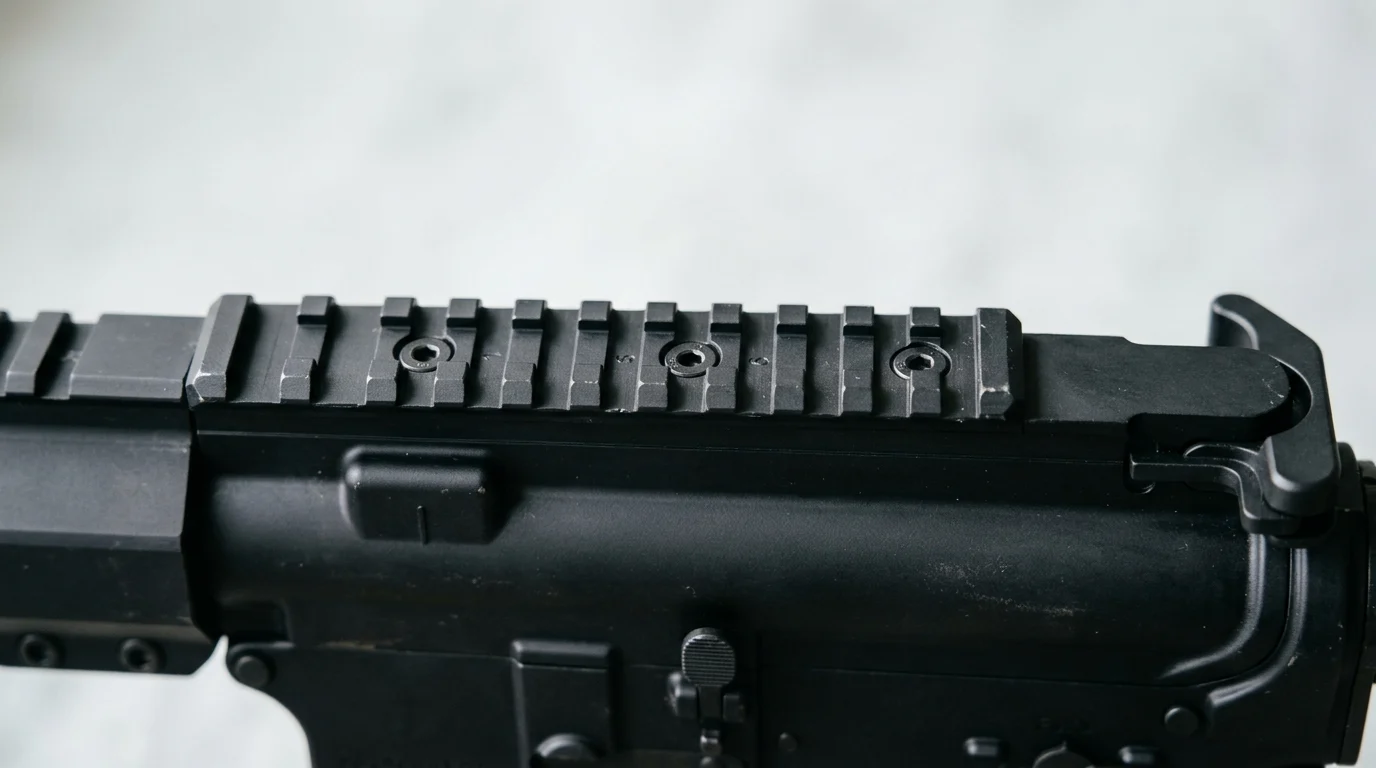
A home-defense firearm is only as useful as your ability to operate it safely, quickly, and with full awareness of what is in front of you. That is where a well-planned rail setup becomes more than a convenience—it becomes a practical interface for the tools that matter most. A Picatinny system offers standardized mounting for lights, optics, and adapters, but not every accessory improves performance in tight, low-light spaces. This guide explains how Picatinny compatibility works, which add-ons deserve priority, what to avoid, and why build quality, weight, and legal considerations should shape every decision before anything is mounted.
Why a Picatinny Rail Setup Matters for Home Defense
At 3:00 AM when you need to access your home-defense firearm, reliability is everything. A barebones rifle or shotgun might work in theory, but in the real world, you must be able to clearly identify your target before firing and have quick aiming capabilities.
This is exactly where a properly configured [Picatinny rail](https:// www.chenxioutdoor.com/scope-bases/) steps in. It acts as the central mounting platform for your firearm, allowing you to modularly attach the specific tools you need to navigate a worst-case scenario without permanently modifying the gun.
Picatinny Rail Standards and Compatibility
The advantage of the Picatinny system lies in its rigid standardization. Originally adopted as MIL-STD-1913, this mounting platform features locking slots measuring exactly 0.206 inches wide, with a precise center-to-center spacing of 0.394 inches.
Unlike older Weaver systems with inconsistently spaced slots, Picatinny accessories will not always fit Weaver bases, though Weaver gear often fits Picatinny rails. Furthermore, if your firearm features modern M-LOK or KeyMod handguards, you will need to install specific [adapter rail sections](https:// www.chenxioutdoor.com/scope-bases/) before mounting Picatinny accessories.
Because most manufacturers across the globe adhere to these dimensions, you can typically snap a flashlight or optic onto your Picatinny-compatible bases without modification. However, true universal compatibility depends on quality control; out-of-spec or budget rails and accessories may still require fitting, so verifying true MIL-STD-1913 dimensions is recommended. When properly machined, this standardization means you are rarely locked into a single brand's proprietary ecosystem, allowing you to build a defense tool tailored to your exact needs.
Essential vs. Optional Home-Defense Accessories
When outfitting your rail, the temptation to bolt on every tactical gadget in the catalog is common. However, it is best to separate the life-saving essentials from unnecessary weight. For home defense, a reliable weapon light is highly recommended to clearly see potential threats in the dark.
A red dot sight is a strong second essential, allowing you to keep both eyes open while tracking a threat in low light. Conversely, items like heavy bipods, magnifiers, and backup iron sights are generally optional. While backup sights provide redundancy, they add bulk and must be carefully placed to avoid interfering with your primary optic. Always remember that adding accessories does not replace the need for secure storage practices and understanding specific legal restrictions. For instance, attaching a vertical foregrip to an AR pistol can trigger National Firearms Act (NFA) regulations depending on the firearm's overall length, and some states restrict the use of visible lasers or high-output lights.
How to Compare Picatinny Rail Accessories
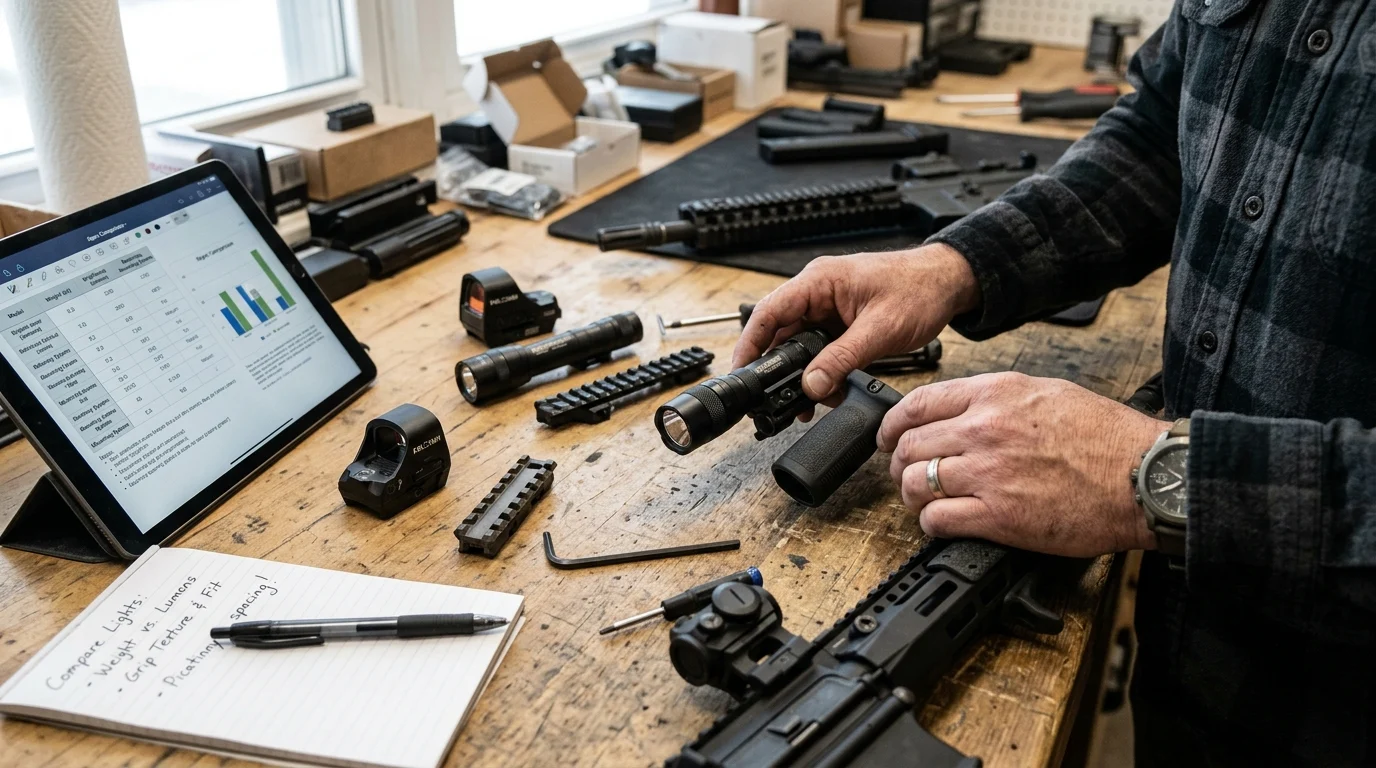
While the previous section covered which categories of gear to mount, this step focuses on evaluating the build quality and specifications of those items. The market is saturated with tactical gear, ranging from duty-grade hardware to budget-friendly, consumer-grade alternatives.
You need to evaluate each piece of equipment based on how it will actually perform inside the tight confines of your home. Instead of a general performance-versus-budget guess, base your decisions on real comparison criteria. It is vital to understand the difference between consumer-grade accessories and duty-grade equipment. For a life-saving tool, duty-grade gear is strongly recommended. Recoil-rated construction ensures internal electronics survive repeated firing, high waterproof ratings prevent moisture failure, and reliable warranty terms back up the manufacturer's durability claims.
Lights, Optics, Lasers, and Other Add-Ons
Comparing lights, optics, and lasers comes down to balancing performance specifications against your budget and realistic use cases. You want an optic that turns on instantly and a light that provides clear visibility. Remember that lumens alone do not determine performance. High-lumen outputs can cause blinding self-reflection against white walls indoors, so balance lumens with candela (throw) for a focused, usable beam pattern. Using momentary bursts of light rather than constant-on modes can also help you navigate safely without washing out your vision.
If you opt for a visible laser, be mindful of local laws and eye safety warnings, as Class 3R lasers are not fully eye-safe under all conditions. Additionally, visible beams generally perform poorly in daylight or brightly lit rooms. Here is a quick breakdown of what to look for when shopping for these critical components:
| Accessory Type | Ideal Specification | Typical Cost Band* | Primary Purpose |
|---|---|---|---|
| Weapon Light | 500–1,000 Lumens (balanced candela) | $100 – $300 | Target identification |
| Red Dot Sight | 2 MOA (varies by preference) | $150 – $500 | Rapid, both-eyes-open aiming |
| Visible Laser | Class 3R (observe safety warnings) | $100 – $250 | Awkward-angle backup aiming |
| Foregrip | < 3-inch length / Hand-stop profile | $25 – $60 | Recoil control and retention |
*Note: All cost ranges are approximate and vary by region or retailer.
Sticking to these baseline numbers helps avoid overpaying for long-range features rarely used in a standard 10-yard indoor engagement.
Firearm Type, Room Layout, Controls, and Snag Risk
Your home’s architecture heavily dictates your accessory choices. If you are clearing a standard 36-inch interior doorway, a rifle equipped with multiple side-mounted accessories and wide flashlight bezels becomes a snag hazard. Mounting a light at the 3 or 9 o'clock position can also cause severe barrel shadowing, projecting a blind spot into the room. A 12 o'clock or offset mount often minimizes this shadow and reduces the risk of gear catching on doorframes, bedposts, or loose clothing.
When selecting low-profile mounts and accessories, prioritize designs that hug the firearm tightly. Proper cable management for pressure pads and switches is critical here: route wires securely against the rail using zip ties, specialized clips, or retention bands so they do not snag on your surroundings.
Additionally, consider your support-hand placement. Your light's pressure pad or tail-cap should sit exactly where your thumb naturally rests, prioritizing momentary activation over constant-on for better indoor light discipline. This allows you to activate your electronics under stress without awkwardly shifting your grip in the dark.
How to Build a Reliable Picatinny Rail Setup
Buying
Key Takeaways
- Verify that rails and accessories follow MIL-STD-1913 dimensions, including 0.206-inch slots and 0.394-inch slot spacing, before relying on compatibility.
- Prioritize a durable weapon light because identifying a target in low light is essential for responsible home defense.
- Consider a red dot sight as a practical second upgrade because it supports fast, both-eyes-open aiming in close quarters.
- Use Picatinny adapter rail sections when mounting accessories to M-LOK or KeyMod handguards.
- Avoid overloading the firearm with unnecessary gear, since extra weight and bulk can reduce handling speed inside the home.
- Review applicable laws before adding items such as vertical foregrips, visible lasers, or high-output lights.
Frequently Asked Questions
What is the main benefit of a Picatinny rail on a home-defense firearm?
A Picatinny rail gives you a standardized mounting platform for essential accessories such as a weapon light or red dot sight, helping you identify threats and aim more effectively without permanently modifying the firearm.
Is Picatinny the same as Weaver?
No. Picatinny rails follow MIL-STD-1913 dimensions with 0.206-inch slots and 0.394-inch spacing. Weaver slot spacing is less consistent, so Weaver accessories often fit Picatinny rails, but Picatinny accessories may not fit Weaver bases.
Do I need an adapter for M-LOK or KeyMod handguards?
Yes. M-LOK and KeyMod are different attachment systems, so you need a compatible Picatinny adapter rail section before mounting most Picatinny lights, optics, or other accessories.
What accessory should come first for home defense?
A dependable weapon light should usually come first because positive target identification is critical in low-light home-defense situations. Choose a durable mount and test the light’s controls before relying on it.
Is a red dot sight useful indoors?
Yes. A red dot sight can help you aim quickly with both eyes open, which is valuable in close, low-light environments. It should be securely mounted, properly zeroed, and supported by regular battery checks.
Post time: Jul-09-2026