
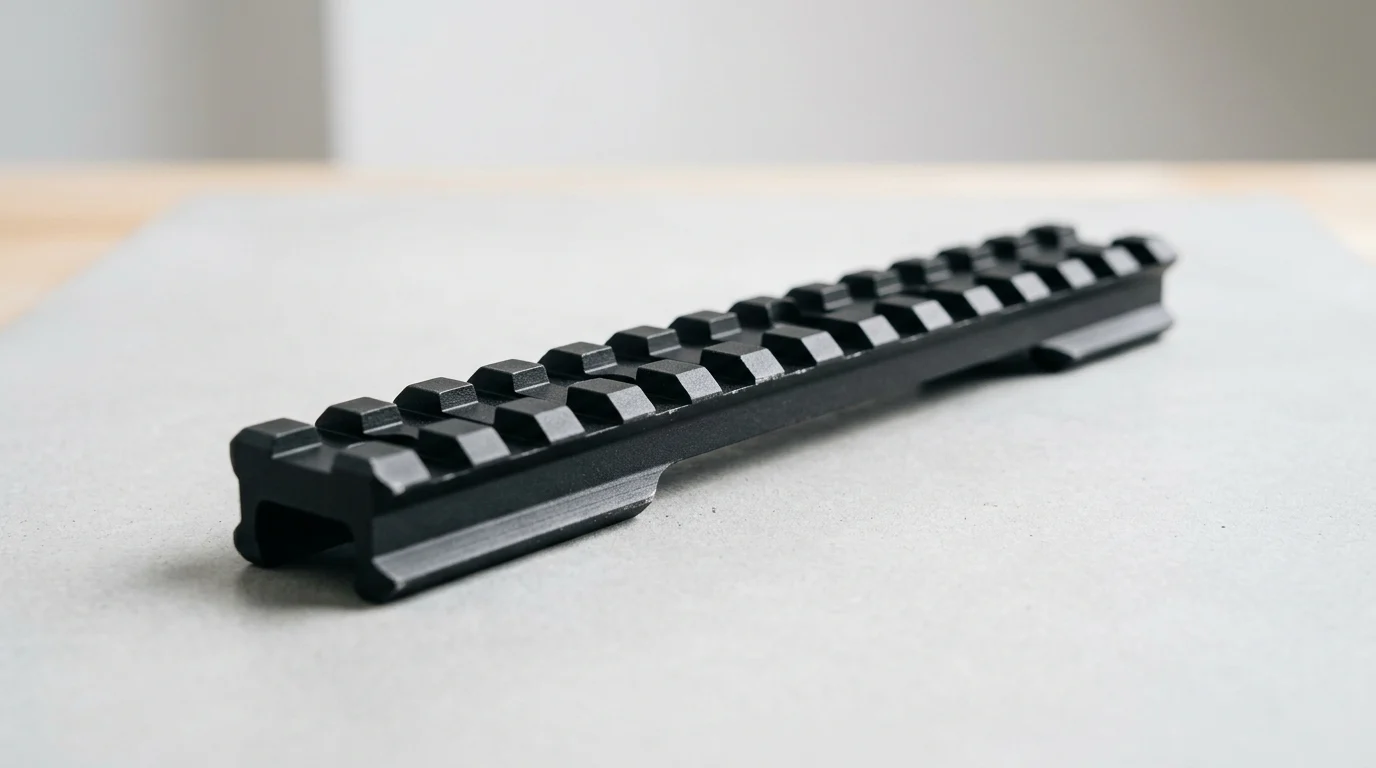
Mounting systems shape how reliably a firearm accepts optics, lights, grips, and other accessories—and in 2026, the choice is no longer just about what looks modern. Picatinny remains the reference standard because its MIL-STD-1913 geometry delivers repeatable alignment, recoil resistance, and near-universal compatibility. At the same time, M-LOK has become the dominant lightweight handguard interface, while KeyMod continues to fade from mainstream adoption. This guide compares how each system works, where each one still makes sense, and why many serious rifle setups now use a hybrid approach: a solid Picatinny rail for optics and modular slots for everything else.
Why Picatinny Rails Still Matter in 2026
The tactical and sporting firearm landscape has seen immense innovation over the past two decades, transitioning from bulky quad-rails to streamlined modular handguards. However, even as sleeker alternatives dominate the market, the classic Picatinny Rail continues to hold its ground as an indispensable platform for serious shooters, military personnel, and hunters. Understanding why this legacy system persists requires looking past the aesthetic appeal of modern forends to examine the robust mechanical reliability of a continuous locking interface.
Picatinny, M-LOK, and KeyMod Basics
To grasp the current state of mounting systems, buyers must understand the core mechanics of the big three. The Picatinny system utilizes a continuous series of standardized ridges and recoil grooves to clamp attachments securely along a solid plane. In contrast, KeyMod, introduced as an open-source design in 2012, uses keyhole-shaped slots; a lug inserts into the larger hole and slides forward into the narrow key slot to lock, allowing direct-attach components without requiring a full-length rail. M-LOK, developed shortly after as a free-licensed standard, utilizes elongated T-nut slots. Over the years, M-LOK has largely eclipsed KeyMod in popularity due to its manufacturing simplicity and superior strength. While modular systems excel at shedding bulk and improving ergonomics along the handguard, modern rifles almost universally employ a hybrid approach: a traditional Picatinny rail machined directly into the upper receiver for optics, paired with an M-LOK or KeyMod handguard for accessories.
Why Picatinny Remains the Baseline
The primary reason the Picatinny system refuses to fade into obscurity comes down to its standardization and reliable clamping force. Defined by the rigorous MIL-STD-1913 specification (published by the U.S. Department of Defense in 1995), every single slot is machined to exactly 0.206 inches wide with a precise center-to-center spacing of 0.394 inches. This rigid geometry ensures that a heavy variable-power optic or thermal sight will return to zero even after being detached and reattached multiple times in the field. Furthermore, the modernized NATO Accessory Rail (STANAG 4694) is generally compatible with 1913 hardware, though it utilizes a different rail geometry that grips the bottom angles and has seen limited widespread adoption. When dealing with specialized mount hardware that must withstand the heavy recoil of magnum calibers, the continuous locking surface of a 1913 rail provides structural integrity that direct-attach modular slots cannot easily replicate.
Picatinny vs. M-LOK vs. KeyMod
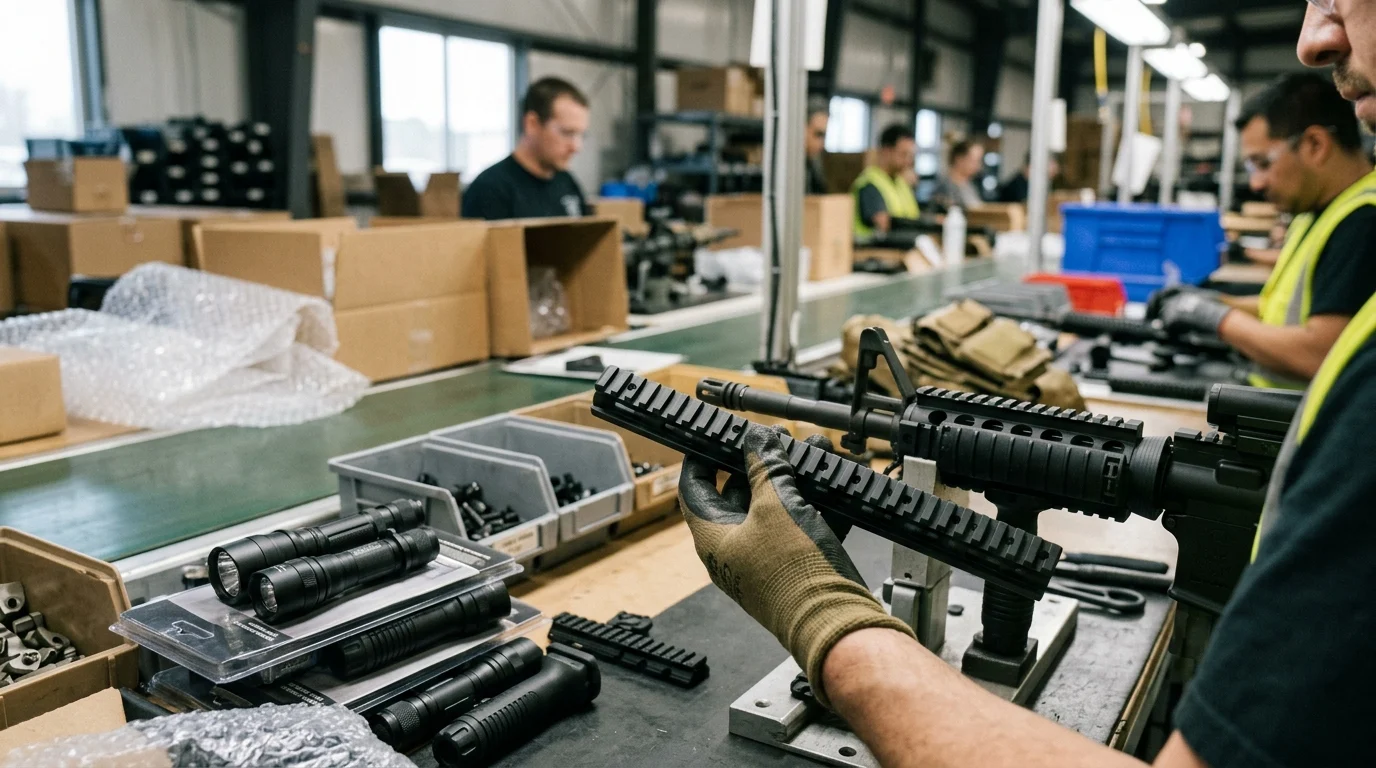
Choosing between these three distinct platforms requires a careful evaluation of the trade-offs between modular flexibility, overall weapon mass, and structural strength. Each system possesses unique mechanical properties that dictate how well it handles real-world abuse, environmental hazards, and the rigors of heavy use.
Strength, Weight, and Accessory Fit
A continuous quad-rail machined to military 1913 specifications undeniably adds bulk, often increasing a rifle's front-end weight by roughly 4 to 8 ounces compared to a slick modular rail, depending heavily on the rail's profile, material, and width. This extra mass can accelerate shooter fatigue during prolonged engagements or long hunting treks. M-LOK and KeyMod solve this critical weight issue by leaving the handguard smooth, allowing users to bolt on small rail sections or direct-fit components exclusively where they are needed. However, these weight savings quickly shrink if users must bolt on multiple heavy Picatinny rail sections to attach their gear. Accessory fitment and security also vary dramatically. M-LOK's cammed T-nuts offer a universally tight lockup across varying aluminum thicknesses, rotating precisely 90 degrees to bite into the rail interior. KeyMod accessories, while highly functional, rely on a lug that inserts into a large opening and slides into a narrow key slot. Under heavy directional impact, this design can theoretically loosen, contributing to its gradual decline in new firearm builds, though it remains perfectly serviceable for legacy or light-duty setups.
Durability, Heat, and Build Quality
When pushed to the absolute breaking point in controlled environments, empirical data clearly dictates the hierarchy of these systems. A highly publicized USSOCOM/NSWC Crane load-to-failure evaluation revealed that M-LOK accessories substantially outperformed KeyMod before experiencing catastrophic failure. Furthermore, M-LOK demonstrated superior resistance to point-of-impact shifts when laser aiming modules were removed and reattached. Yet, for mounting heavy-duty accessories like heavy bipods or large infrared illuminators that demand absolute rigidity, the 1913 rail remains a highly effective option due to its massive surface area for structural reinforcement. Because exposed aluminum rails can become uncomfortably hot and abrasive during high-volume fire, or feature sharp edges, operators frequently mitigate these drawbacks by installing snap-on polymer rail covers or textured panels to protect their hands and manage temperatures.
| Feature | Picatinny (MIL-STD-1913) | M-LOK | KeyMod |
|---|---|---|---|
| Primary Application | Heavy Optics, Lasers, Bipods | Handguards, Grips, Lights | Legacy Handguards |
| Weight Penalty | High (varies by profile and material) | Low (until rail sections added) | Low (until rail sections added) |
| Attachment Method | Cross-bolt / Clamp | Cammed T-Nut | Lug / Slide |
| Market Trajectory | Stable / Essential | Dominant in Modularity | Declining but Serviceable |
How to Choose the Right Mounting System
Selecting the optimal interface for a modern sporting rifle or tactical platform means blending the unique strengths of these systems rather than committing exclusively to just one. A well-thought-out hybrid approach almost always yields the best performance-to-weight ratio for any application.
Best Uses for Duty, Sport, and Hunting
For duty use and high-stakes tactical environments, a receiver featuring a continuous top rail paired with an M-LOK handguard is the widely accepted industry standard. This configuration allows operators to secure primary optics with maximum zero retention while keeping the support-hand area slim, highly maneuverable, and free of sharp edges. Hunters trekking miles into the backcountry should prioritize aggressive weight reduction, making a lightweight M-LOK forend ideal for attaching a simple sling stud or a lightweight carbon-fiber bipod without unnecessary bulk.
Key Takeaways
- Choose Picatinny for optics and heavy-recoil applications because the MIL-STD-1913 standard uses 0.206-inch slots with 0.394-inch center-to-center spacing for repeatable mounting.
- Use M-LOK on the handguard when reducing weight and improving ergonomics matter more than having a continuous rail surface.
- Avoid investing heavily in new KeyMod accessories unless you already own a KeyMod platform, since M-LOK has largely overtaken it in market support and strength reputation.
- Expect a full Picatinny quad-rail setup to add about 4 to 8 ounces versus a comparable slick modular handguard.
- For a practical 2026 rifle setup, pair a Picatinny receiver rail for optics with M-LOK or similar modular slots for secondary accessories.
Frequently Asked Questions
Is Picatinny still relevant in 2026?
Yes. Picatinny remains the baseline for optics and hard-use mounts because its MIL-STD-1913 geometry provides repeatable clamping, strong recoil resistance, and broad accessory compatibility.
What is the main difference between Picatinny and M-LOK?
Picatinny uses continuous raised ridges and recoil slots, while M-LOK uses elongated slots with rotating T-nuts. Picatinny is stronger for optics; M-LOK is lighter and slimmer for handguard accessories.
Why do most rifles still use Picatinny on the upper receiver?
Optics need a rigid, standardized mounting surface. A machined Picatinny receiver rail helps scopes, red dots, night vision, and thermal sights maintain zero under recoil and repeated removal.
Is M-LOK better than KeyMod?
For most buyers, yes. M-LOK has become more popular than KeyMod because it is easier to manufacture, widely supported, and generally considered stronger for direct-attach accessories.
Does Picatinny add weight compared with M-LOK?
Usually. A full-length quad rail can add roughly 4 to 8 ounces compared with a slick modular handguard, depending on the rail profile, material, and width.
Post time: Jul-09-2026